How to Enable CTRL+ALT+DEL for Windows 11 Sign-in


The secure sign-in setting in Windows 11 requires you to press Ctrl+Alt+Del before you type your password. This extra step stops fake login apps from stealing your password because Windows reserves that key combination for the real sign-in screen.
Windows turns this feature off by default, but you can turn it back on using the Registry Editor (a tool for changing advanced system settings). This classic security habit works best on shared computers to make sure no background programs can fake the sign-in screen.
To enable Ctrl+Alt+Del for Windows 11 sign-in, use secpol.msc on Pro/Enterprise editions by setting “Interactive logon: Do not require Ctrl+Alt+Del” to Disabled. Home users can achieve this by setting the DisableCAD registry value to 0 in 🗝️HKEY_LOCAL_MACHINE\
What happens when done?
The password box remains hidden until the key combination is pressed, confirming physical presence at the machine.
Method 1Local Security Policy (For Pro, Enterprise, and Education editions)
Local Security Policy lets you enable Ctrl+Alt+Del on Windows 11 Pro, Enterprise, and Education editions to add an extra layer of security before you sign in. This tool comes built into these versions of Windows and blocks fake login screens by forcing you to press those three keys before typing your password.
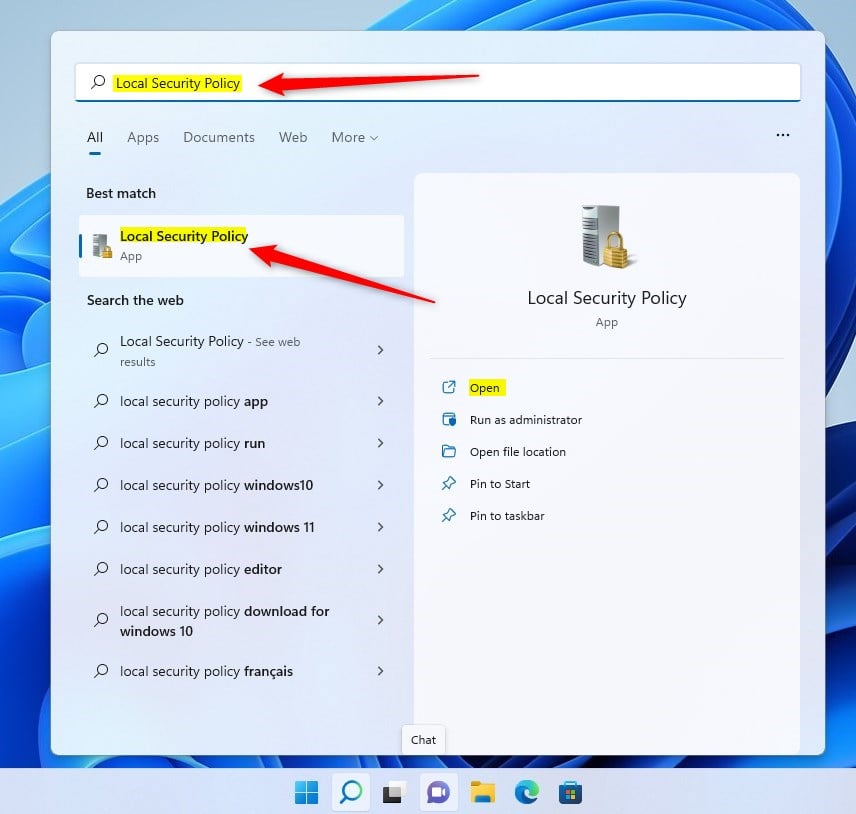
1. Open the Start Menu and search for ‘secpol.msc’ (which opens the Local Security Policy editor).
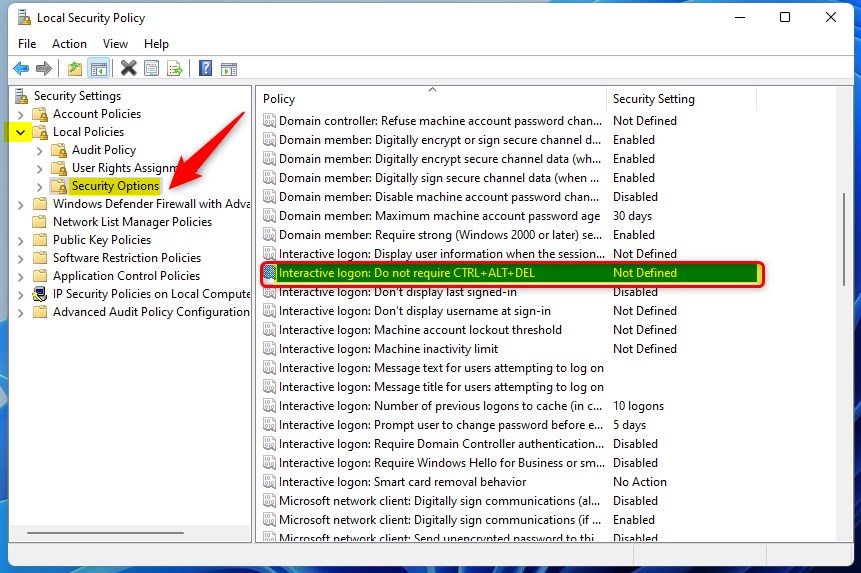
2. In the left-hand menu, click on ‘Local Policies,’ then choose ‘Security Options.’
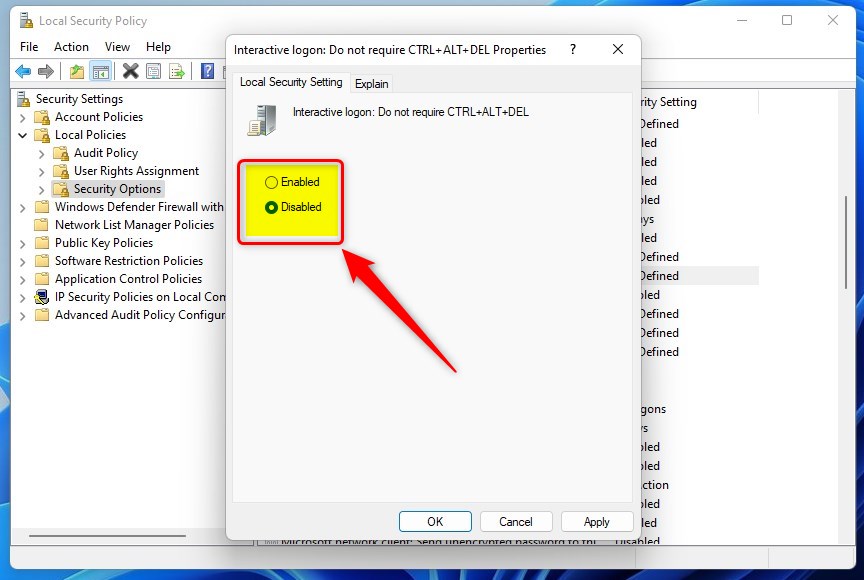
3. Double-click the setting named 'Interactive logon: Do not require CTRL+ALT+DEL.' on the right side of the window. Choose 'Disabled' to activate the security check, or 'Enabled' to turn it off, then click 'OK'.
Method 2Windows Registry (For Home edition)
Windows Registry (a database that stores system settings) lets you enable CTRL+ALT+DEL on Windows 11 Home editions where the Local Security Policy tool is missing. By changing a single value in the registry editor, you can force the secure sign-in prompt to appear every time you start your computer.
Since Windows 11 Home lacks the Local Security Policy editor, the registry serves as the alternative for making this adjustment.
1. Press the Windows key + R, type 'regedit,' and hit Enter.
2. Navigate to this path in the address bar:
HKEY_LOCAL_MACHINE\SOFTWARE\Microsoft\Windows NT\CurrentVersion\Winlogon
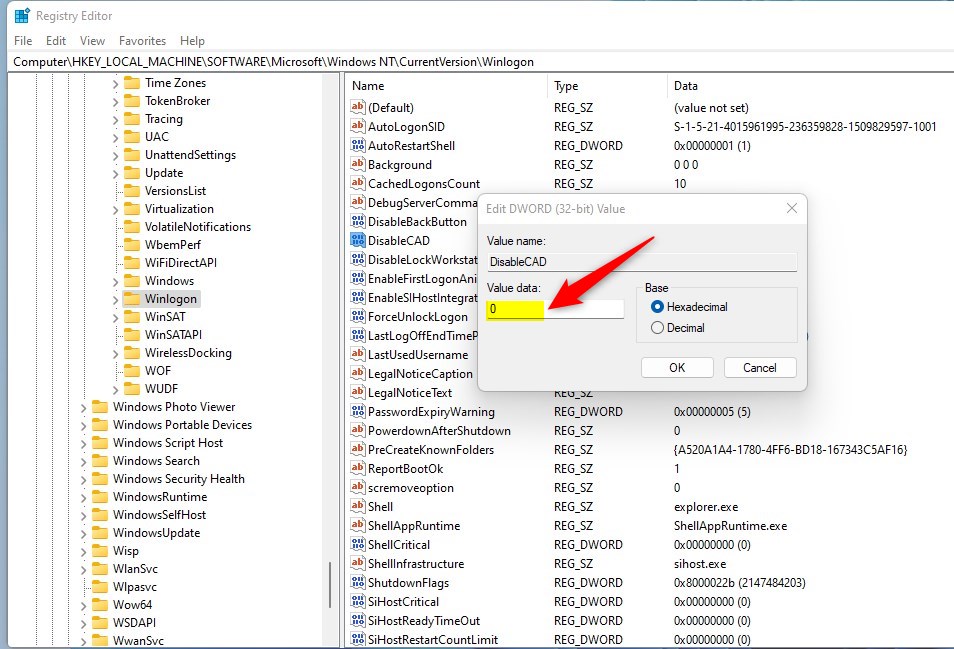
Within the Windows Registry editor, locate or create a value named 'DisableCAD' on the right side. If 'DisableCAD' is missing, right-click an empty spot, select 'New,' choose 'DWORD (32-bit) Value,' and name it 'DisableCAD.'
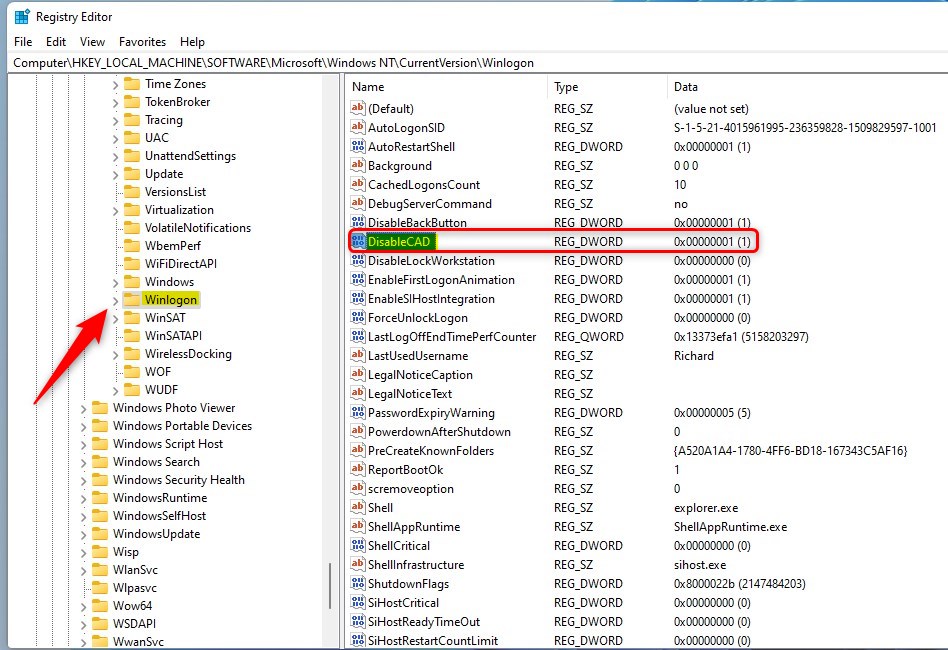
4. Double-click 'DisableCAD' and set the value to '0' to require the keys, or '1' to turn off the requirement. Click 'OK.'
Method 3PowerShell Automation
IT administrators can deploy this script to enforce secure sign-in across multiple machines:
Set-ItemProperty -Path 'HKLM:\SOFTWARE\Microsoft\Windows NT\CurrentVersion\Winlogon' -Name 'DisableCAD' -Value 0
Summary
Enabling CTRL+ALT+DEL adds a secure sign-in layer to Windows 11 PCs. Pro users rely on the Local Security Policy tool, while Home users modify the registry. This defense blocks fake login screens and represents a recommended security practice.
Was this guide helpful?

About the Author
Richard
Tech Writer, IT Professional
Richard is a writer at Geek Rewind who turns complex IT tasks into clear, step-by-step guides. He draws on years of hands-on experience in system administration and enterprise IT operations, focusing on Windows, Linux and WordPress: the problems people actually run into, and the fixes that work. His server and WordPress guides come from systems he runs himself. Richard builds and maintains the platform behind Geek Rewind, from its Ubuntu servers and Nginx configuration to its custom WordPress plugins. Many new tutorials start with readers' questions, and he's always glad to answer them in the comments.



No comments yet — be the first to share your thoughts!