How to Change Wireless Adapter Power Saving Mode in Windows 11

Is your Wi-Fi feeling slow? Does your laptop battery drain too fast? The answer might be in your wireless adapter settings. Windows 11 lets you control how much power your Wi-Fi uses. This guide will show you simple steps to make the change.
What Is Wireless Adapter Power Saving Mode?
Your computer’s wireless adapter is the part that connects you to Wi-Fi. Windows lets you control how much power it uses. When you save more power, your battery lasts longer. But your Wi-Fi might slow down a bit. If you want the fastest Wi-Fi, you can tell it to use more power instead.
Power Saving Options
| Mode | What It Does |
|---|---|
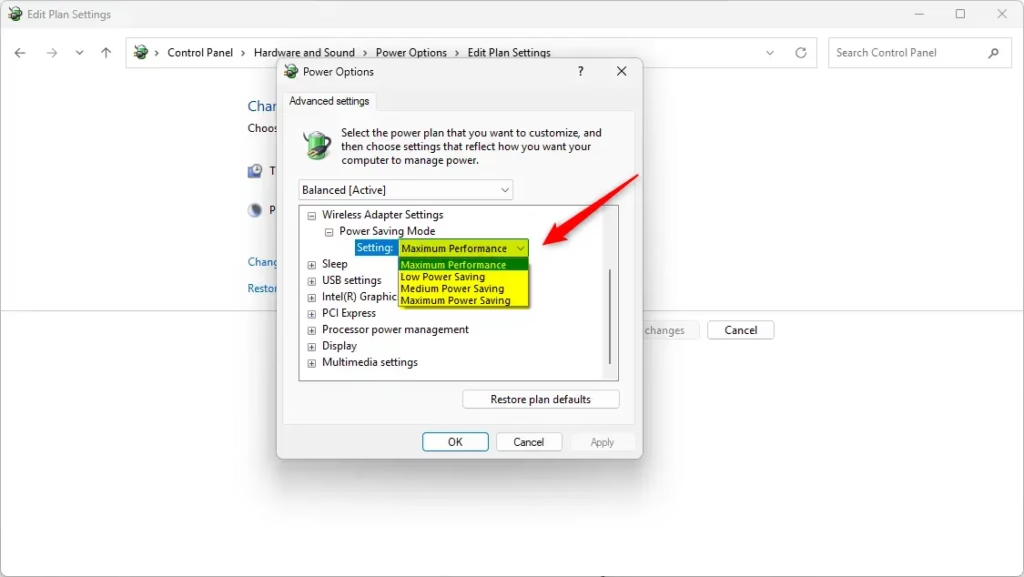
| Maximum Performance | Best Wi-Fi speed, uses more power. (Default when plugged in) |
| Low Power Saving | Good balance between speed and saving power |
| Medium Power Saving | More power saving but may reduce speed. (Default on battery) |
| Maximum Power Saving | Saves the most power but Wi-Fi may slow down |
How to Change Power Saving Mode via Control Panel
Here’s how to change your wireless adapter’s power settings using the Control Panel:
- Open Control Panel: Press ⊞ Win+R on your keyboard. Type
controland press Enter. Switch the view to Small icons or Large icons. Click Power Options. - Choose your active power plan: Look for the plan you are using (like “Balanced”). Click Change plan settings next to it.
- Open advanced settings: Click Change advanced power settings.
Find Wireless Adapter Settings: Scroll down and expand Wireless Adapter Settings. Then expand Power Saving Mode.- Pick your preferred mode: Choose from the dropdown menus for On battery and Plugged in options. For example, select Maximum Performance for best Wi-Fi speed. Click OK to save your changes.
Note: Desktop computers may not have separate battery and plugged-in options.
How to Change Power Saving Mode Using Commands
Do you like using commands? Here’s how to do it with Windows Terminal (Command Prompt or PowerShell):
Open Windows Terminal as administrator: ⚠️ Admin privileges required. Right-click the Start button and select Windows Terminal (Admin) or search for “Windows Terminal” and open it as administrator.
Copy and paste a command: Choose one of the commands below based on your preferred power saving mode. Paste it into the terminal and press Enter.
For Laptop on Battery:
Maximum Performance:
powercfg /SETDCVALUEINDEX SCHEME_CURRENT 19cbb8fa-5279-450e-9fac-8a3d5fedd0c1 12bbebe6-58d6-4636-95bb-3217ef867c1a 0Low Power Saving:
powercfg /SETDCVALUEINDEX SCHEME_CURRENT 19cbb8fa-5279-450e-9fac-8a3d5fedd0c1 12bbebe6-58d6-4636-95bb-3217ef867c1a 1Medium Power Saving:
powercfg /SETDCVALUEINDEX SCHEME_CURRENT 19cbb8fa-5279-450e-9fac-8a3d5fedd0c1 12bbebe6-58d6-4636-95bb-3217ef867c1a 2Maximum Power Saving:
powercfg /SETDCVALUEINDEX SCHEME_CURRENT 19cbb8fa-5279-450e-9fac-8a3d5fedd0c1 12bbebe6-58d6-4636-95bb-3217ef867c1a 3For Desktop or When Plugged In:
Maximum Performance:
powercfg /SETACVALUEINDEX SCHEME_CURRENT 19cbb8fa-5279-450e-9fac-8a3d5fedd0c1 12bbebe6-58d6-4636-95bb-3217ef867c1a 0Low Power Saving:
powercfg /SETACVALUEINDEX SCHEME_CURRENT 19cbb8fa-5279-450e-9fac-8a3d5fedd0c1 12bbebe6-58d6-4636-95bb-3217ef867c1a 1Medium Power Saving:
powercfg /SETACVALUEINDEX SCHEME_CURRENT 19cbb8fa-5279-450e-9fac-8a3d5fedd0c1 12bbebe6-58d6-4636-95bb-3217ef867c1a 2Maximum Power Saving:
powercfg /SETACVALUEINDEX SCHEME_CURRENT 19cbb8fa-5279-450e-9fac-8a3d5fedd0c1 12bbebe6-58d6-4636-95bb-3217ef867c1a 3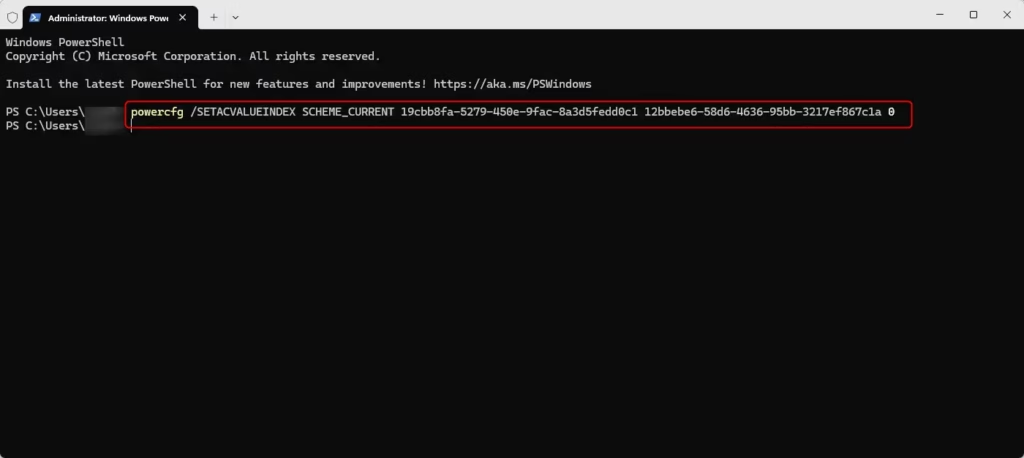
Summary
- Balance speed and battery life: Choose a power saving mode that fits what you need. Do you want faster Wi-Fi or longer battery life?
- Changing settings is easy: Use the Control Panel or Windows Terminal to make changes.
- Know what each mode means: More power saving means less Wi-Fi performance.
- For laptops: You can set different modes for when on battery or plugged in.
- Learn more: Check Intel’s official guide on wireless power management.
By adjusting these settings, you can enjoy better Wi-Fi when you need it. Or save battery when you want to.
Was this guide helpful?

About the Author
Richard
Tech Writer, IT Professional
Richard, a writer for Geek Rewind, is a tech enthusiast who loves breaking down complex IT topics into simple, easy-to-understand ideas. With years of hands-on experience in system administration and enterprise IT operations, he’s developed a knack for offering practical tips and solutions. Richard aims to make technology more accessible and actionable. He's deeply committed to the Geek Rewind community, always ready to answer questions and engage in discussions.




No comments yet — be the first to share your thoughts!