
Is your computer showing the wrong time? You can fix this by changing the Internet Time Server. Your computer uses a system called Network Time Protocol (NTP) to sync with trusted clocks on the internet. This keeps your time accurate for apps and services.
Windows 11 normally uses time.windows.com as its default server. But you can switch to other popular servers like:
time.windows.com(default)time.nist.govpool.ntp.org
Let’s look at three ways to change your time server.
Change Time Server Using the Settings App
This is the easiest way. Here’s what to do:
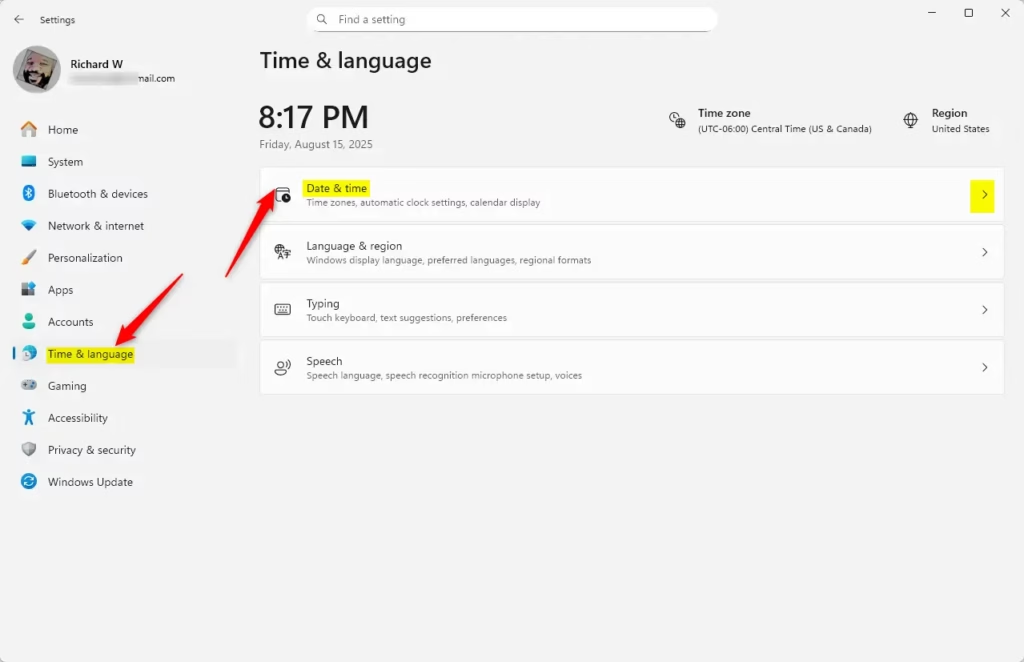
- Open the Settings app. Click the Start menu and select Settings, or press Windows key + I on your keyboard.
- Click Time & language on the left side.
- Click Date & time on the right side to see more options.
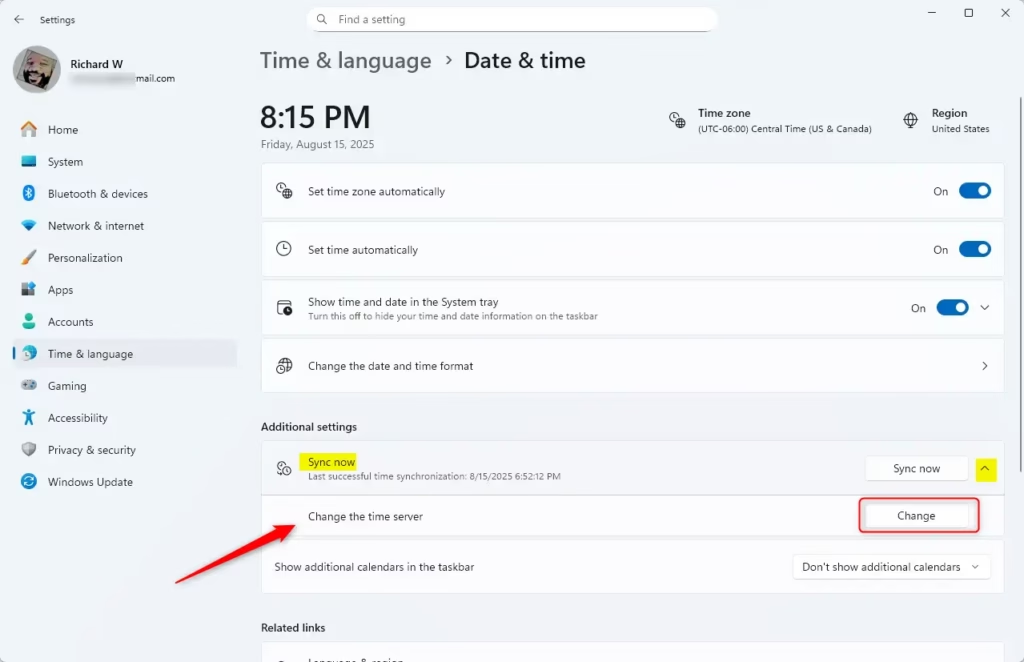
- Scroll down and click the Sync now tile to expand it.
- Click the Change button next to where it shows your current time server.
- Type the address of the new time server you want to use. For example, type
time.nist.govand click OK.
Why do this? Changing your time server ensures your computer syncs with a reliable clock. What happens? Your computer will now get its time from the new server you chose.
Change Time Server Using Control Panel
This method also works well. Follow these steps:
- Open the Control Panel.
- Go to Clock and Region.
- Click Set the time and date.
- In the pop-up window, select the Internet Time tab.
- Click Change settings. ⚠️ This step requires admin privileges.
- Choose a time server from the list or type your own.
- Click Update now and then OK.
Why use this method? The Control Panel gives you direct control over your time settings. What happens? Your computer tests the new server and updates your system time right away.


Add or Change Time Servers Using the Registry Editor (Advanced)
This method is for advanced users. You can add new time servers or change the ones Windows uses. Be careful: editing the registry incorrectly can cause problems. Only try this if you feel confident.
- Open the Registry Editor by typing
regeditin the Start menu search and pressing Enter. ⚠️ This step requires admin privileges. - Navigate to this folder:
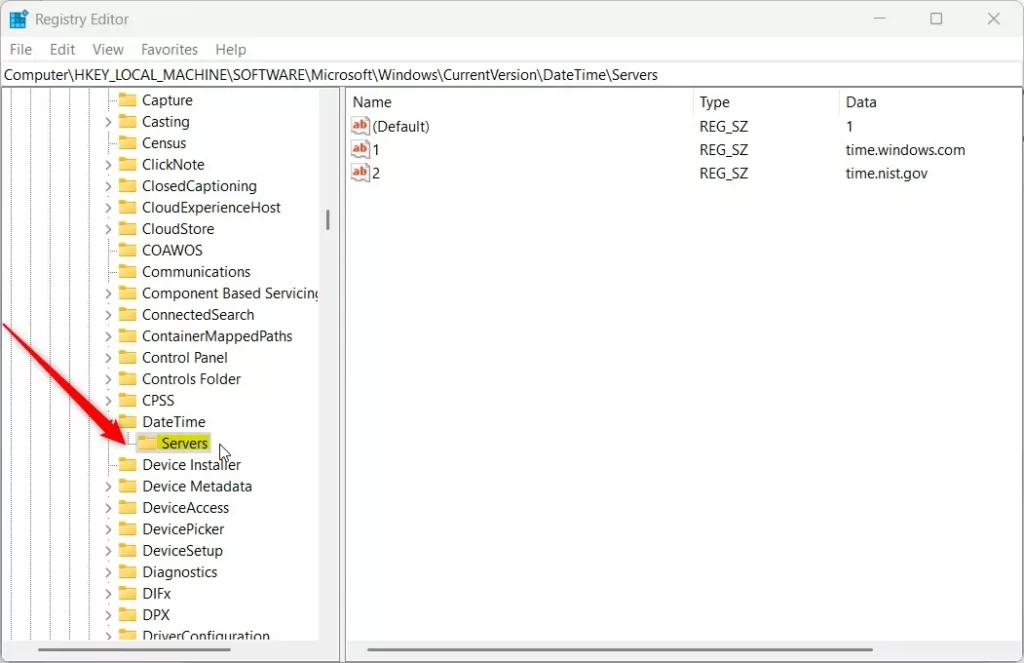
HKEY_LOCAL_MACHINE\SOFTWARE\Microsoft\Windows\CurrentVersion\DateTime\Servers - If the Servers folder doesn’t exist, right-click on DateTime, select New > Key, and name it Servers.
- In the right pane, you will see servers listed as numbers (0, 1, 2, etc.). Each number represents a time server address.
- To add a new server, right-click in the right pane. Choose New > String Value. Name it the next number, like 3. Then double-click it and enter the server address, such as
time.google.com. - Next, go to:
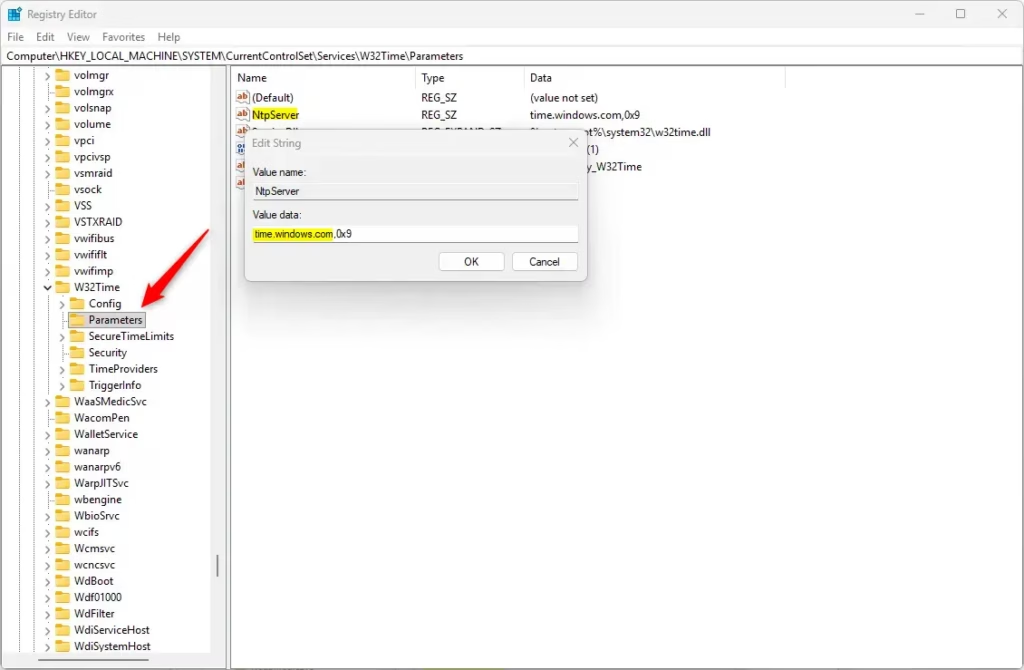
HKEY_LOCAL_MACHINE\SYSTEM\CurrentControlSet\Services\w32time\Parameters - Double-click the NtpServer entry and replace the value with the server you want to use. For example, type:
time.google.com,0x9 - Save and close the Registry Editor.
- Restart your computer to apply the changes. ⚠️ A restart requires admin privileges.
Why edit the registry? This method lets you set up custom time servers or manage multiple servers. What happens? Your computer uses the new servers you added for time syncing.
Summary
- You can change the Internet Time Server in Windows 11 using the Settings app, Control Panel, or Registry Editor.
- The default server is
time.windows.com. Other reliable options includetime.nist.govandpool.ntp.org. - Pick a reliable time server to keep your clock accurate.
- After changing the server, restart your PC to make sure the change takes effect.
- Regular syncing helps keep your computer’s time correct for apps and services.
- If you want to learn more about keeping your Windows 11 PC running smoothly, check out Geek Rewind for helpful guides and tips!
Leave a Reply