How to Change Text Cursor Thickness in Windows 11


- 9 steps
- Includes a restart or sign-out
Text cursor thickness in Windows 11 controls the width of the blinking vertical line that shows where your typing will appear. The default is 1 pixel, and you can make it as wide as 20 pixels.
This helps if you lose track of where you are typing, especially on large monitors or high-resolution displays where a thin line is easy to miss. The change applies to your user account, not to the whole PC. The steps below use the Settings app, and there is also a registry method for people who want to set the value directly.
Go to Settings Accessibility Text cursor. Use the slider under “Text cursor thickness” to adjust the width from 1 to 20. This makes the blinking line easier to see while typing.
Why Adjust Text Cursor Thickness?
A thicker cursor stands out on modern screens, so you can find your place quickly in long documents, spreadsheets and web forms. It is also useful when you share a screen or present, because people further from the display can follow where you are typing.
A thicker text cursor is a bold, well-defined line instead of a hairline. That makes it easier to see against busy backgrounds and can reduce eyestrain during long typing sessions. Start with a modest value such as 3 or 4 and raise it only if you still can’t see the cursor comfortably. Very wide settings can cover the character next to the cursor.
How to Change Text Cursor Thickness in 🪟 Windows 11
The quickest way to change this is through the Windows Accessibility settings. It works on every edition of Windows 11, Home and Pro included, and the change applies as soon as you move the slider. You don’t need to restart or sign out. If you don’t see a Text cursor thickness slider, update Windows through Settings Windows Update, because older builds of Windows 11 don’t have it.
- Open the Settings app by pressing Win+I. The Settings window opens with a list of categories on the left.
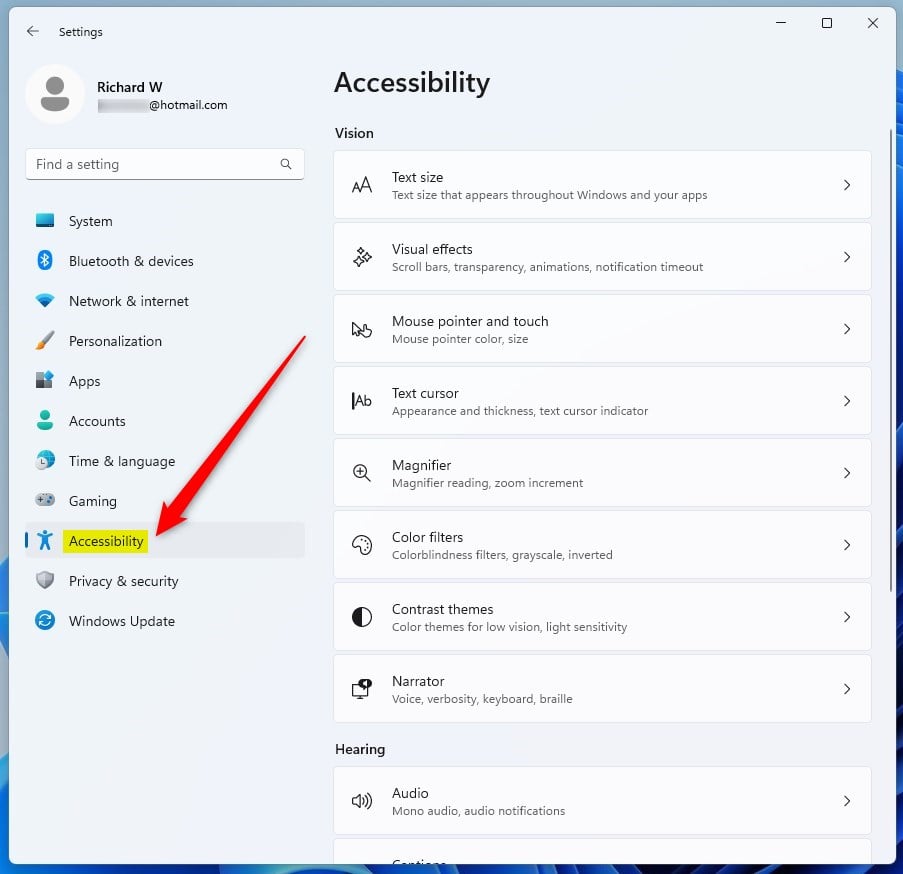
- Click on Accessibility in the left menu. The accessibility options appear on the right, grouped under headings such as Vision, Hearing and Interaction.
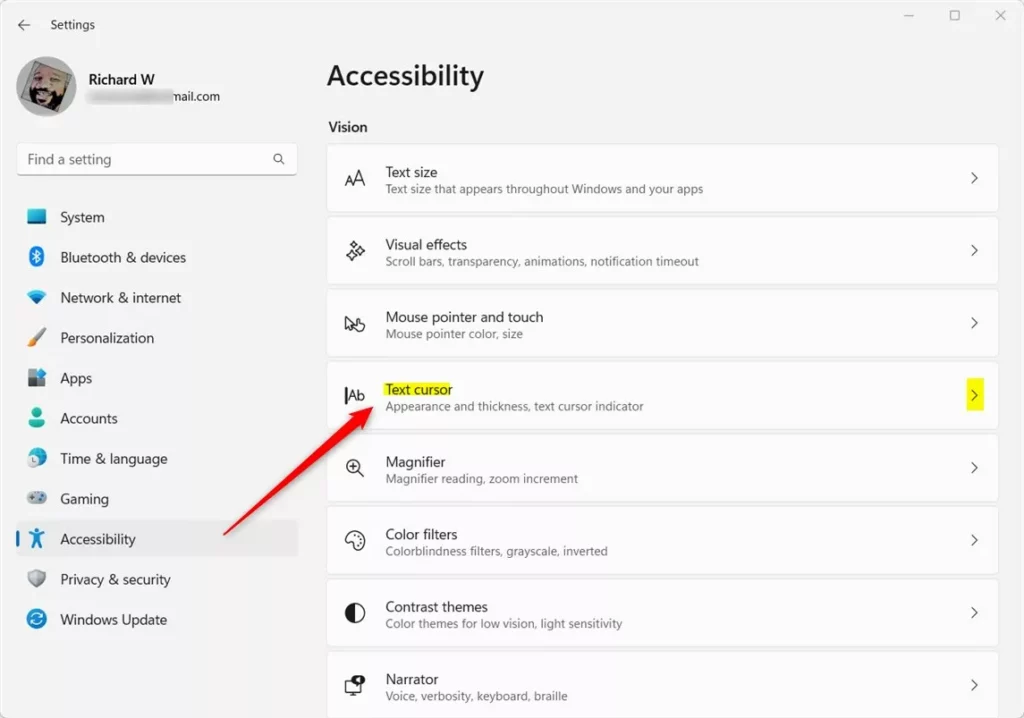
- Select the Text cursor tile on the right side. It is in the Vision group. The Text cursor page opens with the cursor indicator options at the top and the thickness slider below them.
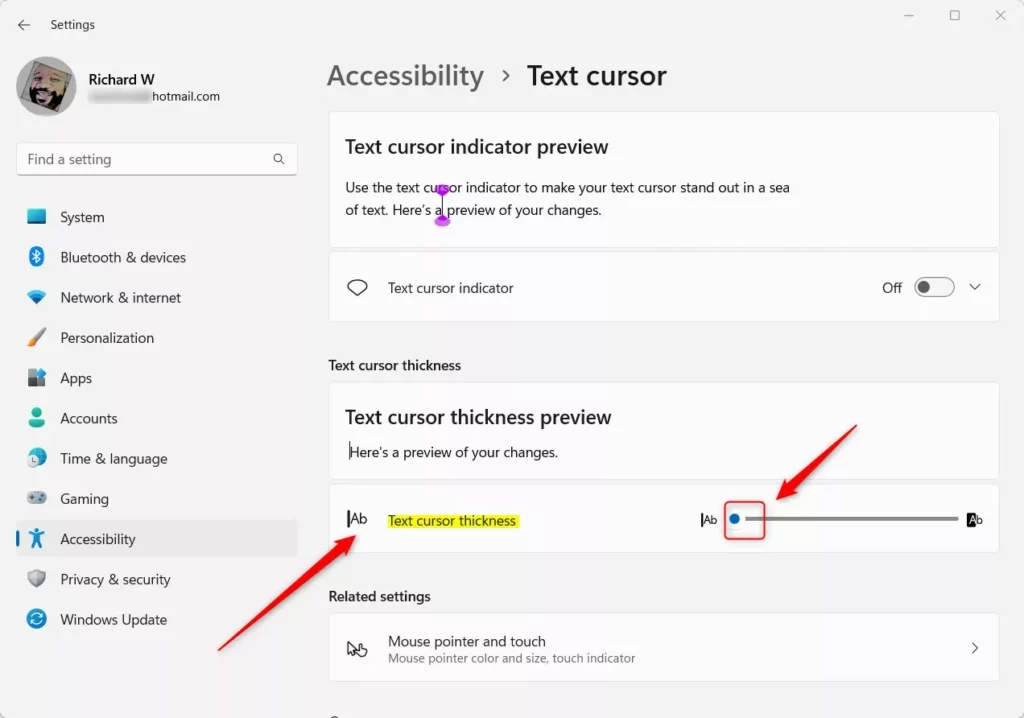
- Use the slider under Text cursor thickness to make the line wider. A preview next to the slider shows the cursor at the width you pick, and the slider runs from 1 to 20. Click into a text field in any app, such as Notepad, to check how it looks.
To undo the change, drag the slider back to its lowest value, which is the default 1 pixel width.
Pro Tip: Use the Text Cursor Indicator
Instead of only making the text cursor thicker, you can use the Text Cursor Indicator to add a colored circle around it. The indicator is easy to spot even when the cursor itself is thin, and you can combine it with a thicker cursor. It is on the same page as the thickness slider, at Settings Accessibility Text cursor. Turn on Text cursor indicator, then choose the size and color you want. You can turn the toggle off again at any time.
Troubleshooting: Why is my cursor a thick block?
If your text cursor looks like a large, solid block, accessibility settings are likely turned up too high or an app setting changed. Check these in order:
- Open Settings Accessibility Text cursor and look at the Text cursor thickness slider. Lower it if it is near the maximum.
- If you changed the registry value, go back and check that the number is between 1 and 20 and that the Base is set to Decimal.
- In some apps, pressing the Insert key switches to overwrite mode, which shows a block cursor. Press Ins again to switch back.
- Some programs, such as terminals and older apps, draw their own cursor and may ignore the Windows setting. Look in that app’s own options.
Advanced: Changing Cursor via Registry
Registry Editor (a database for Windows and app settings) lets you set the text cursor thickness by typing the number yourself instead of using the slider. This is an advanced method. You open the Windows registry, find the Desktop key, and create or change one numeric value to set the cursor width you want. It works on all editions, including Home.
Editing the wrong value can cause problems, so follow the steps exactly. Consider backing up the registry first. In Registry Editor, choose File Export.
- Press Win+R, type
regedit, and hit Enter. If a User Account Control prompt appears, click Yes. Registry Editor opens. - Navigate to:
HKEY_CURRENT_USER\Control Panel\Desktop. Use the folder tree on the left, or paste the path into the address bar at the top of the window. The values for that key appear in the right pane.
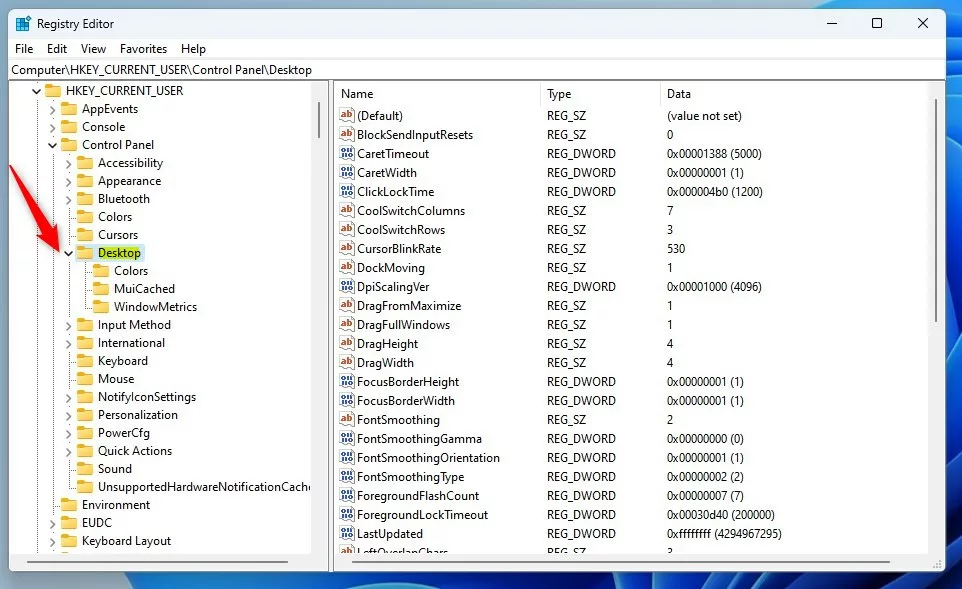
- Right-click in the empty space of the right pane and select New DWORD (32-bit) Value. A new entry appears with its name highlighted for editing.
- Name it
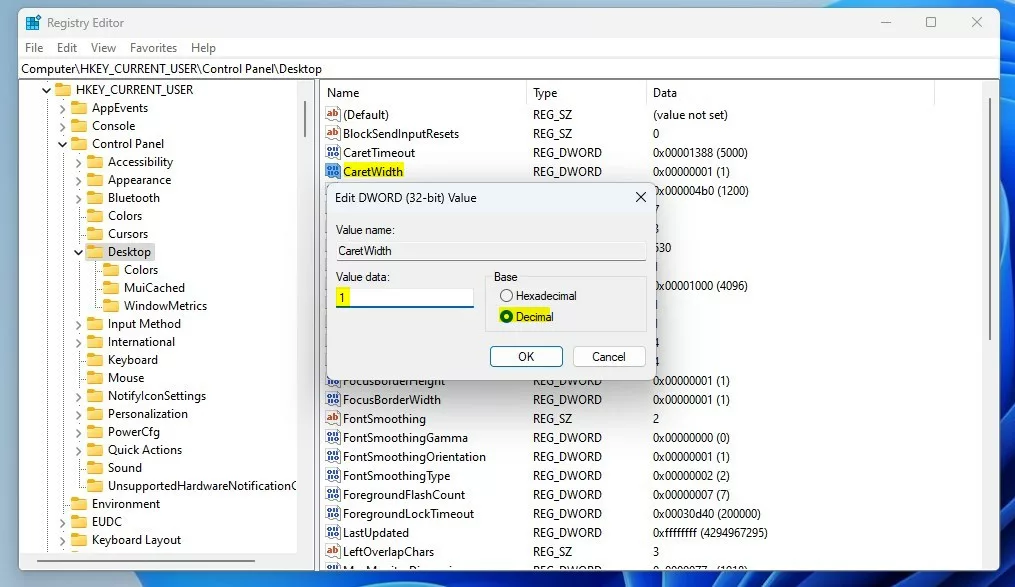
CaretWidth. Type the name exactly and press Enter. If a value with this name already exists, skip the creation and edit the existing one instead. - Double-click it, set the Base to Decimal, and enter a value between 1 and 20. Click OK, then close Registry Editor.
Sign out of Windows and sign back in, or restart the PC, so the new width takes effect. To undo the change, set the value back to 1 or delete the value you created, then sign out and in again.
Summary
Customizing your text cursor thickness or color in Windows makes typing more comfortable. Use the Settings app for the quickest change, add the Text Cursor Indicator if you want extra contrast, and use the registry only when you want to enter a value yourself. Every change can be reversed in a minute.
Have a question about this guide?
Answered by AI from this guide. Good questions may be added to this page — please don't include personal details.
Did this guide fix your problem?

About the Author
Richard
Tech Writer, IT Professional
Richard is a writer at Geek Rewind who turns complex IT tasks into clear, step-by-step guides. He draws on years of hands-on experience in system administration and enterprise IT operations, focusing on Windows, Linux and WordPress: the problems people actually run into, and the fixes that work. His server and WordPress guides come from systems he runs himself. Richard builds and maintains the platform behind Geek Rewind, from its Ubuntu servers and Nginx configuration to its custom WordPress plugins. Many new tutorials start with readers' questions, and he's always glad to answer them in the comments.
No comments yet — be the first to share your thoughts!