Windows 11 is Getting a Smaller Start Menu – Here’s How to Change It!

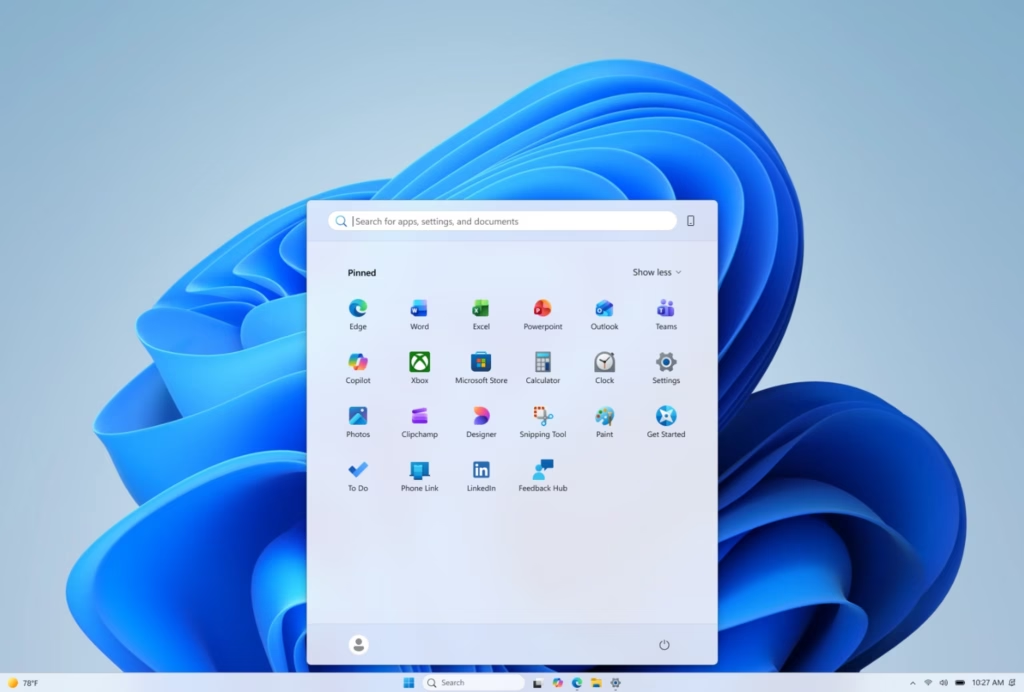
Microsoft is adding new ways to change your Start menu. You can now make it smaller or larger. If your Start menu takes up too much space, you’ll like this. Let’s learn how to change its size.
How to Change Your Windows 11 Start Menu Size
Why change the Start menu size?
Your Start menu is where you find your apps. Sometimes, it feels too big or too small for what you need. Changing its size helps you use your screen better. You can make it fit your style.
What happens when you change the size?
When you change the size, the Start menu will either take up less space on your screen (smaller) or show more items at once (larger). This can make it quicker to find what you need.
Step 1: Open Settings
First, you need to open your Windows Settings. This is where you change how your computer looks and works.
- Right-click on your Desktop.
- Click on Personalize from the menu that appears.
Tip: You can also press the Windows key + I on your keyboard to open Settings quickly.
Step 2: Go to Taskbar Settings
Now you are in the Personalization settings. Look for the Taskbar options.
- In the Personalization window, click on Taskbar.
- Scroll down to find the section called Taskbar behaviors. Click it to open it.
Warning: Be careful in Taskbar settings. Some options change where the taskbar sits on your screen. Focus only on the size settings for now.
Step 3: Find the Start Menu Size Setting
This is where you can change the Start menu size. Microsoft has added this option based on what users asked for.
- In the Taskbar behaviors section, look for a new option related to the Start menu size.
Heads Up: This feature is being tested with Windows Insiders first. If you don’t see it yet, don’t worry! It will come to everyone soon. Make sure your Windows is updated.
Step 4: Choose Your Start Menu Size
Now you can pick how big you want your Start menu to be.
- You will see options for the Start menu size. You might see a dropdown menu or radio buttons.
- Choose between:
- Small: This makes the Start menu more compact. It’s good if you want more space on your screen.
- Large: This makes the Start menu bigger. It shows more apps and items without needing to scroll as much.
- Select the size that works best for you.
The change happens right away. You don’t need to restart your computer.
Practical Tip: Try both the Small and Large sizes for a few days each. See which one feels better when you use your computer.
Step 5: Other Start Menu Tweaks (Bonus!)
While you are in the settings, check out other new options for your Start menu.
- Section Toggles: You can turn on or off sections like “Pinned,” “Recommended,” and “All apps.” This lets you make a very simple Start menu.
- File Recommendations: You can stop seeing recent files in the Start menu. This setting is separate from the File Explorer recommendations.
- Hide Name and Profile Picture: If you show your screen to others, you can hide your name and picture from the Start menu for privacy.
Remember: These extra features are also rolling out slowly. Keep checking for Windows Updates.
Reference:
Summary
Microsoft is making Windows 11 more customizable. You can now change the size of your Start menu to be smaller or larger. This helps you use your computer screen more effectively. To do this, go to Settings > Personalization > Taskbar > Taskbar behaviors. You will find the option there to choose between Small and Large sizes. These changes are immediate. There are also new options to control what appears in your Start menu, like turning off recommended files or hiding your name.
How to make Windows 11 Start menu small again?
To make your Windows 11 Start menu smaller, open Settings, navigate to Personalization, then Taskbar settings. Under 'Taskbar behaviors', find 'Taskbar alignment' and select 'Left'. This will revert the Start menu to its default left-aligned position, which is generally perceived as smaller and more traditional.
How do I get the classic Start menu on Windows 11?
While Windows 11 doesn't offer a direct 'classic' Start menu option, you can achieve a similar look and feel. Go to Settings > Personalization > Taskbar. Change 'Taskbar behaviors' to 'Left' alignment. For a more traditional experience, consider third-party tools that restore the Windows 10 Start menu.
Can I revert to the old Start menu design?
Windows 11 does not have a built-in feature to revert to the exact old Start menu design from Windows 10. However, you can adjust the Taskbar alignment in Settings > Personalization > Taskbar to 'Left' to get a more familiar layout. Third-party software can provide a closer replication.
How do I return the old Start menu in Windows 11?
To get closer to the old Start menu in Windows 11, open Settings, go to Personalization, then Taskbar. Under 'Taskbar behaviors', set 'Taskbar alignment' to 'Left'. This positions the Start button and icons to the left, mimicking the older Windows layout. For a full classic experience, third-party tools are available.
Was this guide helpful?

About the Author
Richard
Tech Writer, IT Professional
Richard, a writer for Geek Rewind, is a tech enthusiast who loves breaking down complex IT topics into simple, easy-to-understand ideas. With years of hands-on experience in system administration and enterprise IT operations, he’s developed a knack for offering practical tips and solutions. Richard aims to make technology more accessible and actionable. He's deeply committed to the Geek Rewind community, always ready to answer questions and engage in discussions.
No comments yet — be the first to share your thoughts!