How to Enable or Disable Windows Hello Biometrics

Windows 11 has a cool feature called Windows Hello that lets you sign in to your computer in a fast and safe way. Instead of typing a password, you can use a PIN, face recognition, or fingerprint to log in.
Most new Windows PCs come with these biometric features already built-in. Windows usually prompts you to set them up for added security.
But sometimes, using biometrics might not be the best choice — maybe at work or in some places where it causes problems. In that case, you might want to turn Windows Hello biometrics off.
Here’s how to turn Windows Hello biometrics on or off in Windows 11.
You can enable or disable Windows Hello biometrics using either the Local Group Policy Editor or the Registry Editor. Navigate to the Biometrics settings in either tool and toggle the “Allow the use of biometrics” option or the “Enabled” DWORD value to your preference. Restart your computer for changes to take effect.
Turn Windows Hello Biometrics On or Off Using Local Group Policy Editor
You can turn Windows Hello biometrics on or off using the Local Group Policy Editor, a tool that lets you change settings on your computer. To do this, first open the editor by pressing Windows key + R, typing gpedit.msc, and pressing Enter. Then, navigate through the folders on the left side to Computer Configuration, Administrative Templates, Windows Components, and finally, Biometrics.
- Open Local Group Policy Editor: Press Windows key + R on your keyboard, type
gpedit.msc, and press Enter. - On the left side, find and click these folders one by one: Computer Configuration → Administrative Templates → Windows Components → Biometrics
- Click on the Biometrics folder.
- On the right side, double-click “Allow the use of biometrics”.
- Choose one option:
- Not Configured — Biometrics is allowed (this is the default).
- Enabled — Biometrics is allowed and turned on.
- Disabled — Biometrics is turned off and can’t be used.
- Click OK to save.
- Restart your computer to make the change work.
Turn Windows Hello Biometrics On or Off Using Windows Registry Editor
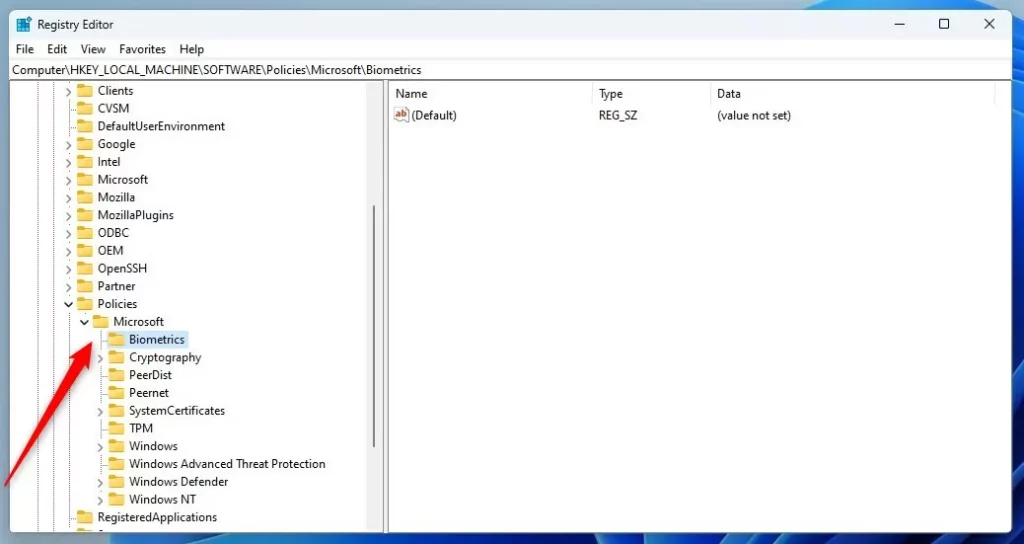
If you’re using Windows Home edition and can’t find the Local Group Policy Editor, you can turn Windows Hello biometrics on or off using the Registry Editor instead. Open Registry Editor by pressing Windows key + R, typing regedit, and pressing Enter; click Yes if a pop-up appears to allow admin privileges. Be careful when using this tool, as changing the wrong settings can cause issues.
- Open Registry Editor: Press Windows key + R, type
regedit, and press Enter. If a pop-up appears, click Yes to allow. ⚠️ Admin privileges required. - In Registry Editor, go to this folder:
HKEY_LOCAL_MACHINE\SOFTWARE\Policies\Microsoft - If you don’t see a folder named Biometrics inside Microsoft, create it:
- Right-click on Microsoft → New → Key → name it Biometrics.
- Click the Biometrics folder.
- On the right side, right-click and choose New → DWORD (32-bit) Value.
- Name this new value Enabled.
- Double-click Enabled and set:
- Base: Decimal
- Value data:
- 1 to turn biometrics ON
- 0 to turn biometrics OFF
- Click OK and close Registry Editor.
- Restart your computer to apply the change.
Summary
Windows Hello biometrics lets you sign in quickly and securely using a PIN, your face, or your fingerprint. You can easily turn these Windows Hello biometrics features on or off by following the steps for either the Local Group Policy Editor or the Registry Editor. Consider how you use your computer to decide if biometrics are right for you, as they offer great security but might not work in every situation.
You can turn biometrics on or off using either the Local Group Policy Editor or the Registry Editor.
Consider where and how you use your computer. Biometrics can be great for security, but they might not work everywhere.
Follow the steps above to control Windows Hello biometrics based on what works best for you.
If you have questions or want to share your experience, please leave a comment below!
What is Windows Hello biometrics?
Windows Hello is a feature in Windows 10 that allows you to securely log into your device using facial recognition, fingerprints, or a personal identification number (PIN). It provides a convenient and more secure way to access your computer, eliminating the need for traditional passwords.
Was this guide helpful?

About the Author
Richard
Tech Writer, IT Professional
Richard, a writer for Geek Rewind, is a tech enthusiast who loves breaking down complex IT topics into simple, easy-to-understand ideas. With years of hands-on experience in system administration and enterprise IT operations, he’s developed a knack for offering practical tips and solutions. Richard aims to make technology more accessible and actionable. He's deeply committed to the Geek Rewind community, always ready to answer questions and engage in discussions.




No comments yet — be the first to share your thoughts!