How to Enable System Protection in Windows 11


System Protection in Windows 11 creates restore points. A restore point is a snapshot of your system files and registry settings that you can roll back to if a bad update, driver or app install breaks something. It does not back up your personal files, so keep using File History or another backup for documents and photos.
Windows 11 turns this safety feature off by default on most hard drives. You must turn it on manually and set aside 5 to 10 percent of your drive space to store the backup files. System Protection is available in both Windows 11 Home and Pro, so the steps below are the same for either edition.
To enable system protection in Windows 11, press Win+I, select System About, then click the System protection link under Related links. Select your drive (usually C:), click Configure, choose Turn on system protection, set the Max usage slider to 5 to 10 percent, and click OK. No restart is needed.
Prerequisites
You must be logged into an account with administrator rights to modify these system settings. If you use a standard account, Windows asks for an administrator password when you open the settings . If you can’t supply one, the Configure button stays greyed out and you can’t turn protection on.
How to Enable System Protection
To enable system protection Windows 11, you need to open the System Properties window and turn on protection for your main drive. This feature creates restore points that save your system files and settings so you can undo bad updates or broken app installs later.
The whole job takes about two minutes and does not need a restart. Follow the steps in order. Where a step changes the screen, the text tells you what you should see next.
- Open Settings by pressing Win+I. The Settings app opens with the System page showing by default.
- Click System, then scroll down and select About. You should see your device name, processor and Windows edition. In Windows 11, Settings System About is the path to this page.
- Click the System protection link. It sits under Related links, near the top of the About page. The System Properties window opens on the System Protection tab. If Windows asks for permission, approve it with an administrator account.
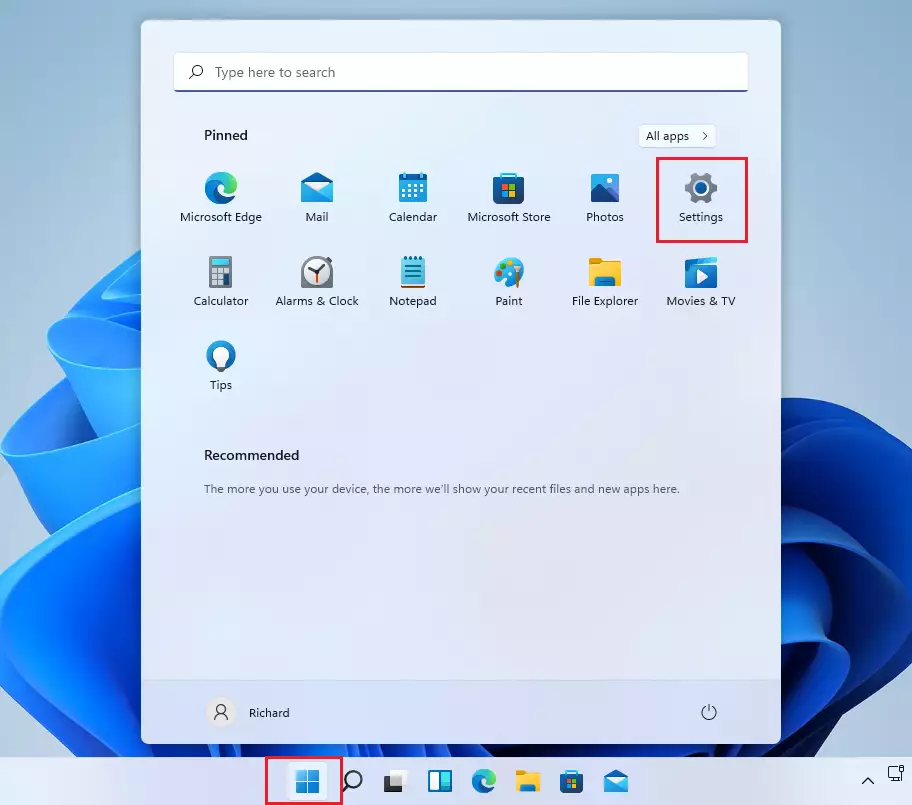
windows 11 start settings 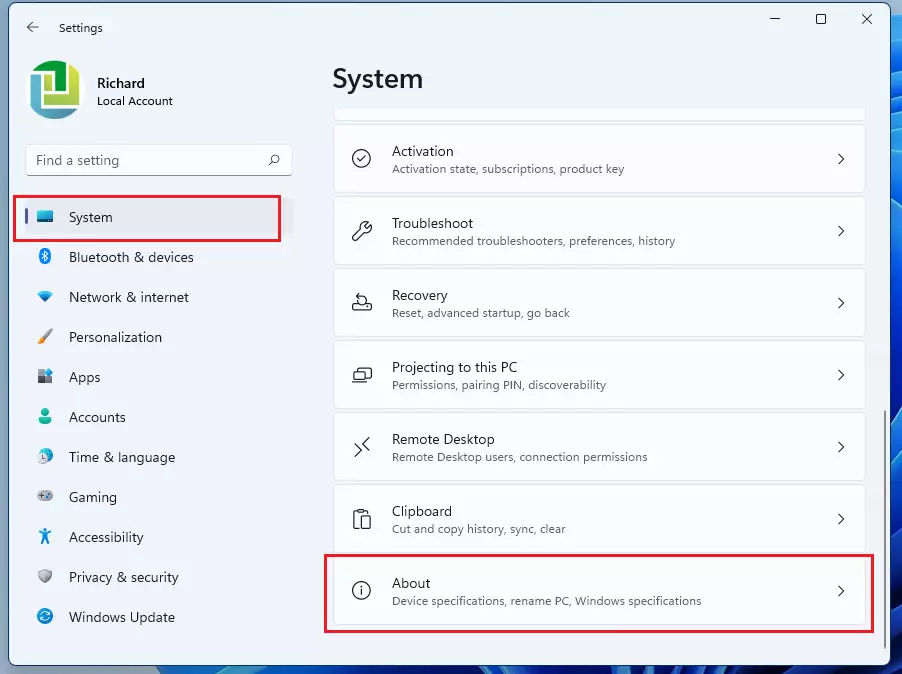
windows 11 about 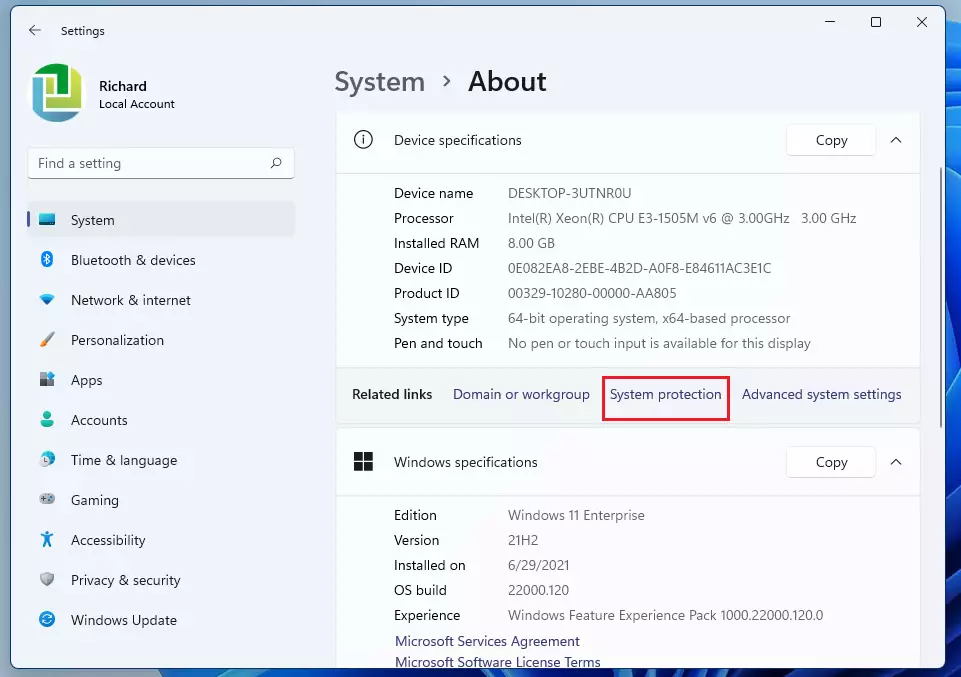
windows 11 system protection link - In the window that appears, select your drive (usually C:) and click Configure. The Protection Settings dialog opens. The Protection Settings list on the tab shows Off or On next to each drive, so you can check the current state here. If Configure is greyed out, you are not signed in as an administrator, or no drive is selected.
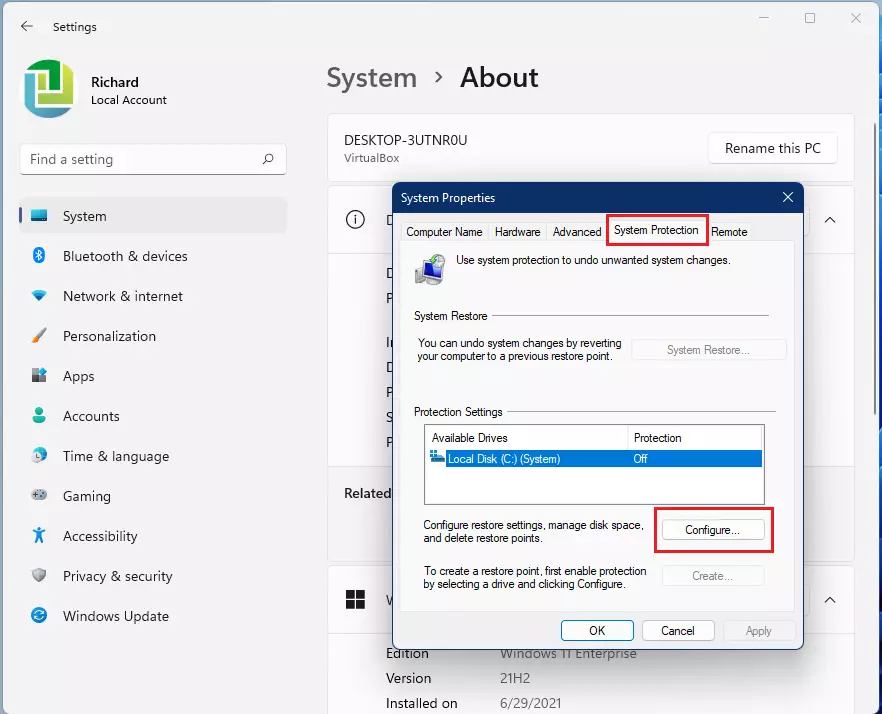
windows 11 restore point configure button - Select Turn on system protection. The Max usage slider, which was greyed out, becomes active.
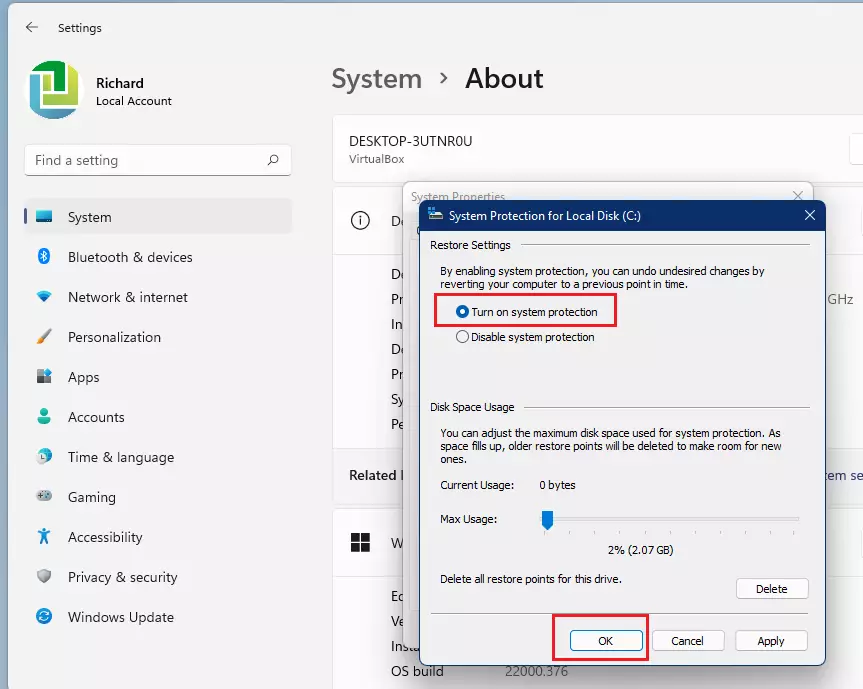
turn on system protection for drive windows 11 - Adjust the Max usage slider to set your disk space limit, then click OK. A setting of 5 to 10 percent works well for most PCs. When the limit is reached, Windows deletes the oldest restore points to make room for new ones. Back on the System Protection tab, your drive should now show On. Click OK once more to close System Properties.
Be aware that turning protection off deletes all existing restore points for that drive.
Understanding Restore Point Management
Windows automatically makes restore points before big updates, but you can also make them yourself anytime. It's a good habit before you install a driver, change system settings or run software you don't fully trust. System Protection must be on for the drive first, or the Create button will be greyed out.
- Open the System Protection tab in System Properties, as in the steps above.
- Click Create. A small dialog asks for a description.
- Type a name you will recognize later, such as "Before graphics driver update". Windows adds the date and time for you.
- Click Create and wait. It usually takes under a minute.
- When you see a message that the restore point was created successfully, click Close.
Disk Space Allocation and SSD Lifespan
For System Protection, it's good to set aside 5% to 10% of your drive space, and this won't hurt your SSD's life much. Restore points only store changes, so they are far smaller than a full copy of your drive. A larger limit lets Windows keep more and older restore points. A smaller limit saves space on a small drive but means older restore points disappear sooner. You can change the Max usage slider at any time without losing the restore points you already have, unless you lower it below what they currently use.
Summary
Turning on System Protection is important for Windows 11 users because it lets you easily fix problems using restore points. If something goes wrong after an update or install, open the System Protection tab and click System Restore. Then pick a restore point from before the problem started and follow the prompts. Windows restarts during the process. Your personal files stay in place, but apps and drivers installed after that restore point are removed.
Was this guide helpful?

About the Author
Richard
Tech Writer, IT Professional
Richard is a writer at Geek Rewind who turns complex IT tasks into clear, step-by-step guides. He draws on years of hands-on experience in system administration and enterprise IT operations, focusing on Windows, Linux and WordPress: the problems people actually run into, and the fixes that work. His server and WordPress guides come from systems he runs himself. Richard builds and maintains the platform behind Geek Rewind, from its Ubuntu servers and Nginx configuration to its custom WordPress plugins. Many new tutorials start with readers' questions, and he's always glad to answer them in the comments.




No comments yet — be the first to share your thoughts!