How to Enable or Disable Projecting to this PC in Windows 11

You enable or disable Projecting to this PC in Windows 11 to control whether your computer can wirelessly receive screen mirroring from other Miracast-compatible devices.
This Windows 11 feature transforms your PC into a Miracast receiver, allowing you to wirelessly display content from your phone, tablet, or another laptop directly onto your screen, acting like a wireless second monitor.
You can turn Projecting to this PC on or off through the optional features settings, typically found under Apps > Optional features.
Open Settings, go to System, then select Projecting to this PC. Configure the dropdown menu to enable or disable the feature. Ensure the Wireless Display optional feature is installed if the option is greyed out.
Prerequisites for Wireless Display
Before you start, your hardware must support Wi-Fi Direct and Miracast. Most modern computers support this, but older hardware might not. You also need the Wireless Display feature installed as an Optional Feature in Windows.How to check if your PC supports Miracast
1. Press Windows Key + R, type dxdiag, and hit Enter. 2. Click Save All Information and open the text file. 3. Search for Miracast. If it says Available, your PC is ready.How to Enable or Disable Projecting to this PC
Follow these steps to manage your settings. Note: This process requires admin privileges to modify system-wide display settings.-
- Open Settings by pressing Windows Key + I.
-
-
windows 11 new settings button
-
-
- Click System on the left sidebar.
-
-
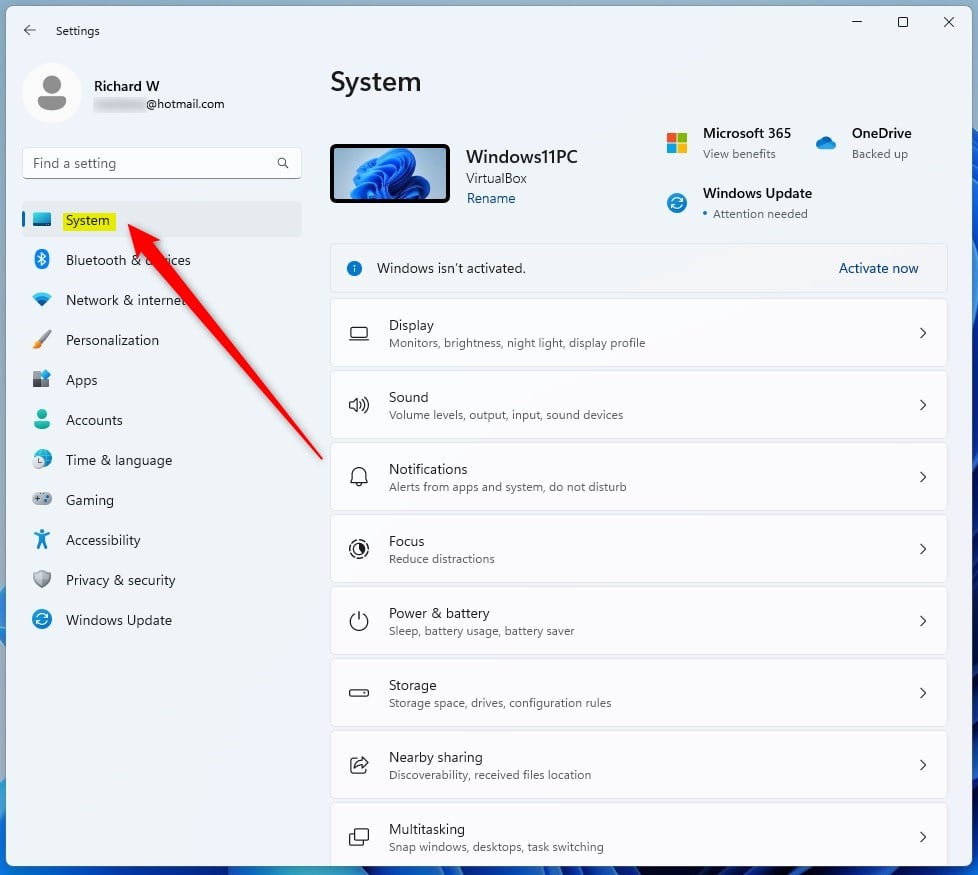
windows 11 system tile
-
-
- Select Projecting to this PC.
-
-
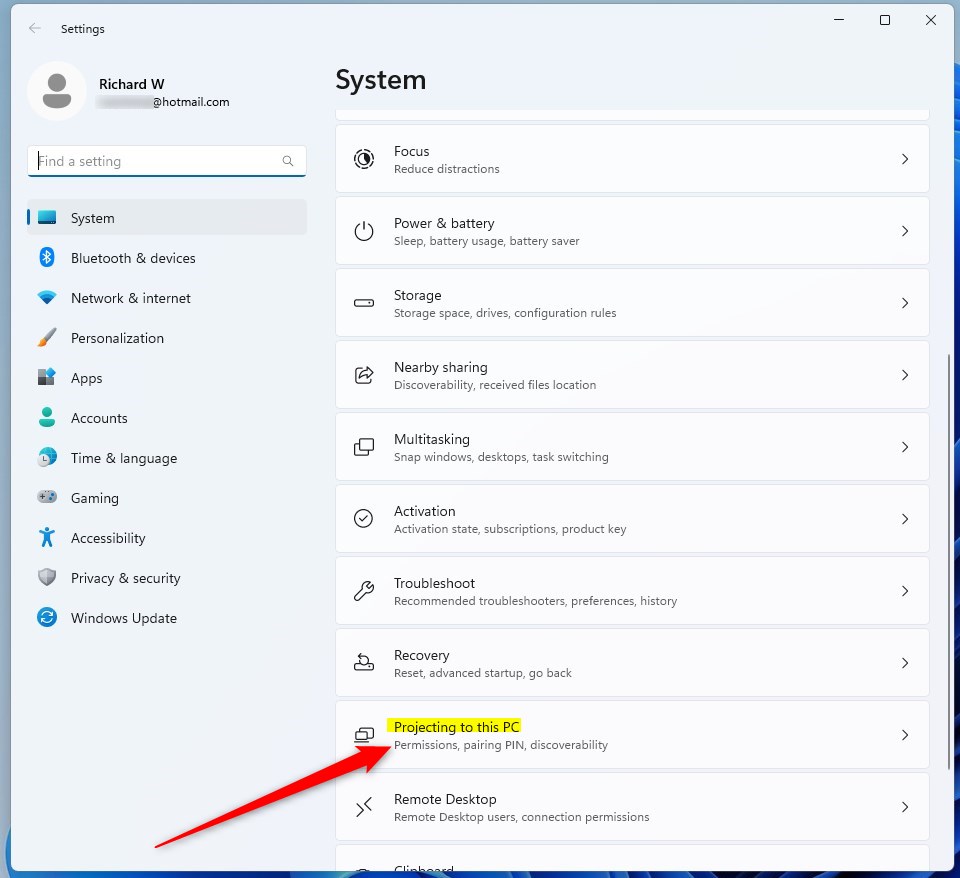
windows 11 projecting to this pc tile
-
-
- Choose your preferred connection mode from the dropdown menu.
-
-
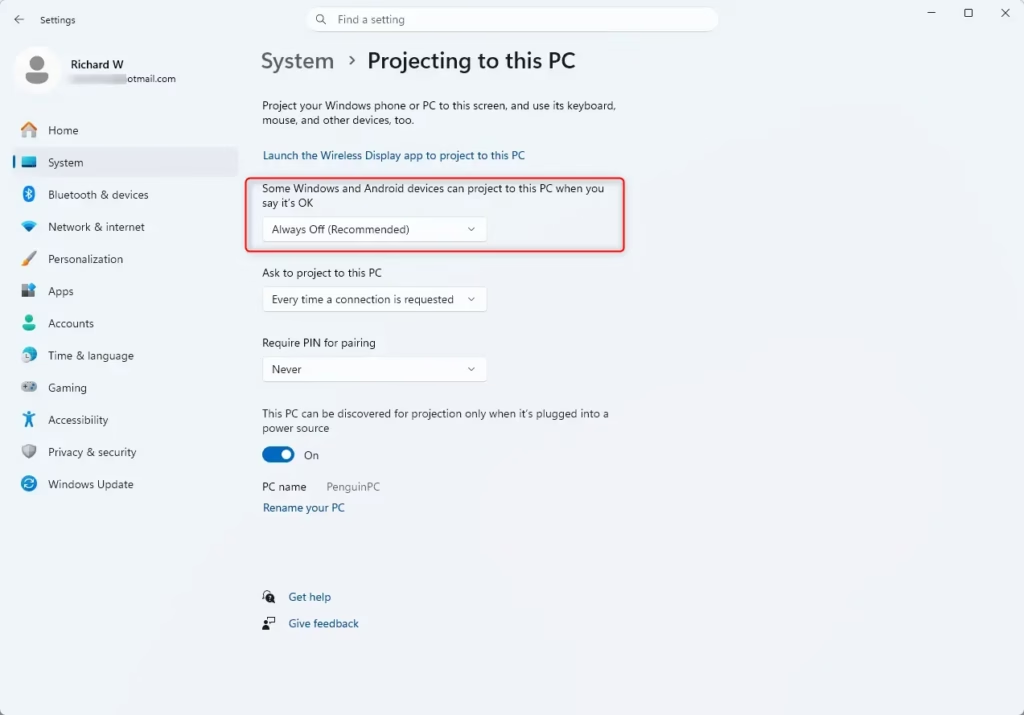
Windows 11 settings screen for Projecting to this PC, currently disabled.
-
Troubleshooting Connection Issues
If the ‘Projecting to this PC’ option is greyed out, you probably need to add the Wireless Display feature to Windows. This is a common fix when you can’t start projecting your screen. If the Projecting to this PC option is greyed out, you likely need to install the Wireless Display feature. Go to Settings > Apps > Optional features > View features and search for Wireless Display. Install it and restart your computer. If you experience lag, ensure both devices are on the same 5GHz Wi-Fi network to improve bandwidth.Summary
Projecting to this PC lets you share your screen wirelessly using Miracast, making it easy to show your content on another display. By checking that your computer supports the Wireless Display feature and setting up your network, you can mirror your device’s screen. Projecting to this PC is a powerful way to share screens wirelessly using Miracast. By ensuring your hardware supports the Wireless Display feature and configuring your network settings, you can easily mirror devices. Remember to keep your settings on ‘Always Off’ when not in use to maintain your system’s security. For more details, visit the official Microsoft support page.Do I need an internet connection to project to my PC?
Can I project to a PC that is not on the same Wi-Fi network?
Was this guide helpful?

About the Author
Richard
Tech Writer, IT Professional
Richard, a writer for Geek Rewind, is a tech enthusiast who loves breaking down complex IT topics into simple, easy-to-understand ideas. With years of hands-on experience in system administration and enterprise IT operations, he’s developed a knack for offering practical tips and solutions. Richard aims to make technology more accessible and actionable. He's deeply committed to the Geek Rewind community, always ready to answer questions and engage in discussions.



[…] change how often your computer asks for permission to “Ask to project to this PC” when projecting to this PC in Windows […]
[…] guide explains how to turn the “Require PIN for pairing” feature on or off when projecting to this PC in Windows […]