How to Partition a Hard Drive in Windows 11

Partitioning a hard drive in Windows 11 creates separate logical sections on your physical storage, treating each as an independent drive.
This allows you to organize your data more effectively, keeping your operating system files separate from your personal documents and applications.
For instance, if Windows 11 encounters an issue, data on a separate partition remains safe. You can easily manage this new space, which will appear with a new drive letter in File Explorer.
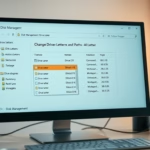
Open Disk Management by typing diskmgmt.msc into the Start menu search. Right-click unallocated space on your drive, select “New Simple Volume,” and follow the wizard to set size, drive letter, and format.
Understanding Disk Management Concepts
Before you begin, it is helpful to understand the terminology. Unallocated space is storage that has not been assigned to a partition yet. Primary partitions are where you can install an operating system, while Logical partitions are used for data storage. When initializing a disk, you will choose between GPT (the modern standard for drives over 2TB) and MBR (the older standard for legacy compatibility).
How to create a partition in 🪟 Windows 11
You can manage your storage using the built-in Disk Management tool. Note: These steps require administrator privileges.
- Click the Start menu and type
diskmgmt.mscorCreate and format hard disk partitions. - Select the result that matches to open the tool.
The tool will show your current drives. If a drive is new, it will be labeled as Unallocated or Not Initialized.
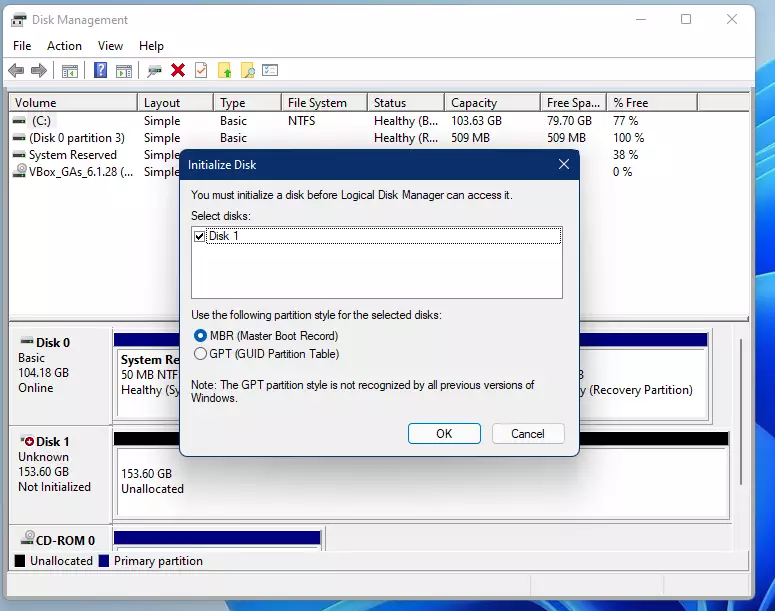
If prompted to initialize a new disk, click OK. You can choose the GPT style if your drive is larger than 2 TB, or stick with the default MBR for standard use.
How to create a new simple partition
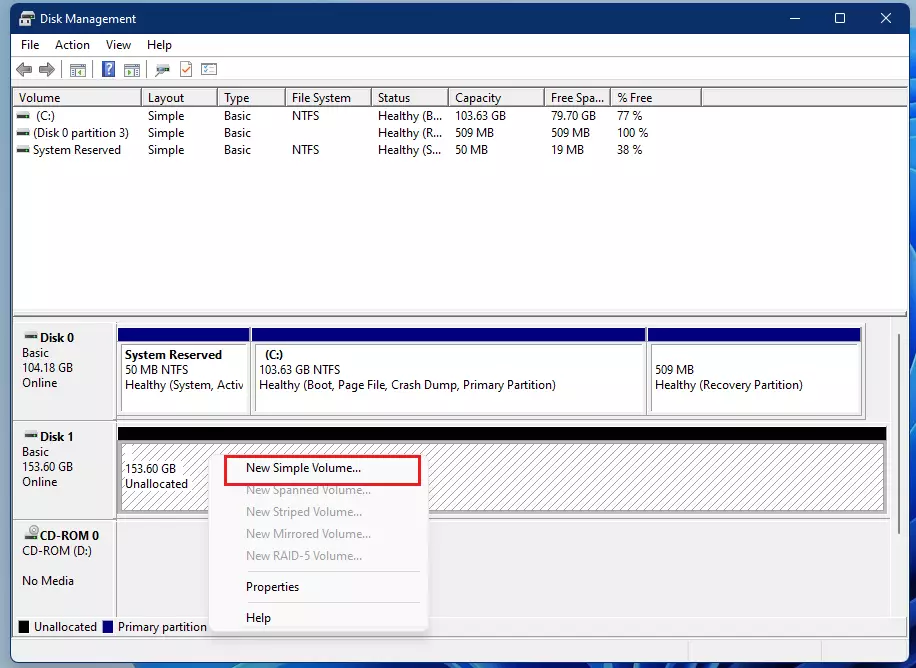
- Right-click the area labeled
Unallocatedon your drive. - Select New Simple Volume from the menu. Official Microsoft Documentation
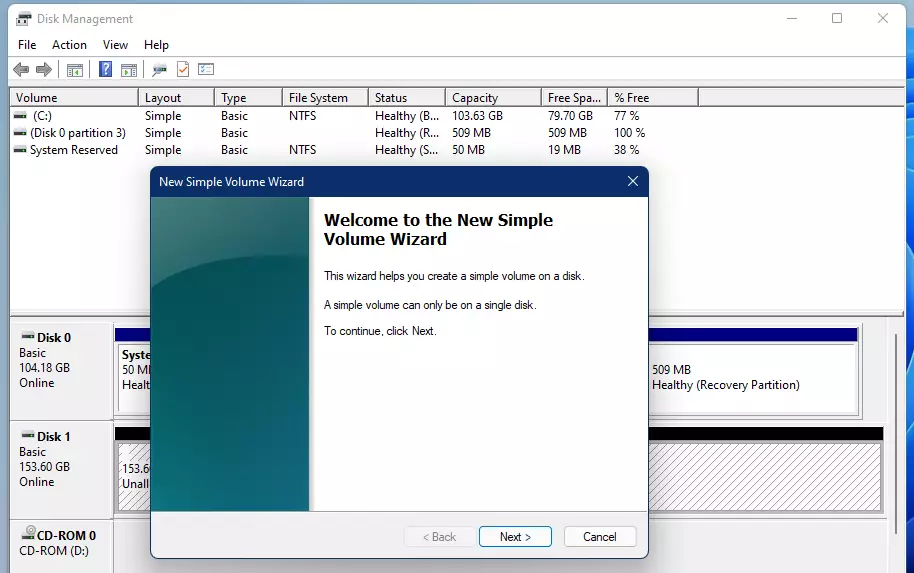
- A wizard will appear. Click Next to start.
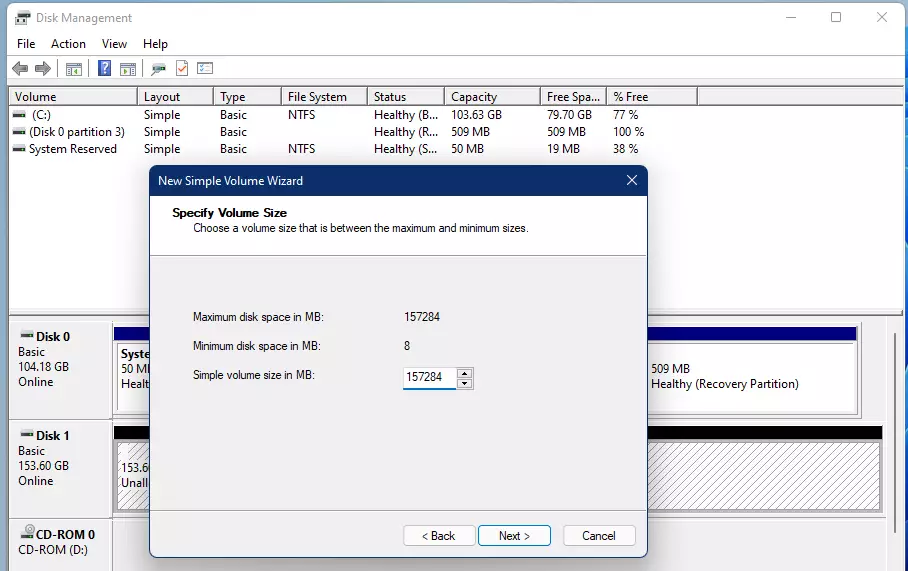
- Choose how big you want the partition to be. The default uses all available space. If you want multiple sections, type a smaller number in MB.
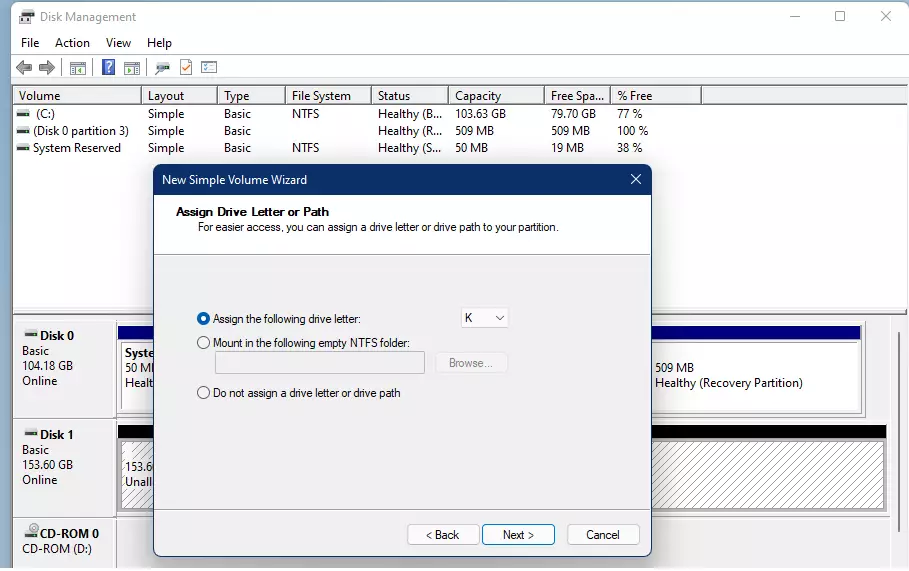
- Pick a drive letter for your new section and click Next.
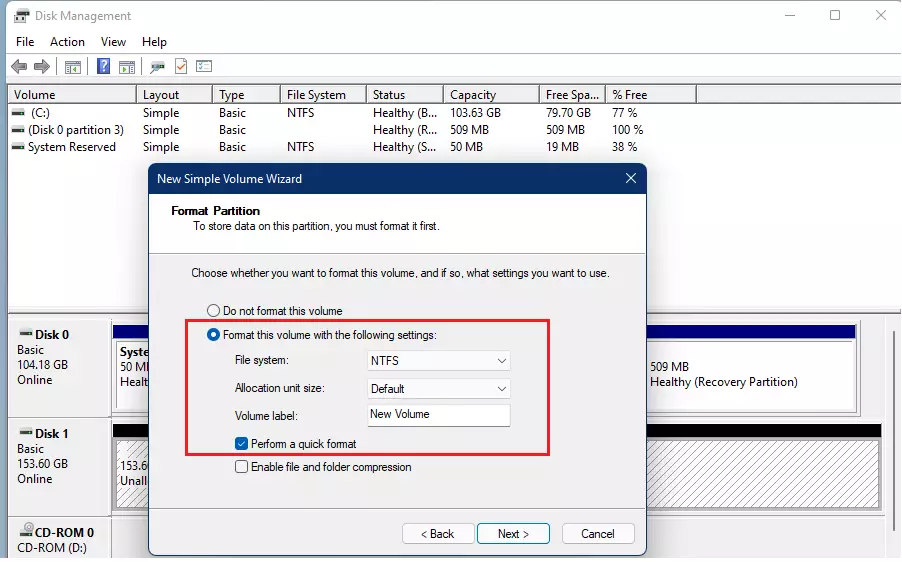
- Make sure the format is set to NTFS for Windows compatibility. You can give the partition a name here if you like. Click Next.
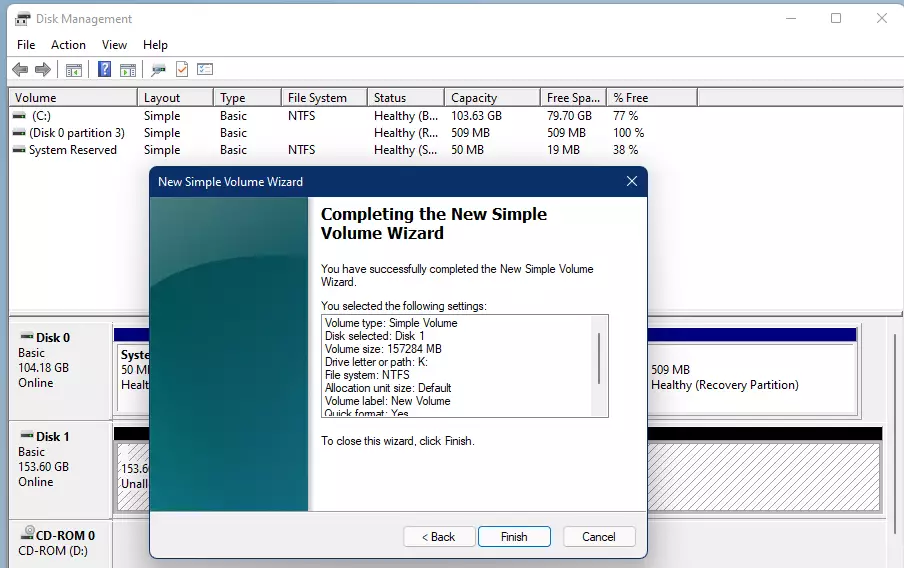
- Click Finish.
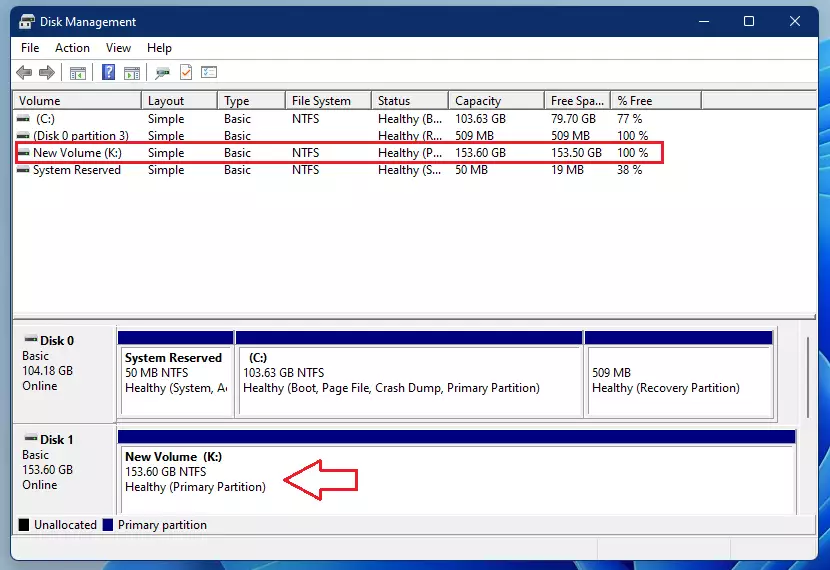
Your new partition is now ready to use and will show up in your computer’s storage list.
Advanced Disk Management and Troubleshooting
Sometimes you may need to use the diskpart command-line utility for more control. This tool allows you to manage disks, partitions, and volumes directly from the command prompt. If the Extend Volume option is greyed out, it is usually because there is no contiguous unallocated space immediately to the right of the partition you want to expand.
Summary
Partitioning is a great way to organize your computer’s storage. By using the built-in Disk Management tool, you can create separate areas for your files, which helps keep your data safe and your system running efficiently. Remember that you can always resize these partitions later if your storage needs change, provided you have enough unallocated space.
Can I partition a drive without formatting?
Yes, you can shrink an existing partition to create unallocated space without formatting the original data. However, creating a new partition from that space requires formatting the new section with a file system like NTFS or exFAT so Windows can store files on it.
What is the difference between shrinking a volume and creating a new one?
Shrinking a volume reduces the size of an existing partition to free up space. Creating a new volume uses that freed-up unallocated space to build a separate, usable drive letter. You must shrink a drive first if you do not have any empty, unallocated space available.
Is it safe to partition my C: drive while Windows is running?
Windows allows you to shrink the C: drive while the system is running. However, you cannot delete or format the partition currently running your operating system. Always ensure you have a full system backup before modifying the system partition to prevent potential boot issues or data loss.
Was this guide helpful?

About the Author
Richard
Tech Writer, IT Professional
Richard, a writer for Geek Rewind, is a tech enthusiast who loves breaking down complex IT topics into simple, easy-to-understand ideas. With years of hands-on experience in system administration and enterprise IT operations, he’s developed a knack for offering practical tips and solutions. Richard aims to make technology more accessible and actionable. He's deeply committed to the Geek Rewind community, always ready to answer questions and engage in discussions.

No comments yet — be the first to share your thoughts!