How to Change Display Language in Outlook for Windows 11

You can change the display language for the Outlook app on Windows 11 by adjusting a setting within Outlook itself.
The display language determines the language of menus, buttons, and other interface elements you see while using Outlook. This process applies specifically to the new Outlook for Windows, and also works for Classic Outlook for Microsoft 365 and Outlook.com.
Remember, changing your Outlook display language does not alter your overall Windows 11 system language. You’ll need to follow separate steps for that if desired.
Why Change Your Outlook Display Language?
The new Outlook for Windows brings modern features and a simple design. It works with Exchange-backed Microsoft 365 work or school accounts, Outlook.com, Hotmail, and Gmail accounts. Changing the language helps you understand the app better. It makes reading and writing emails easier. You can use the language you feel most comfortable with. This is especially helpful if you work with people who speak different languages.
What Happens When You Change Language?
When you update your language settings, the Outlook interface, menus, and buttons will switch to your chosen language. If you choose to rename your default folders, your Inbox, Sent Items, and Trash folders will be updated to match the local naming conventions of that language.
How to Change the Language in New Outlook
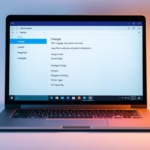
Follow these steps to update your interface settings:
Step 1: Open Outlook on Windows 11
Open the new Outlook app on your computer. Click Start, type Outlook, and press Enter.
Step 2: Open Settings
Click the Settings gear icon in the top right corner.

Step 3: Go to Language Settings
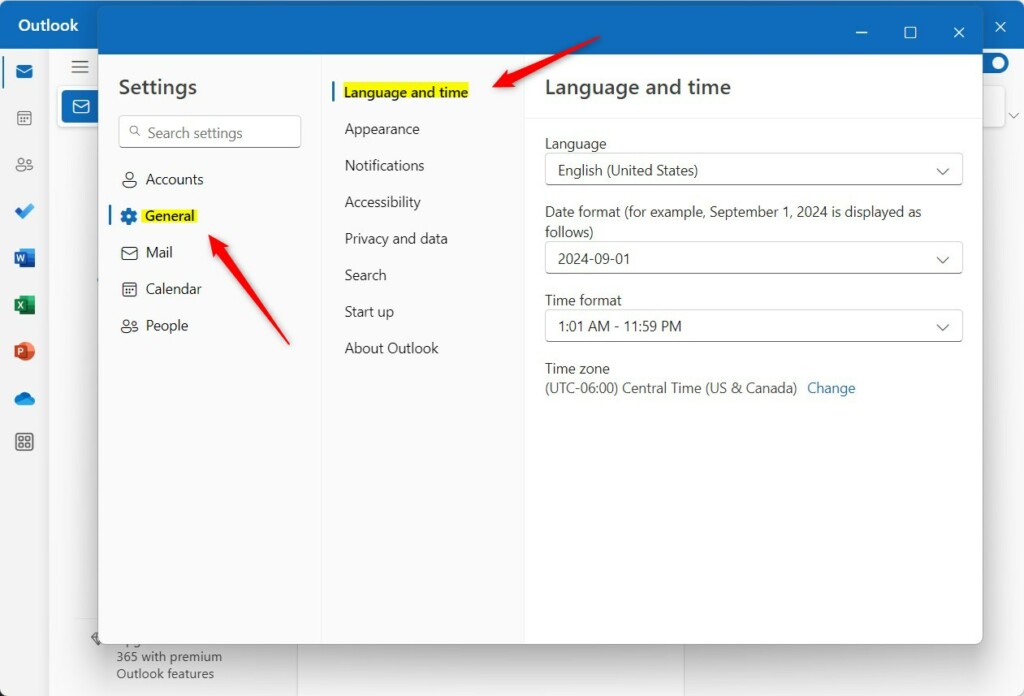
Select General on the left, then click Language and time.
Step 4: Select Your New Language
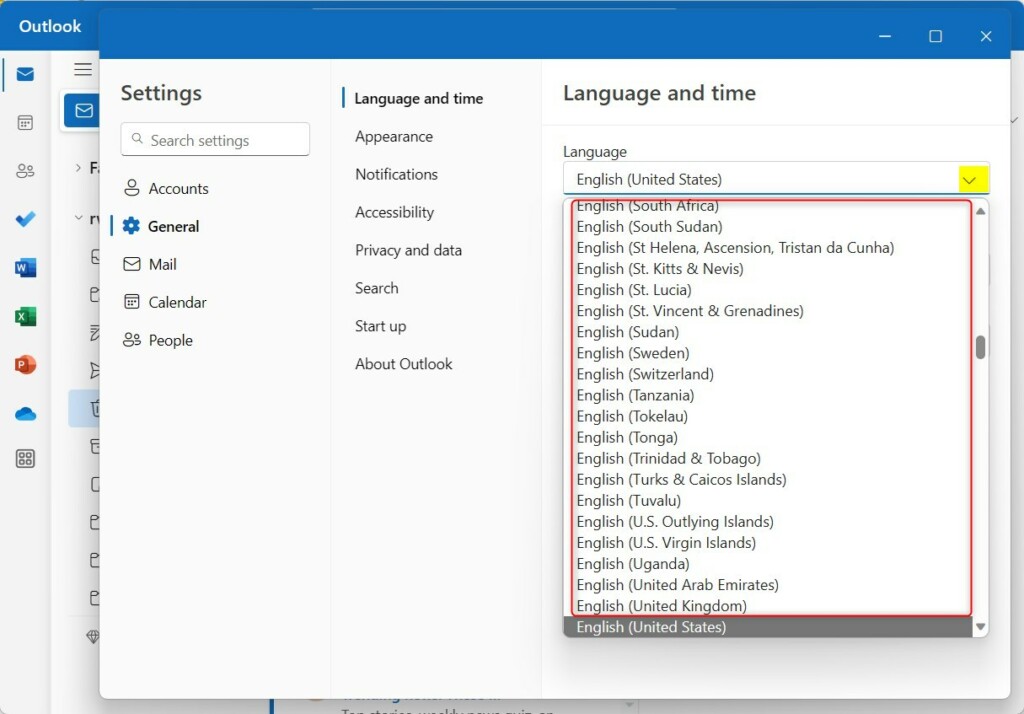
Use the Language dropdown menu to pick your preferred display language.
Step 5: Rename Default Folders
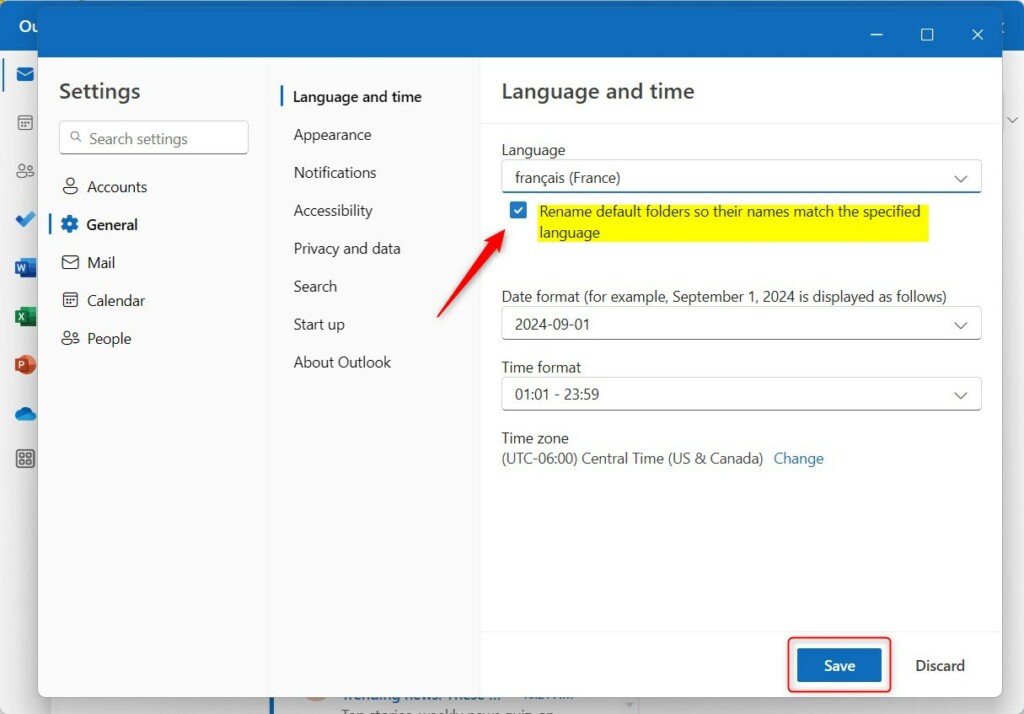
Check the box “Rename default folders so their names match the specified language”. This ensures your folder structure is localized.
Classic Outlook vs. New Outlook
In Classic Outlook, language settings are often tied to your Office installation. You may need to download a Language Accessory Pack if your desired language is not listed. If you are using a managed work computer, you might need to contact your IT department to install these packs as they often require admin privileges.
Troubleshooting Language Display Issues
If your language does not change, check your System Region Settings in Windows 11. Sometimes, the OS-level language dependency overrides app settings. Ensure your Office Proofing Tools are also installed if you want spell check to match your display language.
Summary
Changing your language in Outlook improves your workflow and accessibility. Whether you are using the new Outlook or the classic version, you can easily adjust your display and folder names through the settings menu. Remember to restart the app to finalize your changes.
Why do my folder names remain in the original language?
Folder names often remain in the original language if you did not check the box to rename default folders during the language change process. To fix this, return to your Language and time settings, ensure the rename option is selected, and restart the Outlook application to trigger the folder update.
Can I have different languages for spell check and display?
Yes, you can. Outlook allows you to set a display language for the interface while choosing a different language for your proofing tools. You can manage these separately under the Language settings menu by adding specific proofing languages to your Microsoft 365 account settings.
Was this guide helpful?

About the Author
Richard
Tech Writer, IT Professional
Richard, a writer for Geek Rewind, is a tech enthusiast who loves breaking down complex IT topics into simple, easy-to-understand ideas. With years of hands-on experience in system administration and enterprise IT operations, he’s developed a knack for offering practical tips and solutions. Richard aims to make technology more accessible and actionable. He's deeply committed to the Geek Rewind community, always ready to answer questions and engage in discussions.


No comments yet — be the first to share your thoughts!