How to Remove Image Backgrounds in Windows 11 Paint

Background removal in Windows 11 Paint lets you cut out the main subject of a picture and erase the scenery behind it with a single click. Microsoft added this built-in AI tool to Paint version 11.2309.30.0 and newer in late 2023, so you no longer need a heavy photo editor for quick cutouts.
Open any image in Paint, click the background removal button on the toolbar, and the app separates your subject from the rest of the frame. You get a clean cutout that you can save as a transparent PNG file or paste into another project. It works on Home and Pro alike, because it is part of the app and not a Windows edition feature.
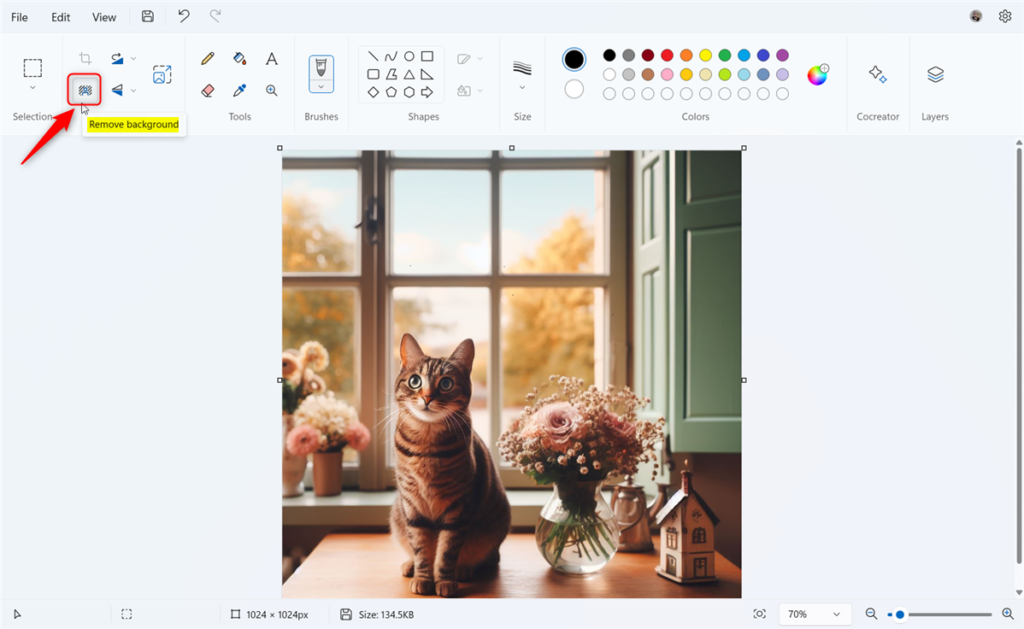
Open Paint, go to File Open to load your picture, then click the Remove background button on the top ribbon. Paint erases the scenery behind your subject in a second or two, leaving a transparent area you can save as a PNG. This needs Paint version 11.2309.30.0 or newer, and it works on Windows 11 Home and Pro.
How to remove an image background
You can remove a background in Paint with one click, using the built-in automatic subject detection. Open your picture in Paint, click the background removal button on the top ribbon, and Paint erases everything around the main subject. You can then save the cutout or place it on a new picture without complex photo editing software.
This method works best on photos where the subject stands out clearly from what is behind it. The steps below cover the whole picture. If you only want one part of the image, use the selection method further down.
- Open the Paint app on your computer. Click Start, type Paint, and pick the app from the results. A blank canvas appears with the ribbon across the top.
- Click on File and select Open. Choose your image file from File Explorer . Your picture now shows on the canvas.
- Click the Remove background button on the top ribbon. If you can’t see it, the ribbon may be too narrow to show every button, so widen the Paint window. If the button is not there at all, your Paint app is out of date. See the troubleshooting section below.
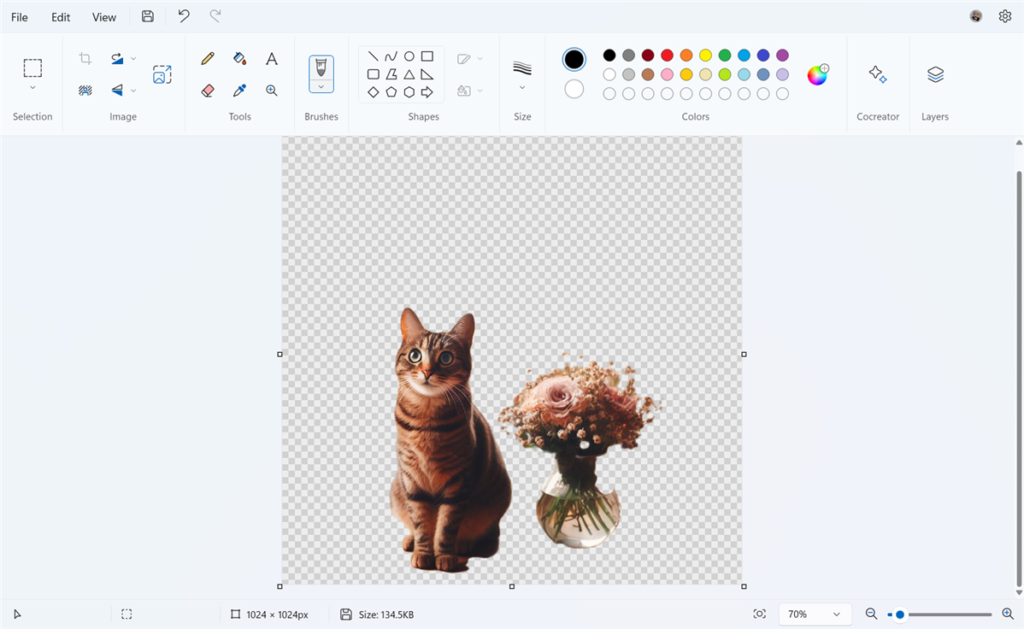
Paint detects and removes the surrounding scenery automatically. This usually takes a second or two. When it finishes, the background shows as a checkerboard-style transparent area and only your subject remains.
If the result is not what you wanted, press Ctrl+Z to undo it and go back to your original image. Nothing is changed on disk until you save, so you can try again freely.
Sometimes a picture holds several objects and you only want one of them. Isolating a specific part of the picture takes a few extra steps, so that only the section you choose is affected and the rest of the image stays as it is.
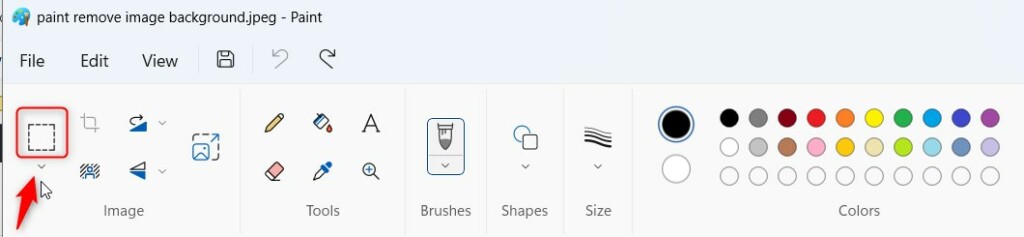
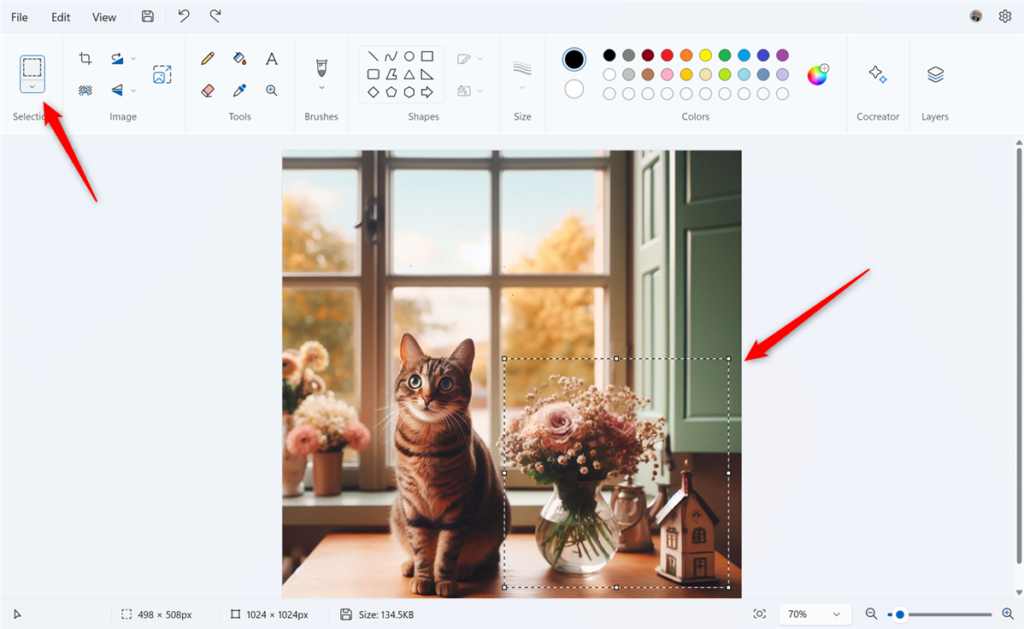
- Click the Select button on the ribbon. Your pointer changes to a crosshair, ready for you to draw a selection.
- Draw a box around the object you want to keep. Drag from one corner of the object to the opposite corner. A dotted outline shows the area you selected. Leave a little space around the object so that no edges are cut off.
- Click the Remove background button again. Paint now works only inside the selection and removes everything in the box that is not your subject. Press Ctrl+Z if you want to undo and redraw the box.
This ensures cutouts remain clean when moved across other layers. Turn it on before you drag your cutout onto another image, so the transparent areas stay see-through instead of covering what is underneath.
Note: Performing system-wide updates to keep apps current requires admin privileges (administrator accounts with full system control) to install the latest Windows updates.
If you are on a work or school PC and can't install updates, ask your IT administrator. Updating only the Paint app through the Microsoft Store often works from a standard account, but a managed PC may block it.
Paint vs. Paint 3D and AI Tools
Windows 11's Paint app offers an efficient way to remove backgrounds for everyday jobs. Paint 3D provides a Magic Select tool for more detailed work, but Microsoft has deprecated Paint 3D, so it may not be installed on your PC. AI features in other apps can handle broader image editing tasks.
For most cutouts, such as a product photo or a profile picture, regular Paint is enough. Move to a full photo editor only when you need fine control over hair, shadows or very busy backgrounds.
Why PNG is Required for Transparency
JPG files lack support for transparency, which means saving your cutout as a JPG turns transparent areas white. Checking the file format in the Save As menu prevents this issue.
To do it, go to File Save as, choose PNG picture, give the file a name, and save. Use a new file name so your original photo stays untouched.
Troubleshooting Common Errors
Missing background removal buttons in Paint usually point to outdated software, requiring an application update through the Microsoft Store.
- Open the Microsoft Store from the Start menu.
- Click Library in the left sidebar.
- Click Get updates and wait for Paint to finish updating.
- Close Paint if it is open, then start it again and check the ribbon for the Remove background button.
If the button is still missing, check that Windows itself is up to date in Settings Windows Update
Summary
Windows 11 Paint offers a fast way to edit photos without expensive software. Clicking the Remove background button cuts out subjects instantly, and drawing a selection first lets you target one object. Saving your work as a PNG preserves transparency. This makes simple, clean graphics easy to produce for any computer user.
Have a question about this guide?
Answered by AI from this guide. Good questions may be added to this page — please don't include personal details.
Did this guide fix your problem?

About the Author
Richard
Tech Writer, IT Professional
Richard is a writer at Geek Rewind who turns complex IT tasks into clear, step-by-step guides. He draws on years of hands-on experience in system administration and enterprise IT operations, focusing on Windows, Linux and WordPress: the problems people actually run into, and the fixes that work. His server and WordPress guides come from systems he runs himself. Richard builds and maintains the platform behind Geek Rewind, from its Ubuntu servers and Nginx configuration to its custom WordPress plugins. Many new tutorials start with readers' questions, and he's always glad to answer them in the comments.
No comments yet — be the first to share your thoughts!