How to Manage Copilot Plugins in Windows 11

You manage Copilot plugins in Windows 11 by accessing the Copilot settings menu to enable or disable them.
Copilot plugins are extensions that give Windows Copilot access to information from third-party apps and services, like your Microsoft 365 data or an airline’s booking system. You can control which of these integrations are active right from your Windows 11 settings.
For example, you might disable a plugin for a personal app like Spotify to keep your listening habits private while keeping the Microsoft 365 plugin enabled for work-related tasks.
When you turn a plugin on, you give Copilot permission to fetch data from that specific source. Turning it off immediately revokes that access, giving you direct control over how Copilot uses your information.
Enable or disable Copilot plugins in Windows 11 via the Copilot settings. Open Copilot, click the Plugins icon, and use the switches to turn plugins on or off. Disabling the Search plugin deactivates all other plugins.
Enterprise Administrative Controls
If you’re an administrator, you manage Copilot plugins for your whole company in the Microsoft 365 admin center.
Preinstalled vs. Custom Plugins
Preinstalled plugins come standard with Microsoft 365 Copilot and provide basic functionality. Custom plugins are built by your internal developers to connect to your specific business apps. Managing these requires different levels of contributor permissions within your organization.
How to Manage Copilot Plugins in 🪟 Windows 11
Managing Copilot plugins in Windows 11 lets you control which extra tools Copilot can use, making it work better for your needs.
- Open the Windows Copilot by clicking its icon or pressing Windows key + C.
- Look for the Plugins (blocks) icon in the top right corner of the pane.
- To enable a feature, find it in the list and click the switch to the On position.
- To disable a feature, click the switch to the Off position.
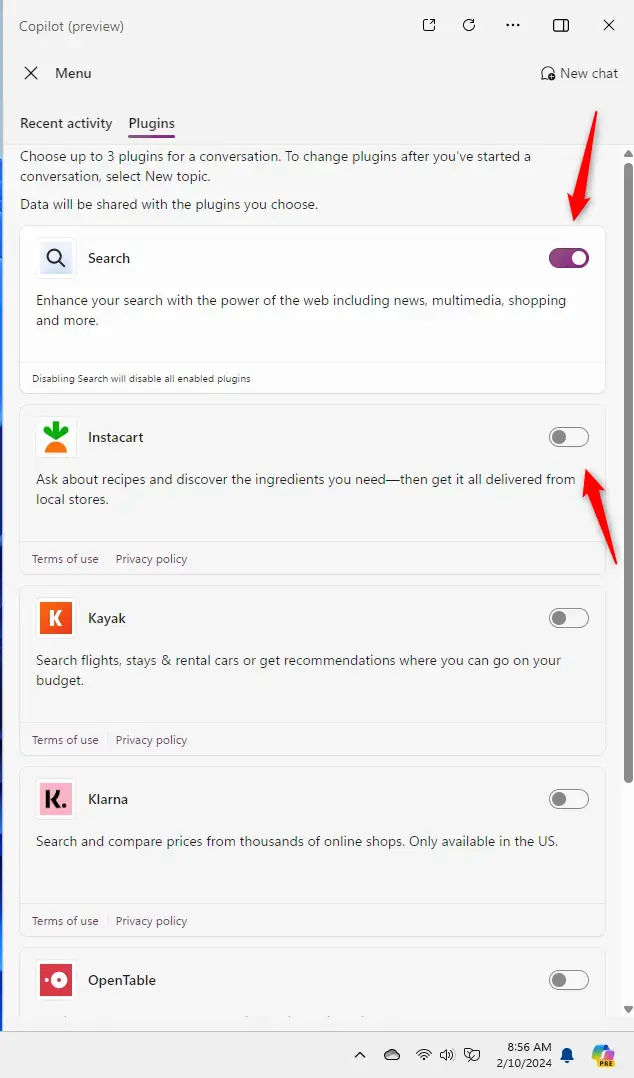
Note: If you turn off the “Search” plugin, all other plugins will be disabled automatically.
Summary
Managing Copilot plugins helps you stay productive and keeps your company data safe.
Related Articles
Who can manage Copilot plugins in an organization?
Only users with Global Administrator or specialized Copilot Administrator roles in the Microsoft 365 admin center can manage tenant-wide plugin policies. Individual users can only toggle plugins that have been explicitly enabled and approved for their use by the IT department.
Are plugins enabled by default in Microsoft 365 Copilot?
Some core plugins are enabled by default to ensure basic functionality. However, custom plugins and third-party integrations usually require explicit administrative approval and deployment through the admin center before they appear in the user interface for your employees.
Was this guide helpful?

About the Author
Richard
Tech Writer, IT Professional
Richard, a writer for Geek Rewind, is a tech enthusiast who loves breaking down complex IT topics into simple, easy-to-understand ideas. With years of hands-on experience in system administration and enterprise IT operations, he’s developed a knack for offering practical tips and solutions. Richard aims to make technology more accessible and actionable. He's deeply committed to the Geek Rewind community, always ready to answer questions and engage in discussions.



[…] from Edge, refresh Copilot prompts, resize the Copilot side pane, delete recent activity, enable or disable Copilot plugins, and […]