How to Enable Sticky Keys in Ubuntu Linux


Sticky Keys in Ubuntu Linux lets you press keyboard shortcuts one key at a time instead of holding them all down together. This built-in accessibility feature keeps modifier keys like Ctrl, Shift, and Alt active until you press your next key. For example, to copy text you press Ctrl, let go, then press C. You don’t have to hold both keys at once.
Ubuntu 22.04 LTS and newer versions include this option directly inside the system settings menu. You can turn it on in a few clicks, and no extra software or restart is needed. It helps if you have limited hand mobility, type one-handed, or just find multi-key combinations awkward.
Open Settings , navigate to Accessibility, then Typing, and toggle Sticky Keys to On. You can also enable it by pressing Shift five times. This feature holds modifier keys for you, simplifying keyboard shortcuts.
How to turn on or off sticky keys in Ubuntu Linux
Here is the short version. The rest of this guide shows each step in detail with screenshots.
- Open the Settings app.
- Click Accessibility.
- Under Typing, click Typing Assist (AccessX).
- Switch Sticky Keys to On.
Sticky Keys is now active. You can press shortcuts one key at a time, which helps if multi-key combinations are hard to hold together. The exact wording of the menu entries can differ slightly between Ubuntu releases. The layout above matches Ubuntu 22.04 LTS and newer with the default GNOME desktop.
You can also switch Sticky Keys on and off from the keyboard, so you don’t have to open Settings each time. This is handy if you share a computer with someone who doesn’t need the feature. The setup is covered near the end of this guide.
Ubuntu keeps most system configuration in one central place. You can change settings, create new users, update the system and more from the System Settings panel. Accessibility options such as Sticky Keys live there too. There are two ways to open it.
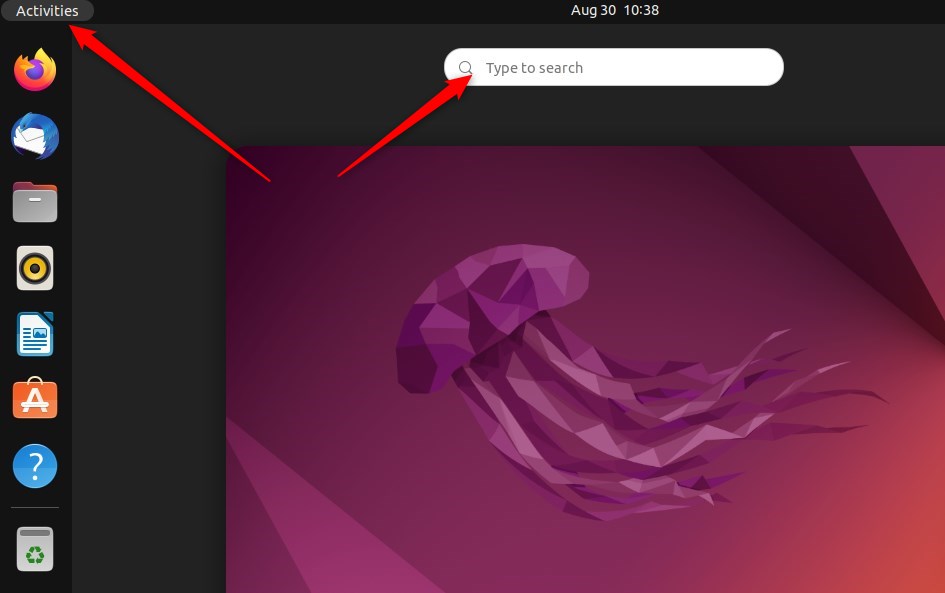
The first way is the Activities overview, where you can search for the app by name. The second way is the System menu, described below.
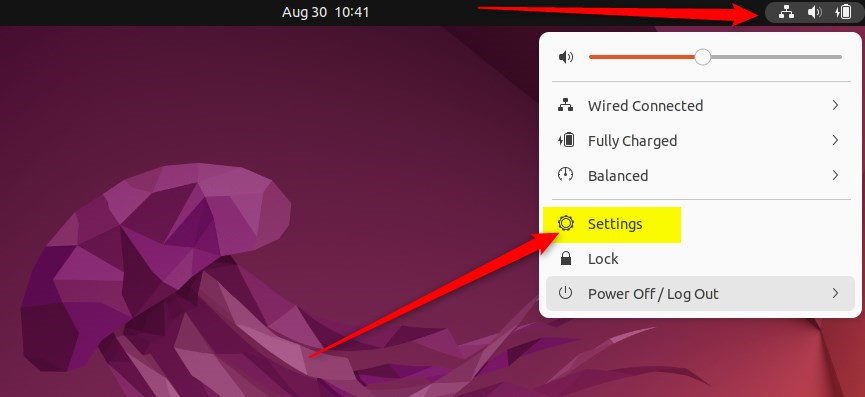
- Click the System menu at the top-right corner of the top bar on your desktop. It holds the network, volume and power icons. A drop-down panel opens.
- In the System menu, select Settings, as highlighted below. The Settings window opens, with a list of categories on the left.
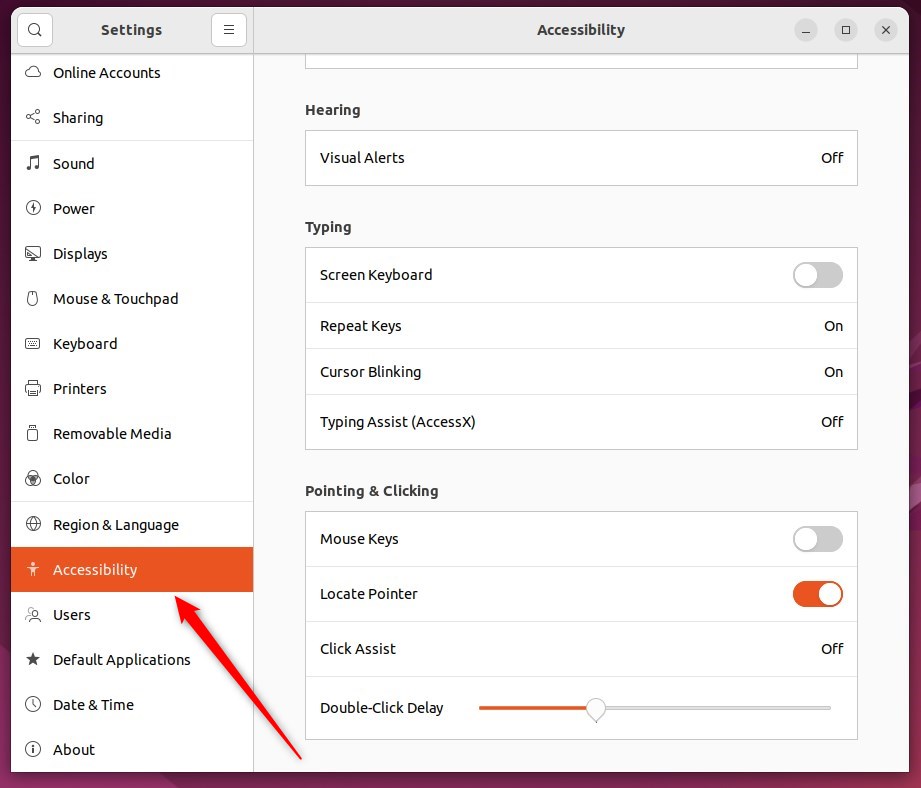
- In the Settings app, click the Accessibility tile to open the panel. If you don’t see it right away, scroll down the left sidebar. The panel lists options for seeing, hearing, typing and pointing.
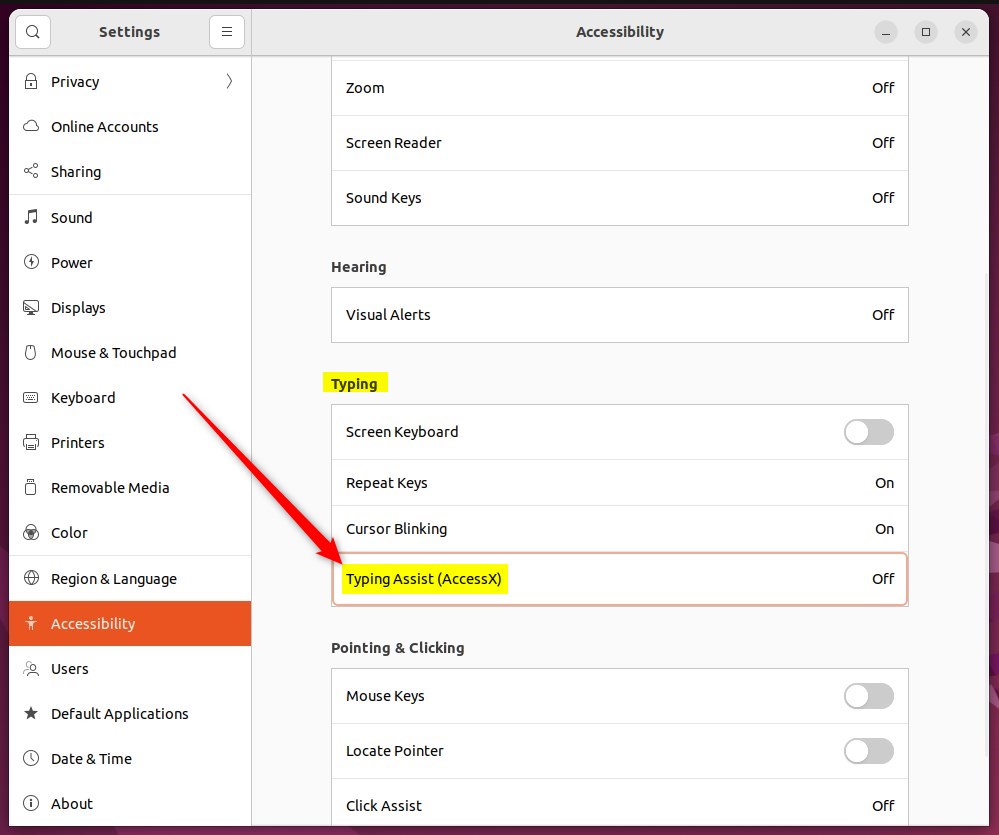
- Scroll to the Typing section and select Typing Assist (AccessX) to expand the menu. A small window opens with the typing aids, including Sticky Keys.
- In the pop-up window, switch the Sticky Keys toggle to On. The switch changes colour to show it is active, and the change takes effect immediately. You don’t need to save anything or restart.
To test it, press and release Ctrl, then press another key such as A. The system should treat the two presses as one combination (Ctrl+A). Pressing a modifier key twice in a row usually locks it on until you press it a third time.
To turn it off, open the same window and switch Sticky Keys back to Off. Your keyboard then goes back to normal behaviour straight away.
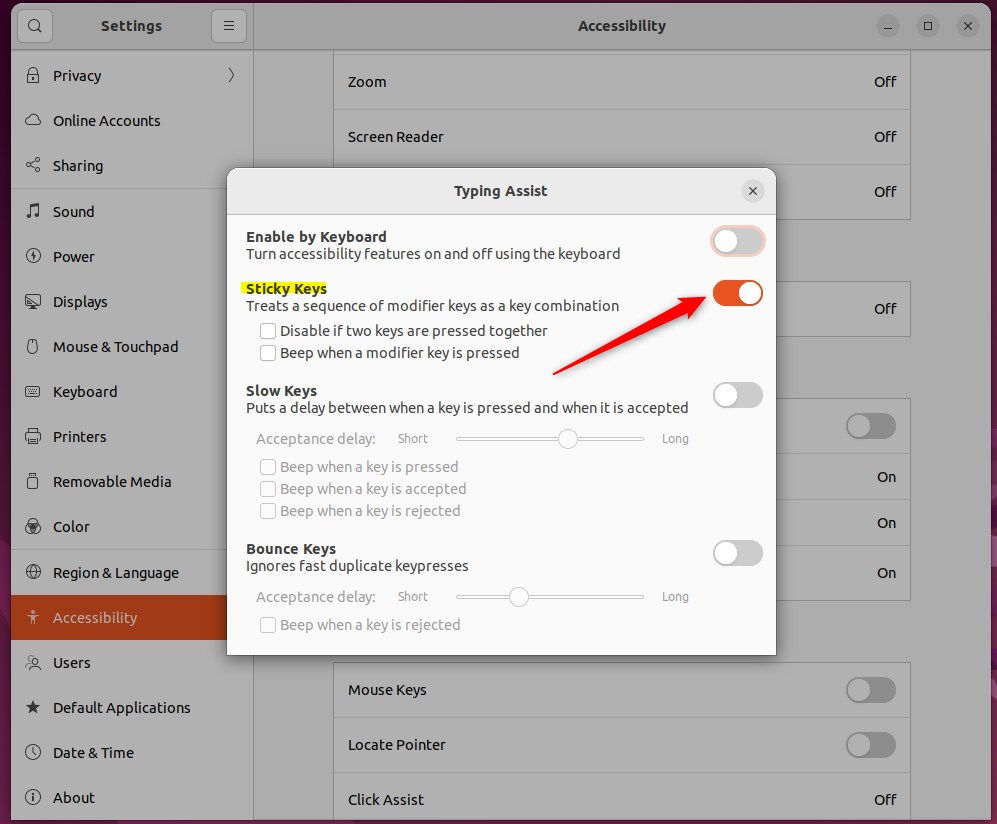
In the same Typing Assist window, you can also turn on the Enable by Keyboard switch. It lets you switch Sticky Keys on and off from the keyboard without opening Settings.
With this option on, pressing Shift five times in a row enables or disables Sticky Keys. Keep this in mind if you don’t use Sticky Keys. If the switch is on, five quick presses of that key can turn the feature on by accident. If that happens, switch Enable by Keyboard to Off.
That completes the process, and you can close the Settings app. Sticky Keys stays on, or off, until you change it again. The setting is saved to your user account, so it is still there after you log out or restart.
Conclusion:
- Enabling Sticky Keys in Ubuntu Linux makes the keyboard easier to use for people who struggle to press several keys at the same time.
- You can switch Sticky Keys on or off at any time in Settings Accessibility Typing Assist (AccessX), and the change applies immediately.
- The Enable by Keyboard option lets you toggle Sticky Keys from the keyboard itself, which saves a trip into Settings.
- With these steps you can set up, test and undo Sticky Keys on Ubuntu without extra software.
Have a question about this guide?
Answered by AI from this guide. Good questions may be added to this page — please don't include personal details.
Did this guide fix your problem?

About the Author
Richard
Tech Writer, IT Professional
Richard is a writer at Geek Rewind who turns complex IT tasks into clear, step-by-step guides. He draws on years of hands-on experience in system administration and enterprise IT operations, focusing on Windows, Linux and WordPress: the problems people actually run into, and the fixes that work. His server and WordPress guides come from systems he runs himself. Richard builds and maintains the platform behind Geek Rewind, from its Ubuntu servers and Nginx configuration to its custom WordPress plugins. Many new tutorials start with readers' questions, and he's always glad to answer them in the comments.
No comments yet — be the first to share your thoughts!