Enable Slow Keys in Ubuntu: A Step-by-Step Guide


Slow Keys is an accessibility setting in Ubuntu that makes the system wait for you to hold a key down for a specific time before it types the letter. This feature stops accidental double keystrokes and helps if you have hand tremors or make frequent typos.
You can turn on Slow Keys in the Ubuntu Settings app and adjust the delay time to match your typing speed.
Open Settings , navigate to Accessibility, then Typing Assist (AccessX), and toggle Slow Keys to On. You can also enable keyboard toggling in the same menu.
How to enable or disable slow keys in Ubuntu Linux
To enable slow keys Ubuntu users need to open the Settings panel from the system menu and find the Accessibility section. From there, select Typing and turn on the Slow Keys switch so the system waits for you to hold down a key before it types the letter.
Turn the feature on or off by following these steps.
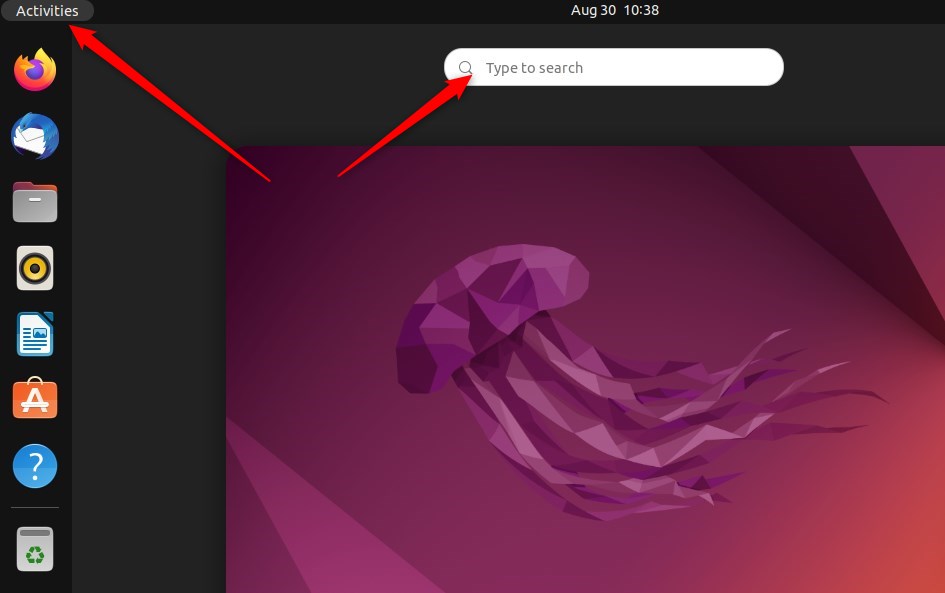
Open the System Settings panel from your system menu.
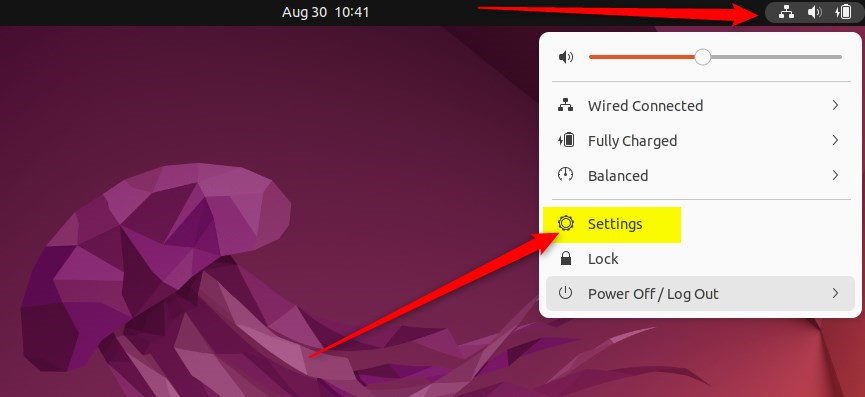
Click the System menu in the top-right corner of the desktop top bar.
Select Settings to open the configuration window, as highlighted below.
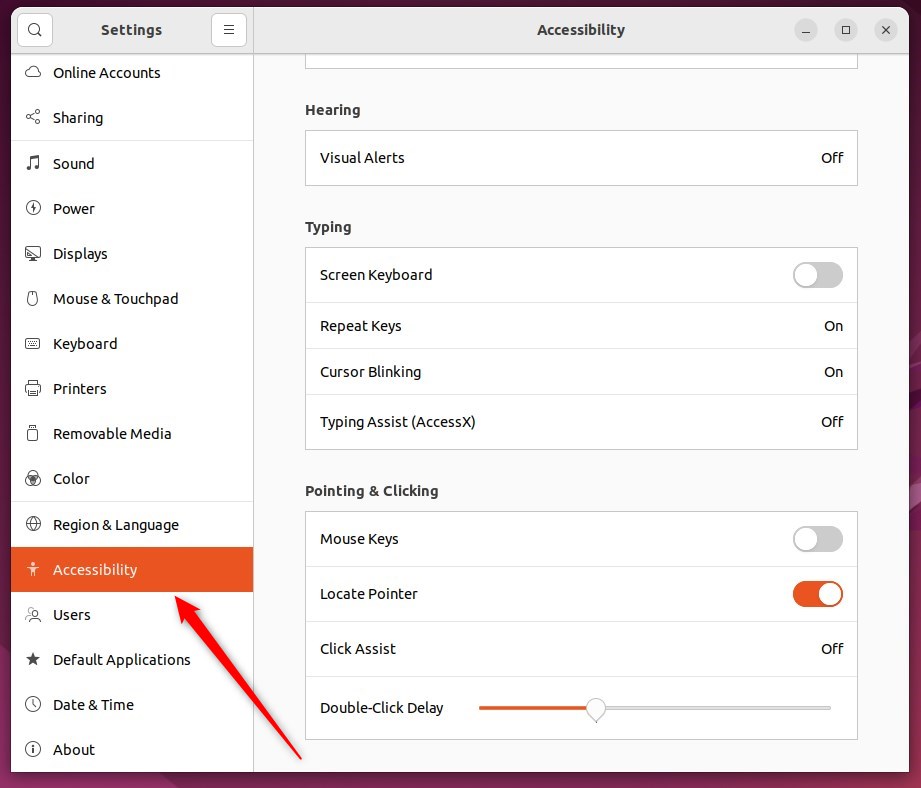
Click the Accessibility tile inside the Settings app to open the necessary panel.
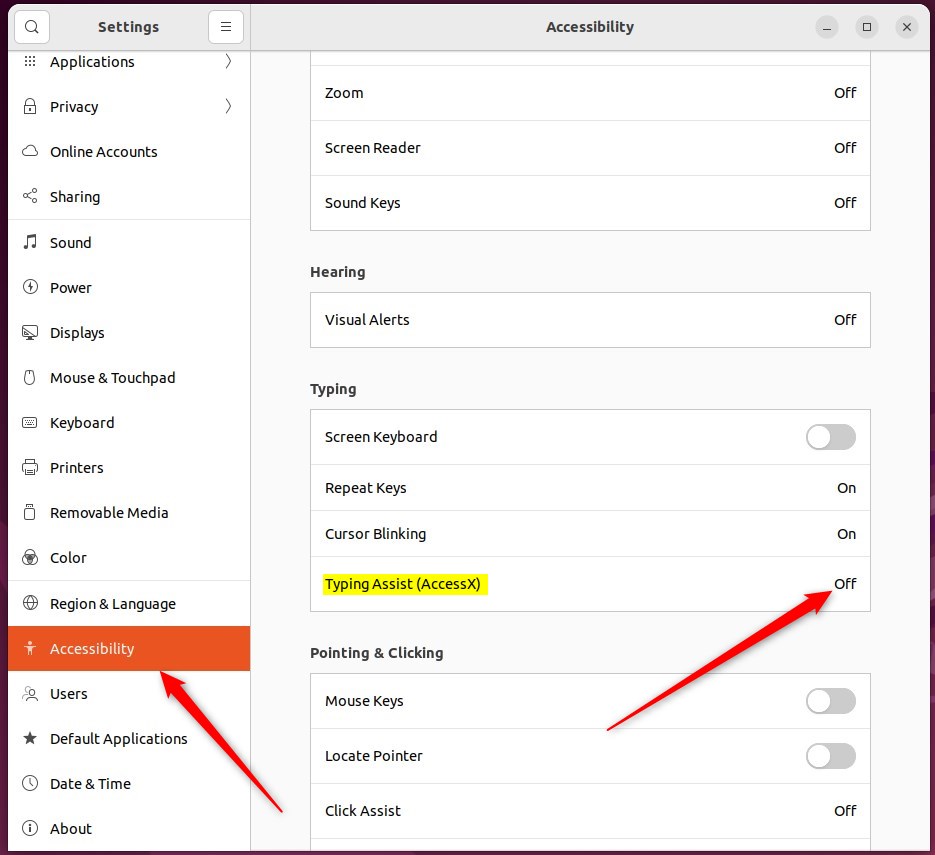
Locate the Typing section under Accessibility to reveal the Typing Assist (AccessX) option, highlighted below.
Toggle the Slow Keys button to the On position on the Typing Assist window.
Flip that same button to the Off position to turn the function off.
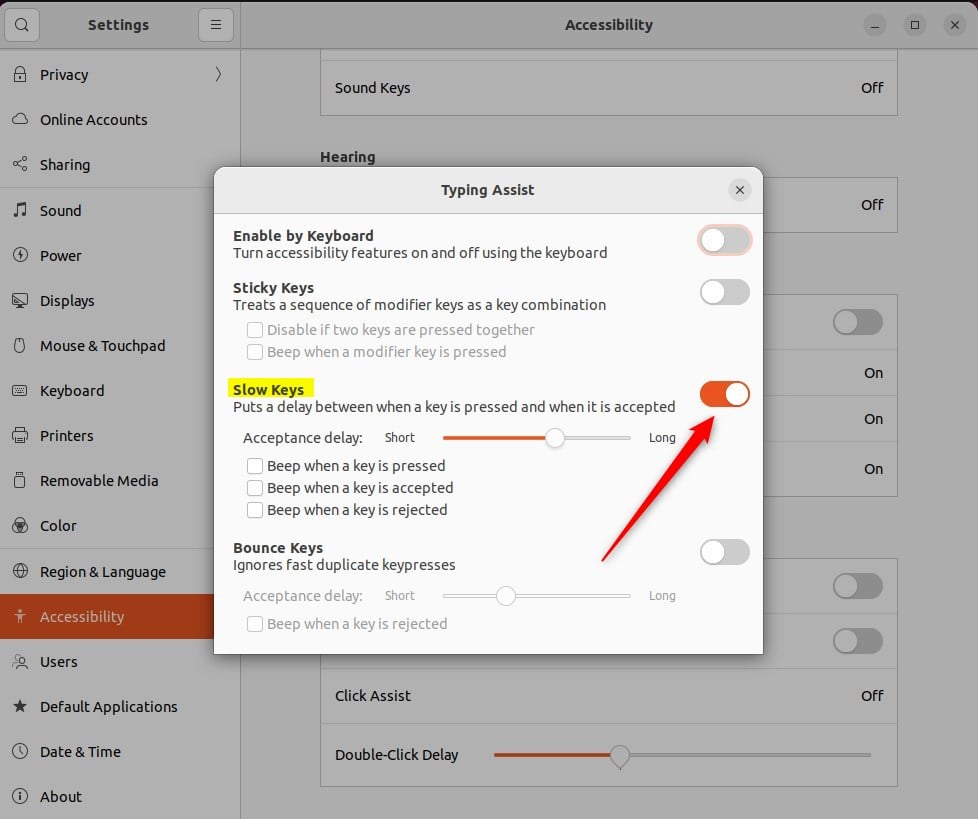
Activate the Enable by Keyboard switch to toggle slow keys directly from the keyboard. Pressing and holding Shift for eight seconds enables or disables the feature once that option is active.
Close the Settings app to complete the setup process.
Conclusion:
- Enabling Slow Keys in Ubuntu Linux can benefit individuals with typing difficulties, particularly those who tend to strike keys or accidentally experience hand tremors.
- The feature instructs Ubuntu Linux to ignore keys that are not held down for a certain period, aiding in accurate and intentional keystrokes.
- Following the outlined steps, users can easily enable or disable Slow Keys and even utilize the convenient 'Enable by Keyboard' switch for added accessibility.
Was this guide helpful?

About the Author
Richard
Tech Writer, IT Professional
Richard is a writer at Geek Rewind who turns complex IT tasks into clear, step-by-step guides. He draws on years of hands-on experience in system administration and enterprise IT operations, focusing on Windows, Linux and WordPress: the problems people actually run into, and the fixes that work. His server and WordPress guides come from systems he runs himself. Richard builds and maintains the platform behind Geek Rewind, from its Ubuntu servers and Nginx configuration to its custom WordPress plugins. Many new tutorials start with readers' questions, and he's always glad to answer them in the comments.



No comments yet — be the first to share your thoughts!