How to Roll Back Device Drivers in Windows 11 Easily

- 11 steps
- Needs administrator rights
- Includes a restart or sign-out
Device driver rollback in Windows 11 replaces a broken hardware driver update with the version that was installed before it. This built-in tool fixes problems caused by faulty updates, such as a graphics card showing a black screen or a Wi-Fi card that keeps dropping connections.
You need an administrator account on your PC to complete these steps. The steps are the same on Windows 11 Home and Pro, and a rollback does not remove your files or personal settings. It only changes the driver for one device.
To roll back a device driver in Windows 11, open Device Manager, right-click the device, choose Properties, then click the Driver tab and select Roll Back Driver. Windows restores the previous driver for that one device, and your files and settings stay untouched. You need an administrator account, and the steps are the same on Windows 11 Home and Pro.
Why You Might Need to Roll Back a Driver
You might need to roll back a driver when a recent update causes hardware problems such as screen glitches, audio failures, or poor performance. Going back to the older driver removes the new bugs and restores stability when the latest manufacturer update does not suit your system.
- New BugsSometimes, new driver versions can introduce unexpected glitches or problems that weren’t there before.
- Compatibility IssuesA newer driver might not work well with other software or hardware you have.
- Performance ProblemsA new driver can sometimes make your device run slower or less reliably.
- Feature RemovalOccasionally, a new driver might remove a feature you used to rely on.
If a recent driver update caused trouble, rolling back is often the quickest fix. You can then wait for a future update to resolve the issue, or investigate the problem further. Before you start, think about when the problem began. If it started right after a driver or Windows update, a rollback is a good first move. If the device never worked properly, a rollback will not help.
How to Roll Back a Device Driver in 🪟 Windows 11
Here’s how to do it, step by step. The whole job takes only a few minutes.
Step 1Open Device Manager
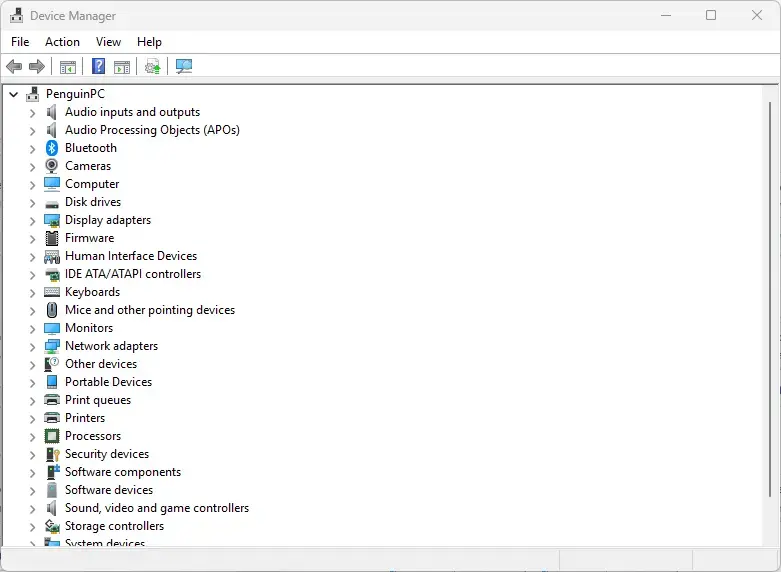
Device Manager is a built-in Windows tool. It lists every hardware component connected to your computer, along with the driver each one uses. There are three quick ways to open it. Pick whichever you prefer.
- Quickest WayRight-click the Start button (the Windows icon on your taskbar) and choose Device Manager from the menu.
- Using SearchClick the search icon on your taskbar, type “Device Manager,” and then click the Device Manager app when it appears.
- Keyboard ShortcutPress the Win+X together, then select Device Manager from the menu.
A window opens with a list of hardware categories, such as Display adapters, Network adapters and Sound, video and game controllers.
Step 2Find the Device with the Problematic Driver
Next, find the device that is causing the trouble. Each category in the list hides the devices inside it until you expand it.
- If your graphics card is acting up, look under Display adapters.
- If your webcam isn’t working, look under Cameras or Imaging devices.
- If your sound is distorted or missing, check Sound, video and game controllers.
- If your Wi-Fi keeps dropping, look under Network adapters.
- Click the small arrow next to the category name.
- Look at the list that opens below it. You should now see the specific hardware in that category.
If you are not sure which device is the culprit, look for a yellow warning triangle on an icon. That marks a device Windows has found a problem with. If several devices are listed, such as two display adapters on a laptop, pick the one that matches the symptom.
Step 3Open the Device’s Properties
The device’s Properties window holds all the details about that hardware, including its driver. You can open it in either of two ways.
- Double-click the device name.
- Or, right-click the device name and select Properties from the menu.
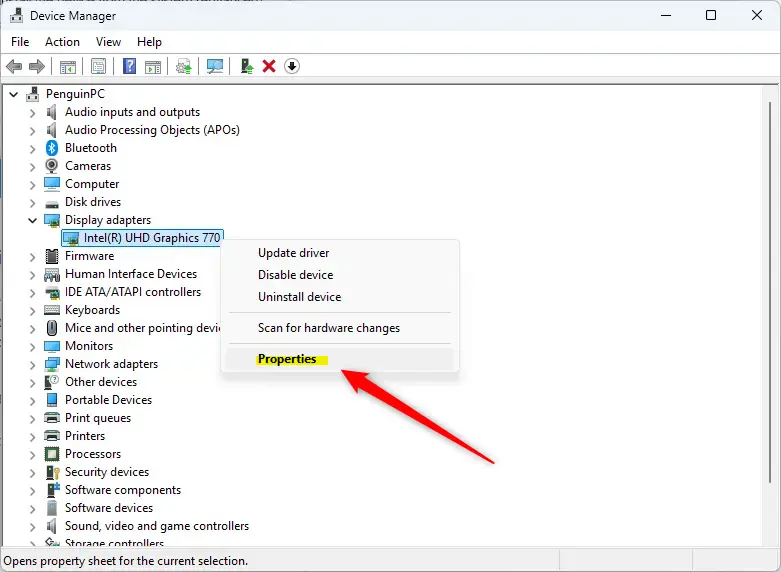
A new window opens for that device. Its title shows the device name followed by “Properties”, and it has several tabs along the top.
Step 4Access the Driver Settings
- Click the Driver tab.
You’ll see the driver provider, the driver date, and the driver version. Compare the date and version with when your problem started. The buttons Update Driver, Roll Back Driver and Uninstall Device sit below those details, and Roll Back Driver is the one you need here.
Step 5Click the “Roll Back Driver” Button
- Click Roll Back Driver if the button is available.
If the button is grayed out, no earlier version is stored, and you cannot use this feature for that device.
This typically happens when the device was recently installed, or when the driver was replaced during a major Windows update without keeping the previous version. In that case you have two options:
- Uninstall the device and let Windows reinstall it. Windows usually detects the hardware again after a restart and installs a driver.
- Find an older driver manually on the manufacturer’s website, then install it yourself.
Click Uninstall Device only if you are ready to reinstall the driver afterwards, because the device will not work until a driver is back in place.
Step 6Explain Why You’re Rolling Back
A pop-up window asks why you are rolling back the driver. Windows uses this feedback to track software issues, so pick the choice that best matches your situation. You’ll see options such as:
- My apps don’t work with this driver or similar wording such as “My computer stopped working properly.”
- “The driver caused problems.”
- “I don’t like this driver.”
- “Other”
The exact wording can differ slightly between driver types, so choose whichever fits best.
- Select the reason that matches your situation.
- If you chose Other, or want to add detail, type a brief explanation in the text box.
- Click Yes to confirm that you want to roll back the driver.
Step 7Wait for the Rollback to Complete
Windows now removes the current driver and puts the older one back. This usually takes a minute or two. Leave your computer on and do not close the window while it works.
The screen may flicker or go black for a moment, especially when you roll back a graphics driver. The display may also drop to a lower resolution for a few seconds. This is normal. Network adapters may disconnect briefly too.
When it finishes, you'll likely see a confirmation, or the window will close on its own. The Roll Back Driver button on the Driver tab will now be grayed out, because there is no older version left to go back to. On the Driver tab, check that the driver date and version have changed to the older ones.
Some drivers ask for a restart to finish the change. If Windows asks, restart the PC. If it doesn't ask, restarting is still a good idea when the problem hardware is a graphics or network device.
Step 8Close Device Manager
- Close the device's Properties window.
- Close Device Manager by clicking the X in the top-right corner of its window.
Then test the device. Open the app or do the task that was failing before, and see whether the problem is gone. If Windows later installs the same driver update again, you can pause updates for a while or wait for the manufacturer to release a fixed version.
Summary
To roll back a device driver in Windows 11, use Device Manager. Open the tool, find your hardware, open its properties, go to the Driver tab, and click Roll Back Driver to restore a stable system. If the button is grayed out, install an older driver from the manufacturer's website instead.
Have a question about this guide?
Answered by AI from this guide. Good questions may be added to this page — please don't include personal details.
Did this guide fix your problem?

About the Author
Richard
Tech Writer, IT Professional
Richard is a writer at Geek Rewind who turns complex IT tasks into clear, step-by-step guides. He draws on years of hands-on experience in system administration and enterprise IT operations, focusing on Windows, Linux and WordPress: the problems people actually run into, and the fixes that work. His server and WordPress guides come from systems he runs himself. Richard builds and maintains the platform behind Geek Rewind, from its Ubuntu servers and Nginx configuration to its custom WordPress plugins. Many new tutorials start with readers' questions, and he's always glad to answer them in the comments.
Cannot select “Roll Back Driver”, it is grayed out.
Same situation. Any solution to this problem?
Hello, Thank You for taking the time to help me. I did what you said.It seems my rollback driver is not even highlighted for me to click on
I want roll back driver
[…] open the Device Manager (devmgmt.msc) […]