How to Restore File Explorer Windows When You Log In

You can have File Explorer windows reappear in their last spots each time you log in to Windows 11 by flipping a setting.
This feature makes File Explorer remember the folders you had open during your last session, and then it automatically reopens them when your PC starts up.
To turn this on, you’ll go to Folder Options in Windows 11 and check a specific box for restoring previous folder windows.
When this setting is on, you won’t have to manually reopen your most-used drives or documents every time your PC starts up.
Enable “Restore previous folder windows at logon” in File Explorer Options. Open File Explorer, click More, then Options. Navigate to the View tab, check the box for the setting, and click OK.
What is File Explorer?
File Explorer is the app on your Windows PC that helps you find, open, copy, move, and organize your files and folders. Think of it like a digital filing cabinet you can click through.
Why Use “Restore previous folder windows at logon”?
When you enable this feature, Windows remembers all the File Explorer windows and folders you had open. The next time you log in, those same folders open automatically. This saves you time!
How to Turn On or Off “Restore previous folder windows at logon”
Follow these steps:
Open File Explorer Options:
- Click the Start button (Windows icon) or press the Windows key.
- Type File Explorer Options and press Enter.
- Or, open File Explorer (folder icon on your taskbar). Click the three dots (More) in the top menu, then choose Options.
Change the Setting:
- In the new window, click the View tab at the top.
- Look for the checkbox labeled “Restore previous folder windows at logon”.
- Check the box to turn it ON. Uncheck it to turn it OFF.
- Click OK to save your changes.
How to Use the Registry Editor to Change This Setting (Advanced)
You can change how File Explorer windows restore when you log in using the Registry Editor, but this is for advanced users and requires caution.
⚠️ Admin Privileges Required
Here’s how:
- Open the Registry Editor by typing
regeditin the Start menu search and pressing Enter. - Navigate to this folder in the left panel:
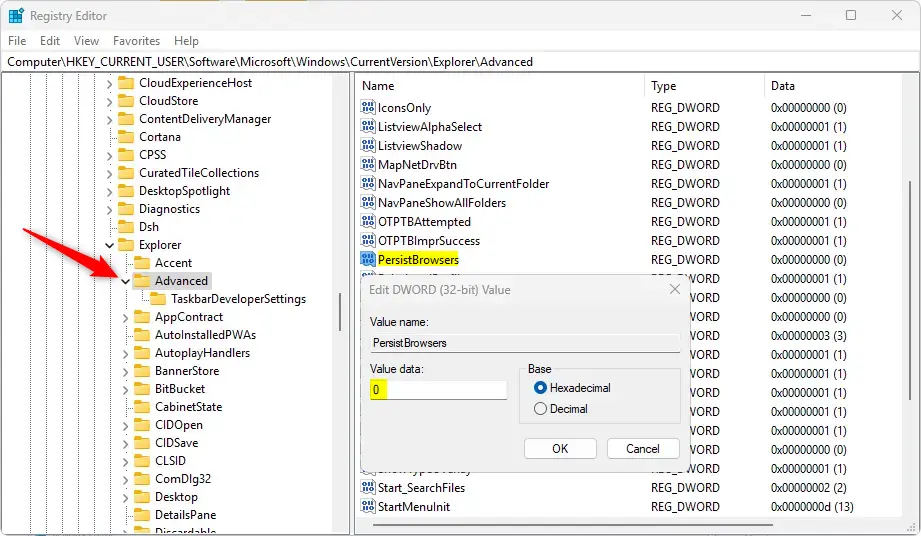
Computer\HKEY_CURRENT_USER\Software\Microsoft\Windows\CurrentVersion\Explorer\Advanced - Right-click on Advanced, then choose New > DWORD (32-bit) Value.
- Name this new DWORD value:
PersistBrowsers - Double-click PersistBrowsers and set the value to:
1to turn ON the folder restore feature0to turn OFF the feature
- Click OK and close the Registry Editor.
- Restart your computer to apply the changes.
Summary
- You can easily turn on or off “Restore previous folder windows at logon” from File Explorer Options.
- The Registry Editor method is for advanced users who want more control.
- Always back up your registry or create a restore point before making changes.
- Restart your PC after changing the settings to make sure they take effect.
- Enjoy having your folders open automatically just like you left them!
To restore File Explorer windows when you log in, you can use the simple File Explorer Options setting or the advanced Registry Editor method.
How to Use File Explorer in Windows 11
How to Copy Files from a USB Drive in Windows 11
How to Delete Files and Folders in Windows 11
How do I get my File Explorer back?
If you’ve hidden the left navigation pane, restore it. Select Start > File Explorer , or select the File Explorer icon on your taskbar.
How to get old explorer back?
Now press Enter. Control Panel will open in File Explorer. Click the up arrow button to find the old File Explorer. Click here to view the old File Explorer. The view has opened.
Was this guide helpful?

About the Author
Richard
Tech Writer, IT Professional
Richard, a writer for Geek Rewind, is a tech enthusiast who loves breaking down complex IT topics into simple, easy-to-understand ideas. With years of hands-on experience in system administration and enterprise IT operations, he’s developed a knack for offering practical tips and solutions. Richard aims to make technology more accessible and actionable. He's deeply committed to the Geek Rewind community, always ready to answer questions and engage in discussions.


No comments yet — be the first to share your thoughts!