How to Hide the Account Protection Section in the Windows Security Apps on Windows 11


Declutter the Windows Security app or stop accidental changes with a quick tweak.
Open gpedit.msc to access Local Group Policy Editor. Navigate to Computer Configuration Administrative Templates Windows Components Windows Security Account protection, then double-click “Hide the Account protection area” and select “Enabled” to hide it.
Applies to
This guide covers hiding the Account Protection section in Windows 11 Pro, Enterprise, and Education editions using Group Policy. The registry method works on every edition, including Home. Windows 10 is out of support since October 14, 2025, so this guide targets Windows 11.
Why hide the Account Protection section?
The Account Protection section in Windows Security holds settings such as your Windows Hello sign-in and the PC lock settings for when you’re away. Hiding it keeps other people from changing these options, whether by accident or on purpose.
What you get when you’re done: the Account Protection section disappears from the Windows Security app. Nobody who opens the app can change those security settings from there.
Prerequisites and Limitations
Check these three things before you start:
- Administrator rights. You must be signed in with an administrator account. A standard account can’t change Group Policy or write to the registry key used here.
- Your Windows edition. The Local Group Policy Editor (gpedit.msc) is not available in Windows 11 Home. If you run Home, skip the Group Policy method and use the registry method further down.
- A restart or sign-out. The change may not show up straight away. If Account Protection is still visible, close and reopen the Windows Security app first. If it’s still there, sign out and back in, or restart the PC.
The change is fully reversible. Set the policy back to Not Configured or Disabled, or delete the registry value, and the section returns.
Hide or Show Account Protection via Group Policy
The Local Group Policy Editor is a built-in tool for managing system settings. It has one setting that controls whether the Account protection area is shown. This method works on Pro, Enterprise, and Education only.
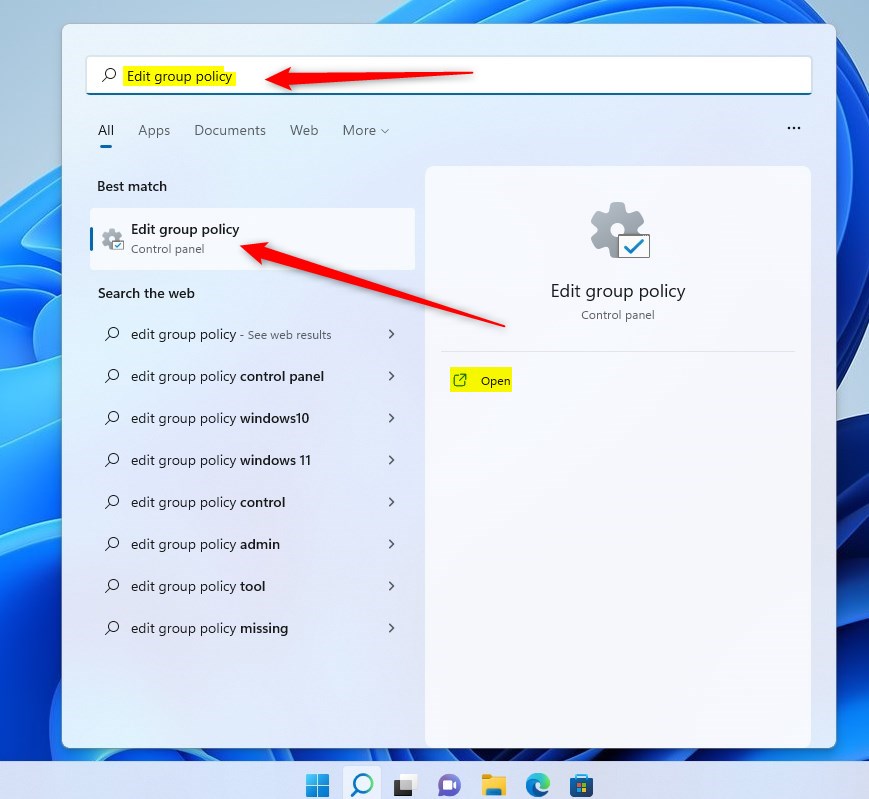
- Press the Win, type gpedit.msc, and press Enter. The Local Group Policy Editor opens. If Windows says it can’t find the file, you are on Home. Use the registry method below.
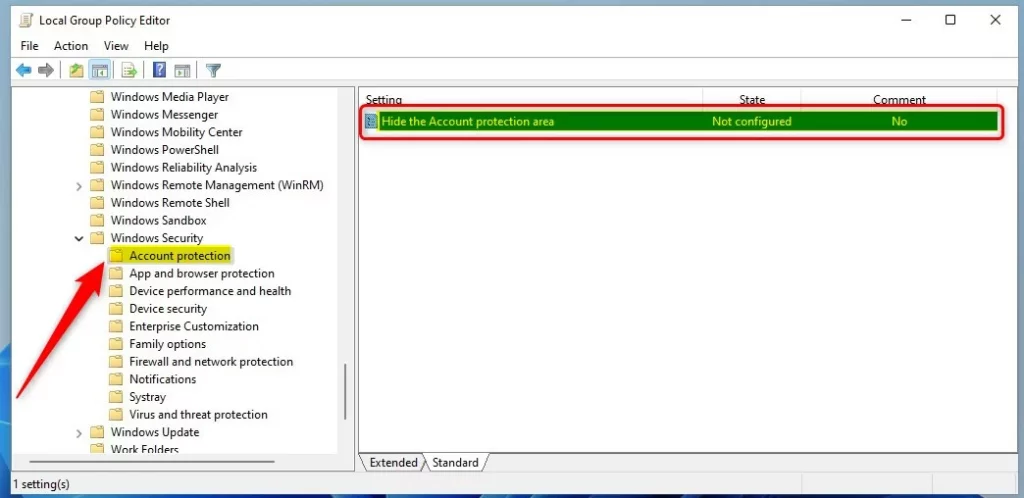
- In the left-hand pane, go to Computer Configuration Administrative Templates Windows Components Windows Security Account protection The settings for that folder appear in the right-hand pane.
- On the right side, double-click the setting named Hide the Account protection area. Its settings window opens.
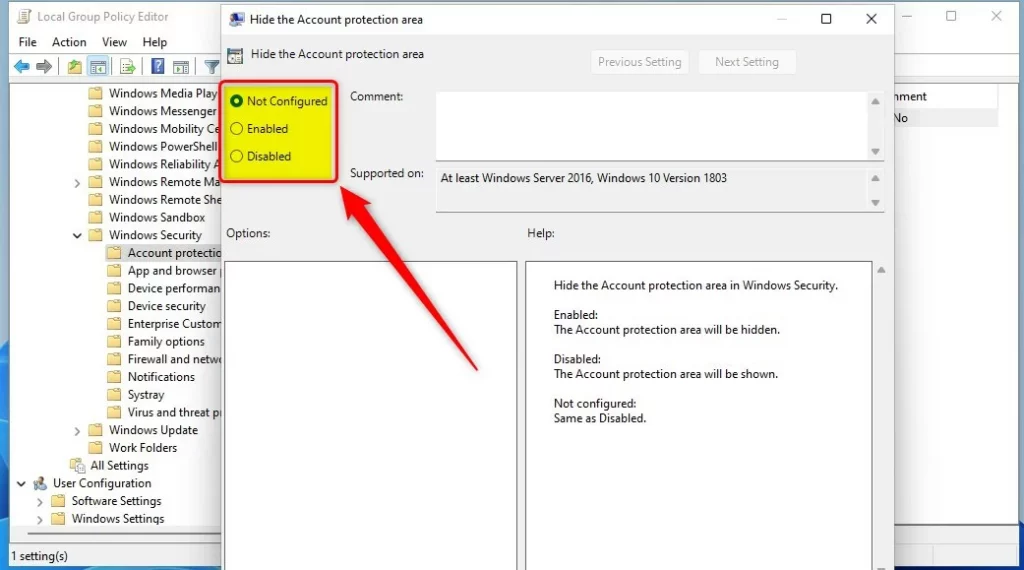
- Choose one of the three options:
- Not Configured: the default. The Account protection area is shown.
- Enabled: hides the Account protection area.
- Disabled: shows the Account protection area.
- Click Apply, then OK. Close the editor.
- Close and reopen Windows Security. If the section is still showing, sign out and back in, or restart the PC.
To undo the change, open the same setting again and choose Not Configured or Disabled.
Hide or Show Account Protection via Registry
The Windows Registry is a database that stores system settings. This method is the only option on Windows 11 Home, and it also works on Pro, Enterprise, and Education if you prefer it. You need to be signed in as an administrator. A wrong edit in the registry can cause problems, so you will back it up before changing anything.
- Press the Win, type regedit, and press Enter. Approve the User Account Control prompt if it appears. The Registry Editor opens.
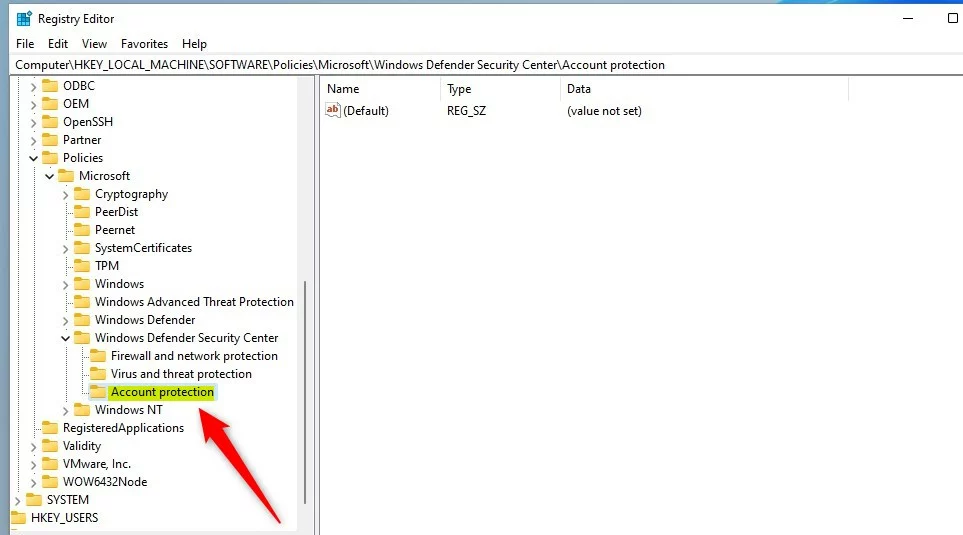
- Navigate to this path in the Registry Editor:
If the specific folders for configuring Windows Security settings are missing, you can create them. Right-click on the “Windows” folder in the Registry Editor. Then, choose “New” and then “Key” to create the “Windows Defender Security Center” key, and again to create the “Account protection” key under it.
Back up first. Do this before you add the value. You have two options, and you can do both:
- Export the registry. In the Registry Editor, click File Export Under Export range, choose All to save the whole registry, or Selected branch to save only the key you have open. Pick a location, enter a file name, and click Save. To restore it later, double-click the saved .reg file and confirm, or use File Import in the Registry Editor.
- Create a system restore point. Press the Windows key, type Create a restore point, and open the result. On the System Protection tab, click Create, name the restore point, and click Create again. If the Create button is greyed out, System Protection is turned off for that drive. Select the drive, click Configure, and turn protection on first.
Once the backup is saved, continue with the steps below.
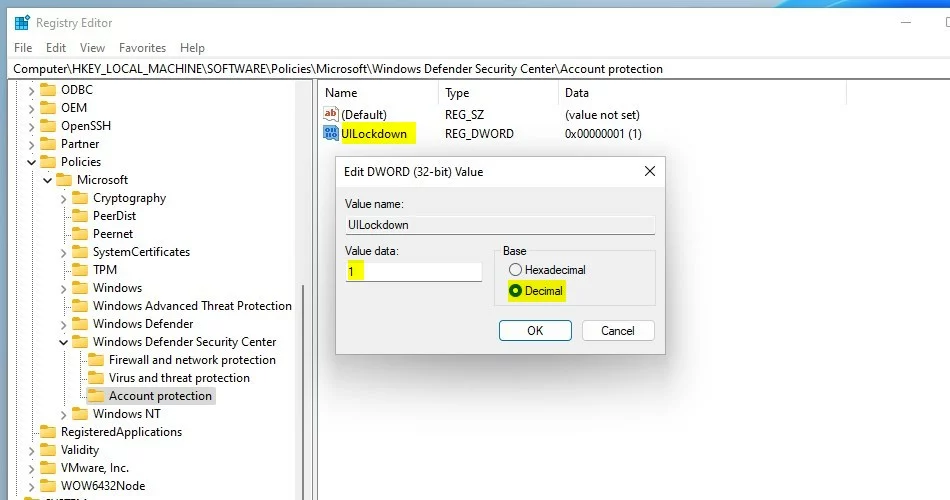
- Right-click an empty space in the right-hand pane. Select New, then DWORD (32-bit) Value. A new value appears with its name highlighted for editing.
- Name the new value
UILockdown. This is a value, not a file, and the name must be exact. - Double-click
UILockdownto open it, and set the Value data field:- Enter
0to show the section in the Windows Security app. - Enter
0to hide the section.
- Enter
- Click OK and close the Registry Editor.
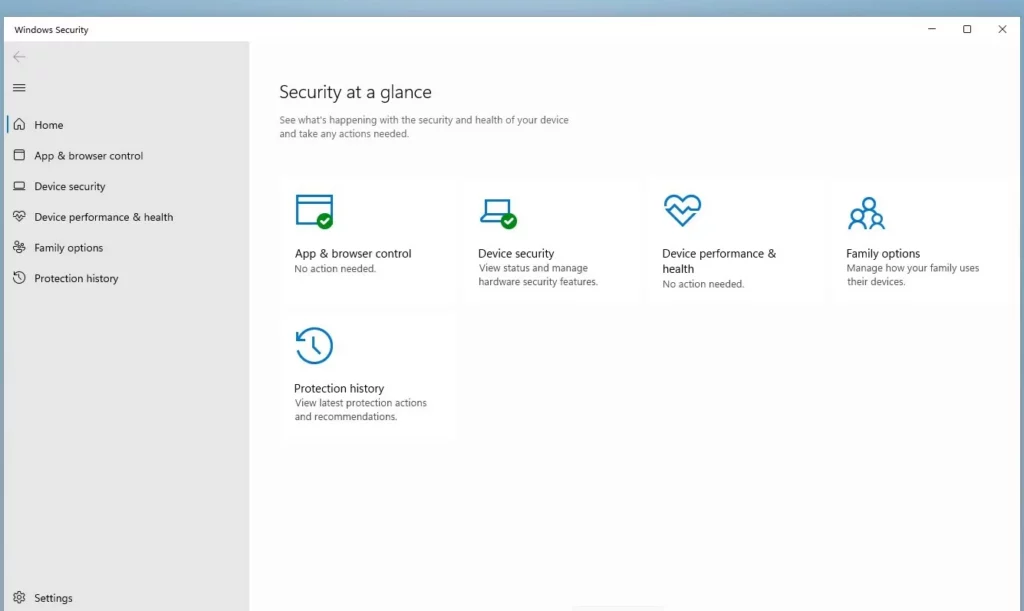
- Restart your computer to apply the change. Then open Windows Security. The Account Protection section should be gone if you chose to hide it.
To undo it, change the value data to the "show" number, or delete the value you created, then restart. If something goes wrong, double-click your exported .reg file or use the restore point to go back.
Summary
You can hide or show the Account Protection section with either the Local Group Policy Editor (Pro, Enterprise, and Education) or the Registry Editor (all editions, including Home). Always sign in as an administrator and back up the registry before editing it. A restart, or at least a sign-out and reopening Windows Security, may be needed before the change shows.
Have a question about this guide?
Answered by AI from this guide. Good questions may be added to this page — please don't include personal details.
Did this guide fix your problem?

About the Author
Richard
Tech Writer, IT Professional
Richard is a writer at Geek Rewind who turns complex IT tasks into clear, step-by-step guides. He draws on years of hands-on experience in system administration and enterprise IT operations, focusing on Windows, Linux and WordPress: the problems people actually run into, and the fixes that work. His server and WordPress guides come from systems he runs himself. Richard builds and maintains the platform behind Geek Rewind, from its Ubuntu servers and Nginx configuration to its custom WordPress plugins. Many new tutorials start with readers' questions, and he's always glad to answer them in the comments.
[…] you to quickly see the status of your virus and threat protection, firewall and network security, Account protection, App and Browser Control, and […]
[…] security status. It covers areas like virus and threat protection, firewall and network security, Account protection, App and Browser Control, and Device […]