How to Check Online Service Experience Packs on Windows 11

Online Service Experience Packs add specific features to Windows 11 outside of major system updates. You can see which ones are installed in a couple of places in Settings, and no extra tools are needed.
Open Settings , navigate to Windows Update , and click “Update history.” Expand “Other Updates” to find and view the list of installed Online Service Experience Packs.
What Are Online Service Experience Packs?
Online Service Experience Packs function as extra toolkits for Windows 11 that add new features and improve your PC’s functionality. Microsoft delivers them from the cloud, so your computer can receive targeted updates without waiting for a major Windows release. They work much like Windows Feature Experience Packs.
A key difference separates the two bundle types. Windows Feature Experience Packs introduce widespread improvements across many parts of the operating system. Online Service Experience Packs target and enhance one specific area. For instance, one might improve your “Your Microsoft account settings” page.
Why Check If These Packs Are Installed?
Knowing which updates are installed helps you understand your computer’s capabilities. It also gives you a head start on troubleshooting. If something in Settings behaves oddly after an update, the history tells you what changed and roughly when.
How to Check If Online Service Experience Packs Are Installed
The short version: open Settings , go to Windows Update , and click Update history. Then expand the Other Updates section and scan the list. The steps below walk through it.
- Open the Settings app . Pressing the Win and I together also opens it. You should see the Settings window with the navigation list on the left.
- Select Windows Update in the left-hand list. The update status page opens on the right.
- Click the Update history tile to open it. You should now see a list of update categories, each with a count of updates.
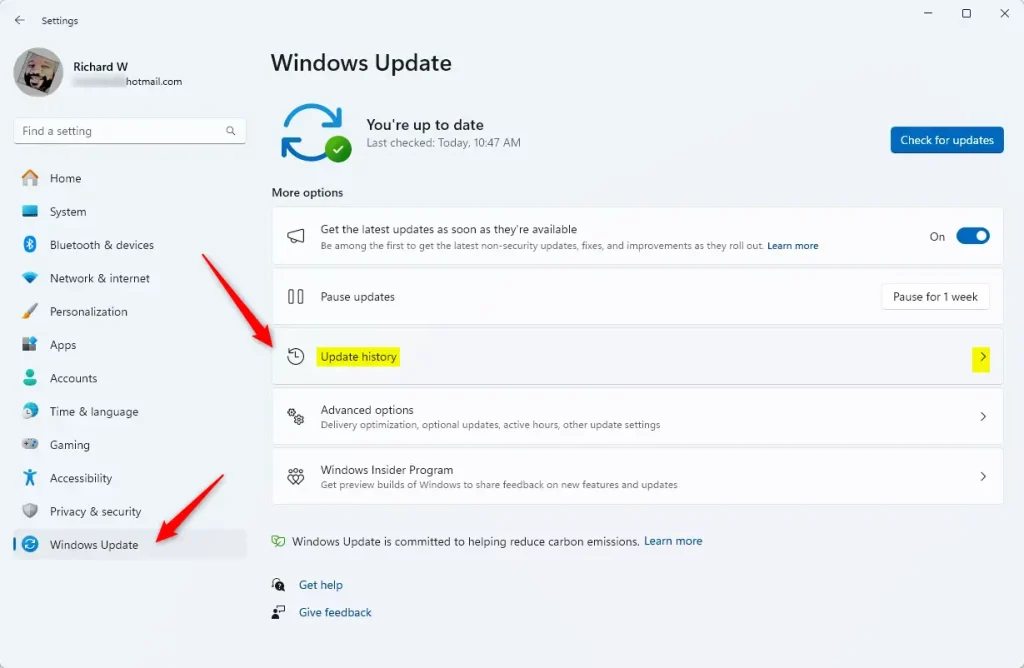
- Expand the Other Updates tile by clicking it. The entries under it appear below the heading.
- Look through the list for Online Service Experience Packs. Each entry shows a name, a version and the date it was installed.
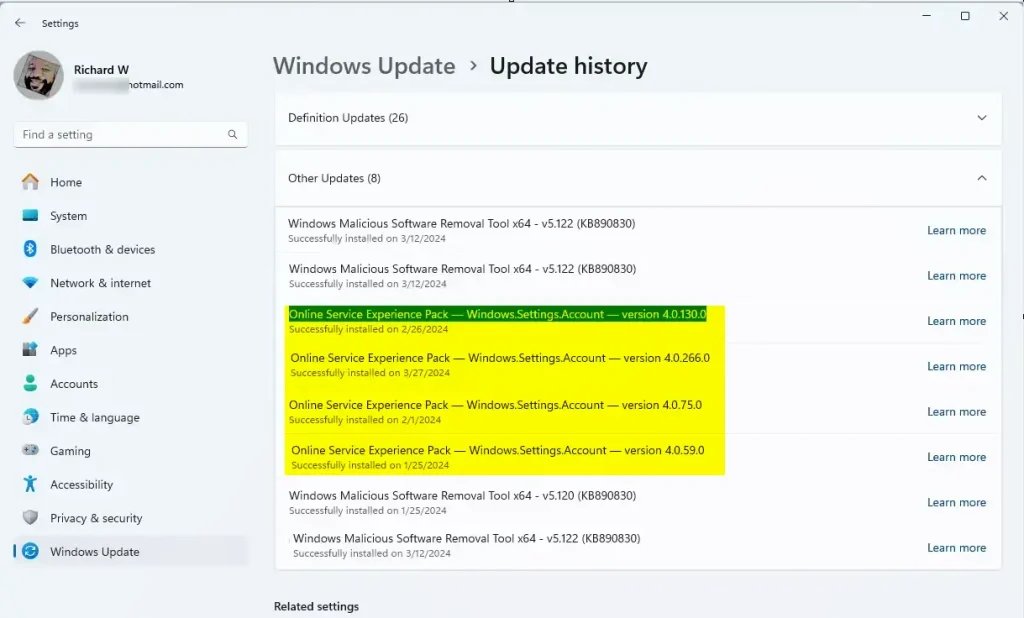
You will now see any installed experience packs in this list. If the Other Updates tile is missing or empty, no updates of that type have been recorded on this PC yet. That is normal on a fresh install or a machine that has not been updated recently. Installing pending updates from the Windows Update page may change that.
You can also confirm versions in two places:
- Windows Feature Experience Pack: go to Settings System About and scroll to the Windows specifications section. The Windows Feature Experience Pack version is listed there.
- Online Service Experience Packs: these are listed with their version under Update history Other Updates, as in the steps above.
Using both gives you a way to confirm exactly which versions are installed. That is handy when you compare against a support article or another PC.
What Happens When These Packs Are Installed?
Once installed, these packs provide your Windows 11 computer with new features and enhancements. Users often notice improved performance or discover new options in specific parts of the system interface. Because each pack targets one area, the change is usually small and limited to that part of Windows.
Need More Help?
For more detailed information, visit the official Microsoft support page on "Online Service Experience Packs" at Microsoft support.
Summary
Online Service Experience Packs add new features and improvements to Windows 11. To check if they're installed, go to Settings, then Windows Update, and look under "Other Updates" in your update history. To check the Windows Feature Experience Pack version, look under Settings System About, in the Windows specifications section.
Have a question about this guide?
Answered by AI from this guide. Good questions may be added to this page — please don't include personal details.
Did this guide fix your problem?

About the Author
Richard
Tech Writer, IT Professional
Richard is a writer at Geek Rewind who turns complex IT tasks into clear, step-by-step guides. He draws on years of hands-on experience in system administration and enterprise IT operations, focusing on Windows, Linux and WordPress: the problems people actually run into, and the fixes that work. His server and WordPress guides come from systems he runs himself. Richard builds and maintains the platform behind Geek Rewind, from its Ubuntu servers and Nginx configuration to its custom WordPress plugins. Many new tutorials start with readers' questions, and he's always glad to answer them in the comments.
No comments yet — be the first to share your thoughts!