Change Display Language in Ubuntu: A Step-by-Step Guide

You change your Ubuntu display language by adjusting settings within the operating system, which alters all visible text and interface elements to your preferred language.
This process ensures that menus, system dialogues, and application text appear in a language you understand, making your computing experience more comfortable. For example, Ubuntu 22.04 LTS offers built-in support for numerous languages, allowing for immediate customization.
You can select your display language during the initial setup, or easily change it later through the system settings. If your desired language isn’t present, you’ll need to install additional language packs.
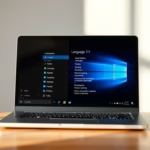
Open Settings, go to Region & Language, and select your desired language from the Language tile. If your language isn’t listed, click Manage Installed Languages to add it, then log out and back in.
How to change your display language in Ubuntu Linux
Changing your display language in Ubuntu Linux is simple and affects apps like Settings and File Manager.
Here’s how to change the display language in Ubuntu Linux.
Most of Ubuntu Linux’s settings live in one place: the System Settings panel. Here, you can manage everything from system configurations to user accounts and updates.
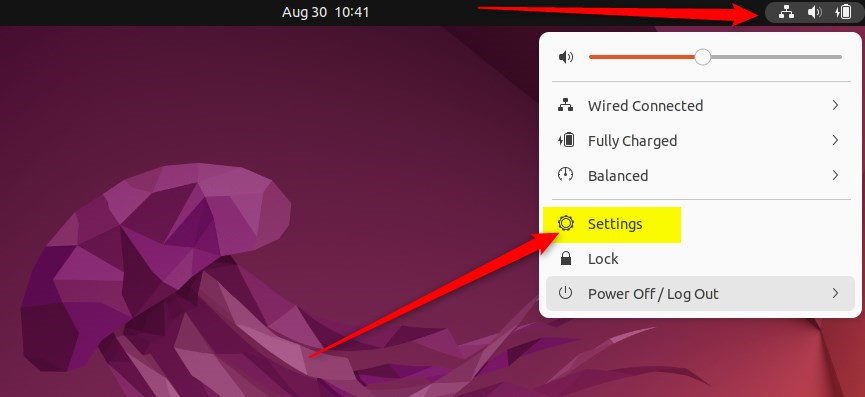
To open System Settings, head to the Activities overview and start typing ‘Settings.’ You can also click the System menu in the top-right corner of your desktop’s top bar and select ‘Settings,’ as shown below.
Alternatively, click on the System menu in the top-right corner of your desktop’s top bar.
From the System menu, select Settings, as highlighted below.
In the Settings app, click on the Region & Language tile.
Select the Language tile within the System Settings > Region & Language settings pane.
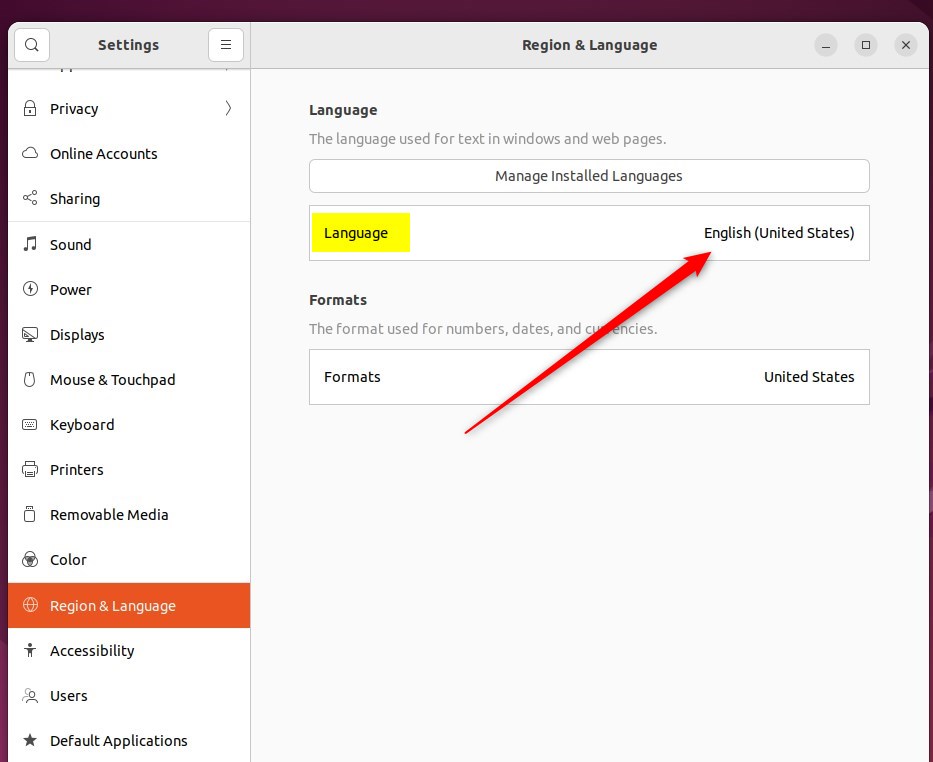
When you click the Language tile, a pop-up window should appear.
Choose your desired region and language from the options presented.
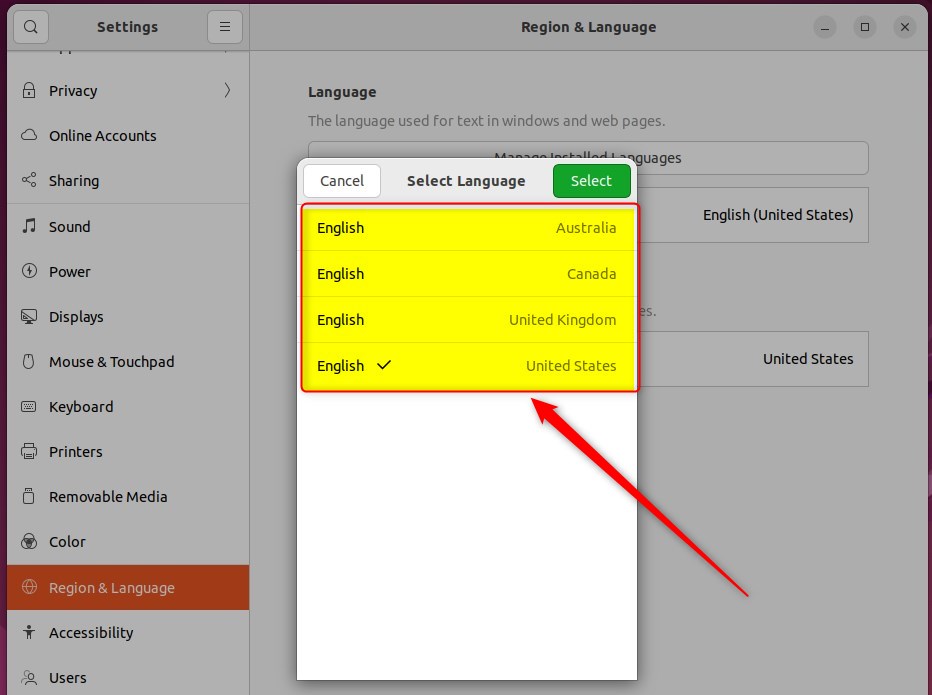
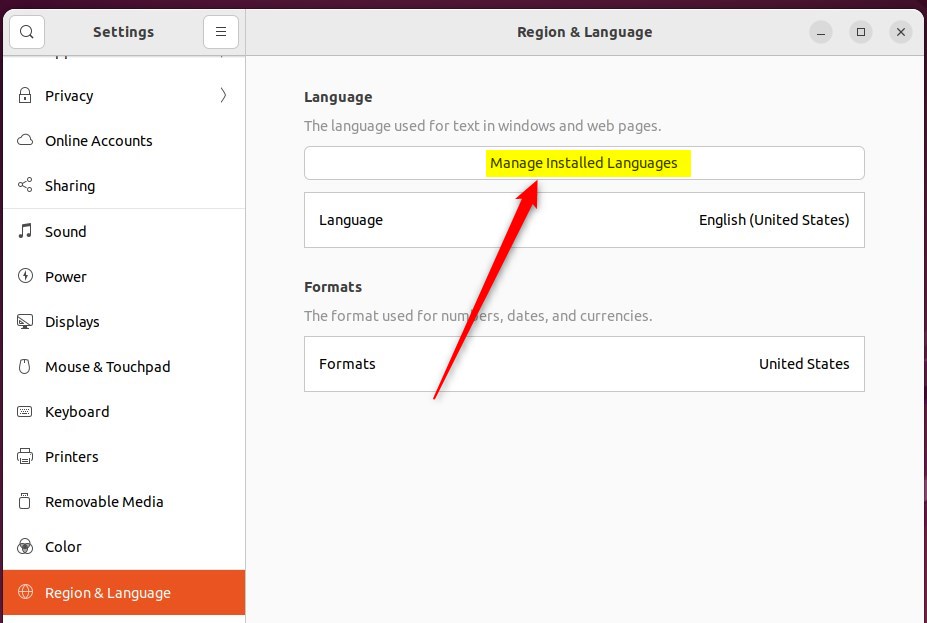
If your region and language aren’t listed, click Cancel.
This returns you to the Region & Language settings panel. From there, click Manage Installed Languages, as highlighted below.
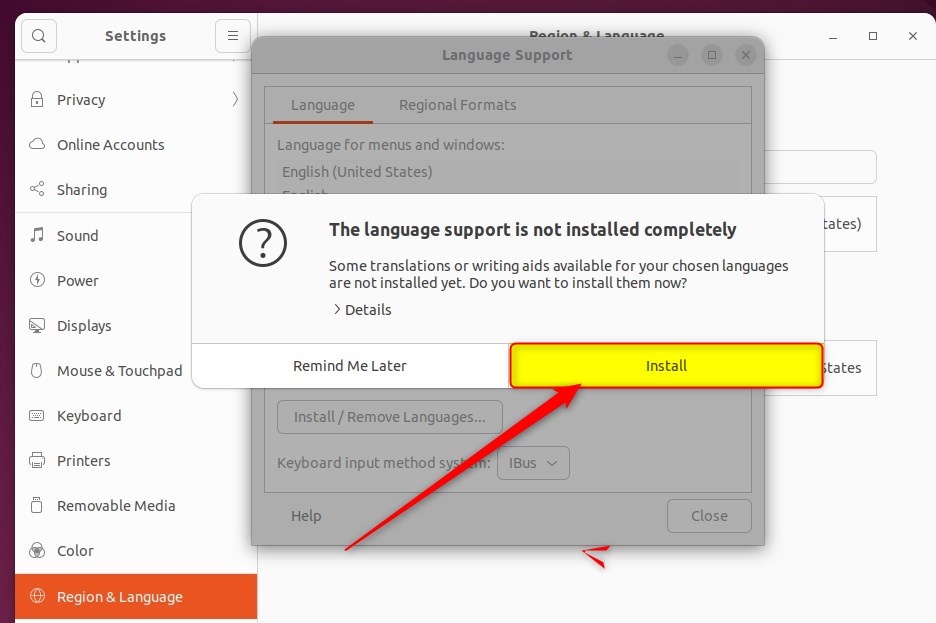
When prompted to install support for additional languages, click Install.
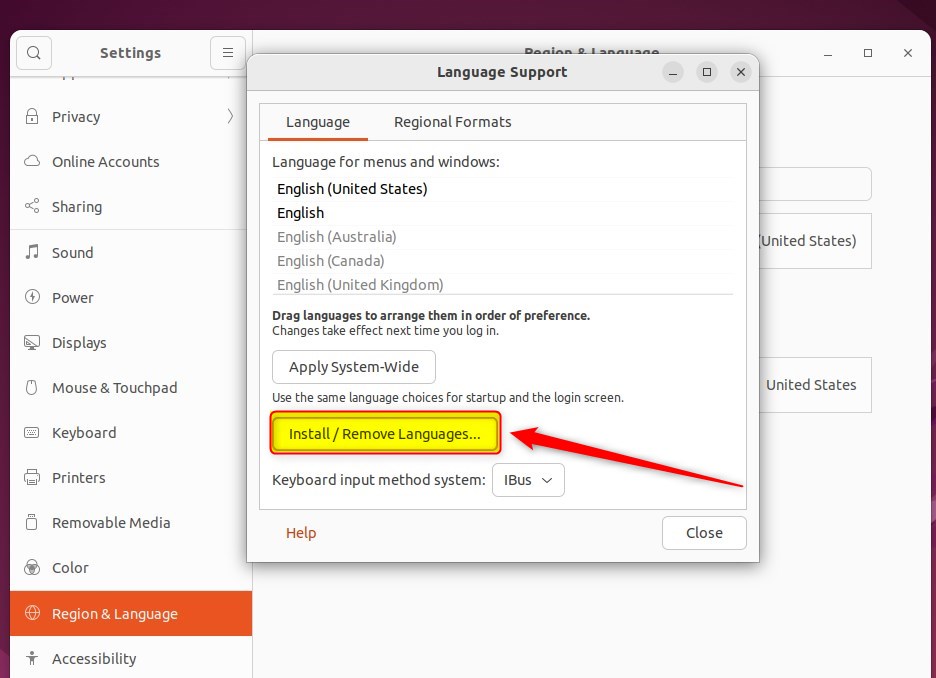
Once that’s installed, click Install/Remove Languages in the Language support window.
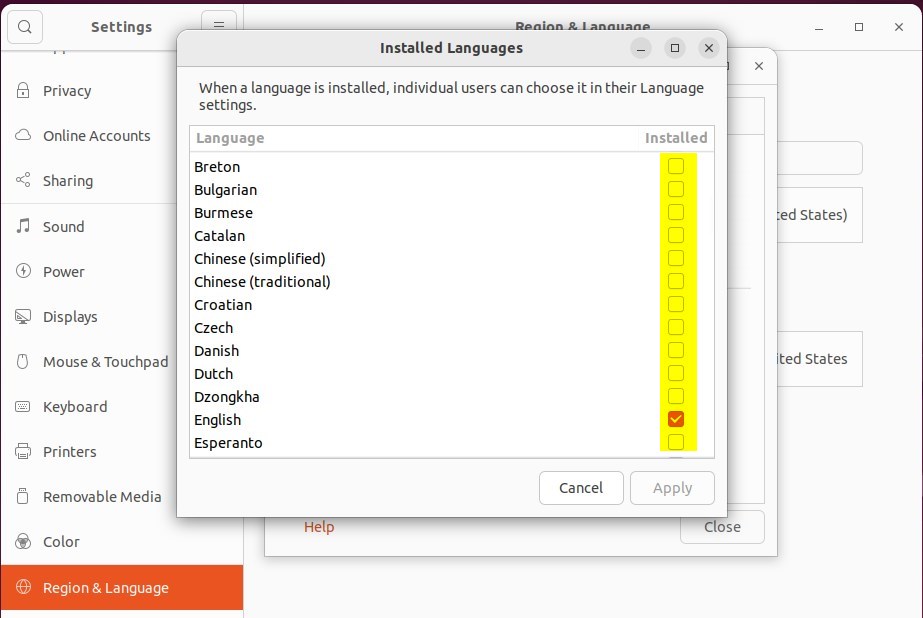
Pick the languages you want to install from the list. After installation, you’ll need to log out or restart your computer.
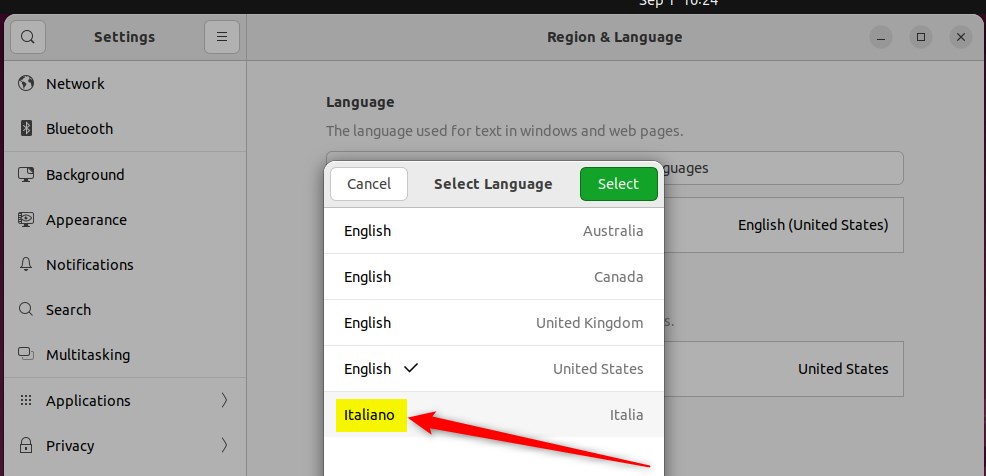
With additional languages installed, you can change your default language back on the previous screen.
Keep in mind that some translations might be incomplete, and certain applications may not fully support your chosen language.
That should do it! You can now close the settings app.
Conclusion:
- Changing the display language in Ubuntu Linux is essential to personalize your experience.
- Ubuntu Linux allows you to select and install multiple display languages.
- Install additional language packs if your preferred display language is unavailable.
- Remember that some translations may be incomplete, and certain applications may not fully support your chosen language.
- Finally, once you’ve completed the process, you can enjoy Ubuntu Linux in your preferred display language.
How to change Ubuntu display language?
Change the language of your computer In the Ubuntu Desktop, click System Settings. Click Language Support. The Language Support window is displayed. Use the down arrow key to scroll through the Language for menus and windows list.
What is the shortcut key for switching languages?
Use Windows + Spacebar to change the keyboard language. Hold down the Windows key and press the Spacebar to switch to the next language in the list until you get to the keyboard layout you want.
Was this guide helpful?

About the Author
Richard
Tech Writer, IT Professional
Richard, a writer for Geek Rewind, is a tech enthusiast who loves breaking down complex IT topics into simple, easy-to-understand ideas. With years of hands-on experience in system administration and enterprise IT operations, he’s developed a knack for offering practical tips and solutions. Richard aims to make technology more accessible and actionable. He's deeply committed to the Geek Rewind community, always ready to answer questions and engage in discussions.
[…] The default keyboard layout will also be installed when you install a new preferred language in Ubuntu Linux. […]
[…] display language you choose at setup can also be changed after installing Ubuntu Linux. You can have multiple display languages that you can switch between […]