How to Access the Handwriting Panel in Windows 11

You can access the Handwriting panel in Windows 11 to write on your screen with a finger or stylus.
The Handwriting panel is a feature that converts your handwritten strokes into typed text within Windows 11. It’s particularly useful for touchscreen devices like tablets or 2-in-1 laptops.
Unlike the standard touch keyboard, which presents keys for tapping, the Handwriting panel offers a blank canvas for your digital ink. This allows you to naturally write out words or even entire sentences.
While many applications automatically bring up the touch keyboard when you tap a text field, you might need to manually open the Handwriting panel for seamless pen or finger input. It’s a great way to interact with your PC if you prefer writing over typing.
Open the touch keyboard by clicking its icon on the taskbar. Then, click the settings gear icon on the keyboard and select “Handwriting” to begin writing. Windows converts your handwritten input into typed text automatically.
Steps to Open the Handwriting Panel
Opening the handwriting panel in Windows 11 is simple and lets you write with a pen or finger, turning your notes into typed text.
What happens when done? Your written words will appear as regular text in your apps.
- Turn on the Touch Keyboard button on the taskbar. Go to
Start > Settings > Personalization > Taskbar > System tray icons. Find “Touch keyboard” and turn it on. - Set when the touch keyboard shows up. Click the dropdown menu. Choose either When no keyboard attached or Always. This controls when the keyboard appears on your screen.
Windows touch keyboard show when no keyboard attached - Click the touch keyboard icon on your taskbar. It looks like a small keyboard. This opens the on-screen keyboard.
- Click the Settings icon (gear icon) on the keyboard window. Then select Handwriting from the menu.
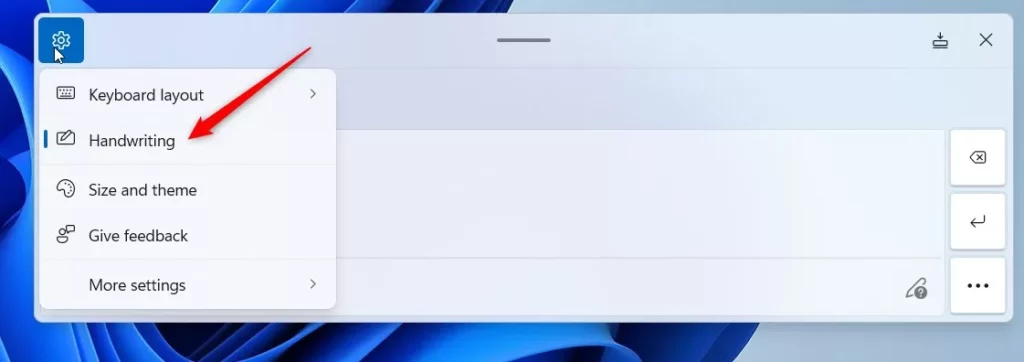
Windows touch keyboard handwriting panel - Start writing in the panel. Use your finger or pen. Windows will change your handwriting into typed text automatically.
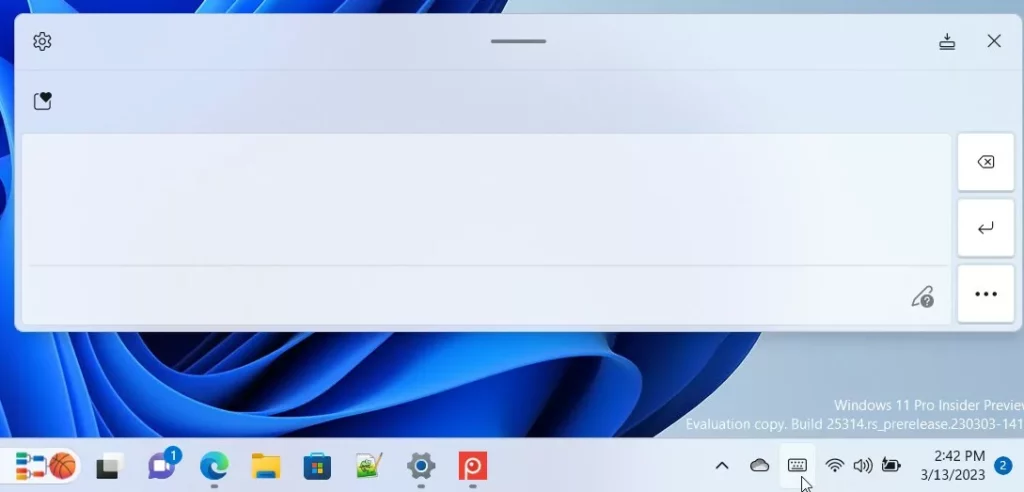
Windows touch keyboard icon on taskbar
Summary
- The handwriting panel lets you write text using your finger or a pen on touchscreen devices.
- You access it through the touch keyboard’s settings in Windows 11.
- Enable the touch keyboard button on the taskbar. Then select handwriting mode to start writing by hand.
- Your written words will automatically turn into typed text.
The handwriting panel for Windows 11 lets you write with your finger or a pen on a touchscreen, turning your writing into typed text.
How to Open and Use Touch Keyboard in Windows 11
How to Turn On or Off On-screen Touchpad in Windows 11
How to enable handwriting panel in 🪟 Windows 11?
Handwriting panel Select Start and then select Settings > Devices > Pen & Windows Ink . In the Pen & Windows Ink window, under the Handwriting section, select Write in the handwriting panel with your fingertip.
How do I open the handwriting panel?
And choose the handwriting. Option right here. Now if you don't see the touch keyboard option at all all you can rightclick here on the taskbar. Choose taskbar settings.
How to enable shell handwriting?
On the right pane, choose Pen & Windows Ink. Under Handwriting, expand Handwriting panel settings and select the checkbox beside Write with your fingertip. Under Shell Handwriting, expand Use your handwriting to enter text and set the toggle to: On = Enables handwriting input into text fields.
Was this guide helpful?

About the Author
Richard
Tech Writer, IT Professional
Richard, a writer for Geek Rewind, is a tech enthusiast who loves breaking down complex IT topics into simple, easy-to-understand ideas. With years of hands-on experience in system administration and enterprise IT operations, he’s developed a knack for offering practical tips and solutions. Richard aims to make technology more accessible and actionable. He's deeply committed to the Geek Rewind community, always ready to answer questions and engage in discussions.




No comments yet — be the first to share your thoughts!