How to Disable Windows Firewall on Windows 11

You disable the Windows Firewall on Windows 11 by navigating to the Security settings and toggling the firewall protection off for your network profiles.
The Windows Defender Firewall is a critical security feature that monitors and controls network traffic, acting as a barrier against unauthorized access and malicious threats. It operates by enforcing rules for incoming and outgoing connections.
While generally recommended to keep enabled for system protection, you might temporarily disable it for specific troubleshooting tasks, like resolving network connectivity problems or configuring alternative security software. For instance, many third-party antivirus programs take over firewall duties.
Disabling the firewall exposes your PC to potential dangers from the internet, so it’s vital to re-enable it as soon as your task is complete.
Navigate to Windows Security, then Firewall & network protection. Click your active network profile and toggle Microsoft Defender Firewall to Off. Remember to re-enable it as soon as possible.
How to Check if Windows Firewall is Active
You can verify your status via the Windows Security Center. If the shield icon has a green checkmark, your protection is active. If it shows a red ‘X’, your firewall is likely disabled.
Method 1Using Windows Settings (Standard Method)
Note: This process requires admin privileges.
1. Press Windows key + I to open Settings.
2. Go to Privacy & security > Windows Security.
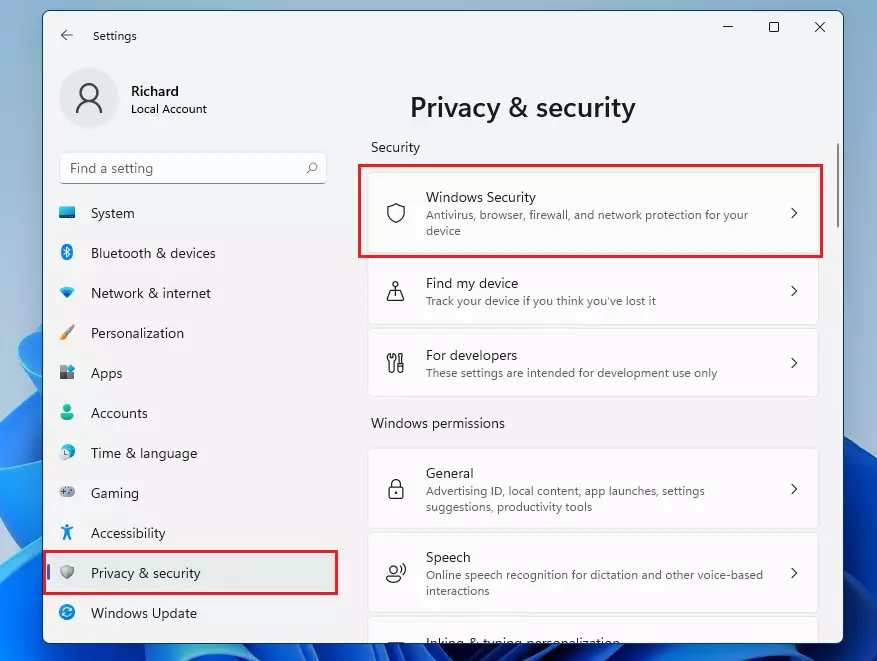
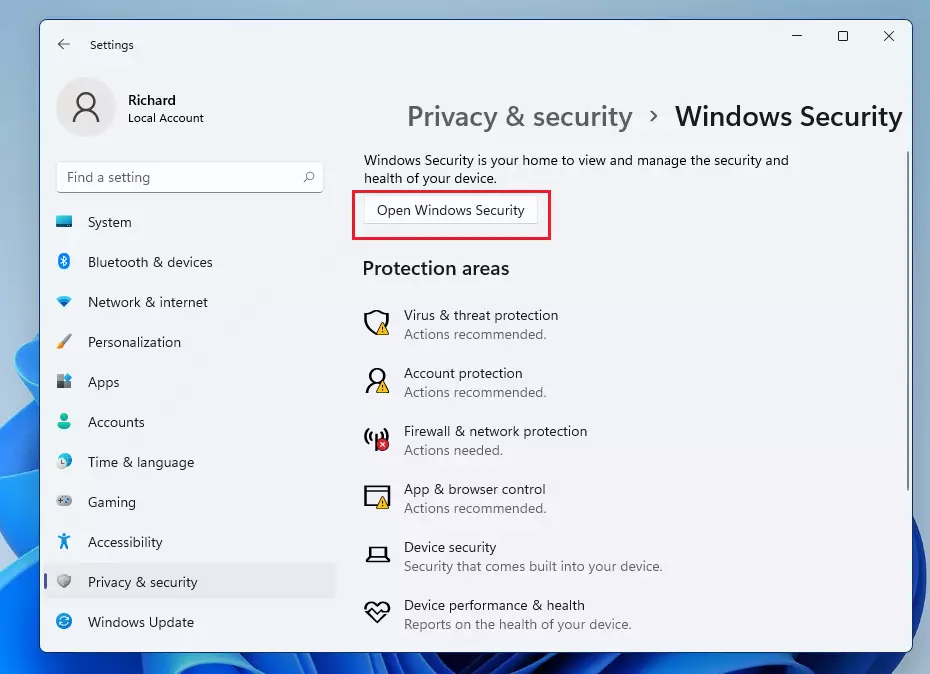
3. Click Open Windows Security.
4. Select Firewall & network protection. You will see three profiles: Domain profile, Private profile, and Public profile.
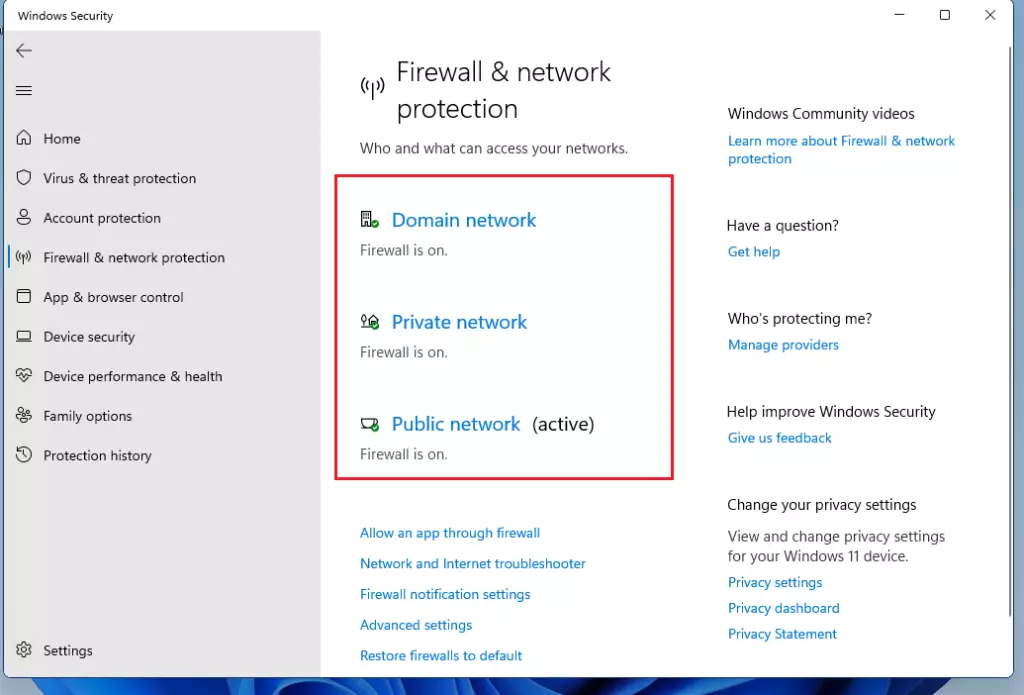
5. Click your active network and toggle the Microsoft Defender Firewall switch to Off.

Method 2Using Command Prompt (Advanced)
Note: This process requires admin privileges.
You can use the netsh advfirewall command to manage settings quickly.
1. Search for cmd in the Start menu, right-click it, and select Run as administrator.
2. To disable the firewall for all profiles, type the following command and press Enter:
netsh advfirewall set allprofiles state off
3. To turn it back on, use:
netsh advfirewall set allprofiles state on
Method 3Using PowerShell
Note: This process requires admin privileges.
1. Right-click the Start button and select Terminal (Admin) or PowerShell (Admin).
2. Run this command to disable the firewall:
Set-NetFirewallProfile -Profile Domain,Public,Private -Enabled False
Method 4Using Group Policy Editor
Note: This process requires admin privileges and is for Windows Pro/Enterprise users.
1. Press Windows key + R, type gpedit.msc, and hit Enter.
2. Navigate to: Computer Configuration\Administrative Templates\Network\Network Connections\Windows Defender Firewall\Standard Profile.
3. Double-click Windows Defender Firewall: Protect all network connections and set it to Disabled.
Best Practices: Allowing Apps vs. Disabling Firewall
Instead of turning off the firewall, you should allow specific apps through. This keeps your system secure while fixing connectivity issues.
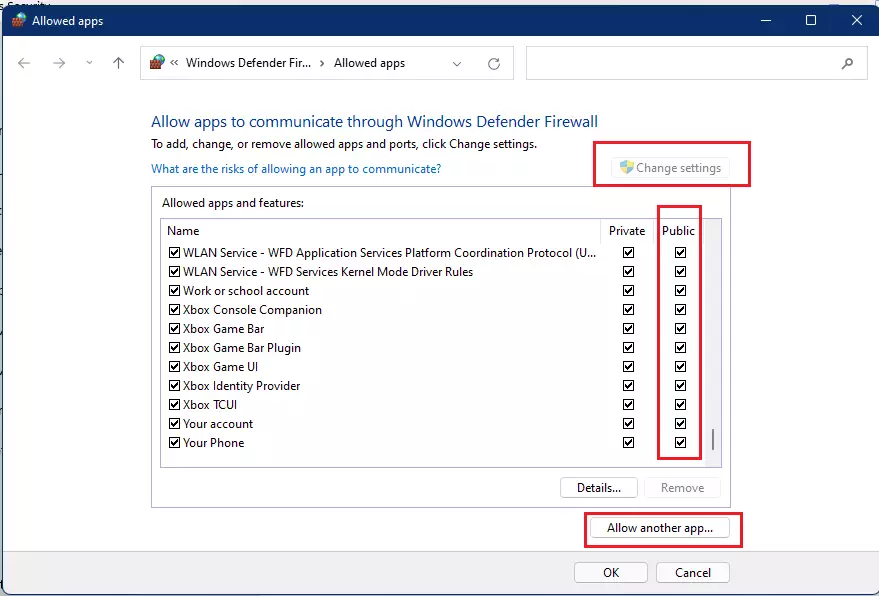
1. Go to Firewall & network protection and click Allow an app through the firewall.
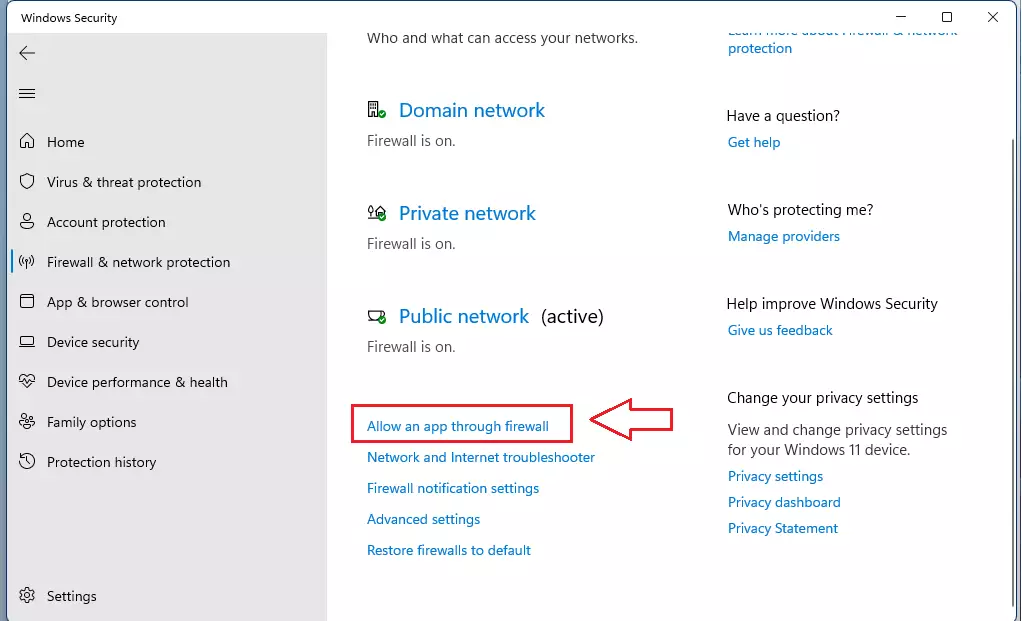
2. Click Change settings (requires admin privileges) and select Allow another app to add your program.
Summary
Disabling the Windows Defender Firewall is a high-risk action that should only be performed when necessary. Always prefer allowing specific apps through the firewall rather than turning it off entirely. If you must disable it , use the Settings app or PowerShell, and remember to re-enable it immediately to maintain your system’s security.” }
Is it safe to disable Windows Firewall?
No, it is not safe. Disabling the firewall removes a critical layer of protection, leaving your computer exposed to hackers and malware. Only disable it temporarily for troubleshooting purposes and ensure you have an alternative security solution active if you must keep the firewall off for an extended period.
Can I disable the firewall for specific networks only?
Yes. Windows allows you to manage the Domain, Private, and Public profiles separately. You can disable the firewall for a Private network while keeping it active for Public networks to ensure your data remains protected when you connect to untrusted Wi-Fi hotspots in public locations.
Was this guide helpful?

About the Author
Richard
Tech Writer, IT Professional
Richard, a writer for Geek Rewind, is a tech enthusiast who loves breaking down complex IT topics into simple, easy-to-understand ideas. With years of hands-on experience in system administration and enterprise IT operations, he’s developed a knack for offering practical tips and solutions. Richard aims to make technology more accessible and actionable. He's deeply committed to the Geek Rewind community, always ready to answer questions and engage in discussions.

No comments yet — be the first to share your thoughts!