How to Find Your Product Key in Windows 11

- 9 steps
- Needs administrator rights
A Windows 11 product key is a 25-character code that activates your operating system and proves you own a legal copy. You need it when you reinstall Windows or move a license to a new PC. Many people never see their key, because it was never printed or typed in.
Most modern computers store a digital license in the motherboard firmware or link it to your Microsoft account instead of using a sticker. If you need the code for an upgrade or a hardware repair, you can read the original key from your system with a built-in command, or with a small free app. Both methods are covered below, along with the places where the key is usually written down.
You can find your Windows 11 product key using Command Prompt by typing wmic path softwarelicensingservice get OA3xOriginalProductKey, or by using the ShowKeyPlus app from the Microsoft Store. If you upgraded from Windows 10, you likely have a digital license and don’t need a physical key.
Where to look for your key
Where your key is depends on how you got Windows. Check these places before you run any commands, because a printed or emailed key is the one you can be sure will work on a clean install. If you bought a new PC from a store, look for a sticker on the hardware or check the packaging. If you bought a digital copy, check the confirmation email from the retailer.
- New computersLook for a sticker on the back or side of your PC. On a laptop, check the underside and the battery bay. The key might also be on the box or on a certificate included with your purchase. Many newer PCs have no sticker at all, because the key is stored in the firmware.
- Authorized retailersCheck the physical box or the card that came with your purchase. The key is often hidden under a scratch-off panel or inside the case, so look there before you throw the packaging away.
- Digital copiesCheck the confirmation email you received when you bought the software. Search your inbox for “Windows” or the retailer’s name. Also check the spam folder and the order history in the retailer’s online account.
- UpgradesIf you upgraded from an older version, you likely have a digital license instead of a key, which activates automatically. There is no code to look up in that case. Open Settings System Activation to see whether Windows is activated and whether the license is linked to your Microsoft account.
If none of these places has a key, don’t worry. A digital license is tied to your hardware or your account, so Windows 11 will usually reactivate itself after a reinstall on the same PC. The methods below help when you still want to see the code.
Using Command Prompt to find your OEM Key
Your original Windows 11 product key may be stored inside your computer’s firmware. You can read it by running one command in Command Prompt. This works well if the manufacturer pre-installed Windows, and it shows the original product code in seconds.
Sign in with an administrator account, or be ready to enter an administrator’s password when Windows asks. This method only finds a key that the manufacturer wrote into the firmware. If you built the PC yourself or installed Windows with a retail key, the command may show nothing.
- Click the Start menu and type cmd. Command Prompt should appear at the top of the search results.
- Right-click Command Prompt and select Run as administrator. If a User Account Control window appears, click Yes. A black window opens, and its title bar should say Administrator: Command Prompt.
- Type the following command and press Enter:
powershell "(Get-CimInstance -ClassName SoftwareLicensingService).OA3xOriginalProductKey". Type it exactly as shown, or copy and paste it. - If a key exists, it will appear below the command as a 25-character code in five groups. If you see only a blank line or a short error, the firmware has no key stored. In that case, use the app method below or your own purchase records. The firmware key also matches the edition the PC shipped with, such as Home or Pro. It may not match the edition you have installed now.
Checking status with slmgr
You can also check the activation status with the slmgr /dli command. It doesn’t show the full key. It shows the license type and a partial product key, which helps you tell Retail, OEM (Original Equipment Manufacturer) and Volume licenses apart. Run it from the same Command Prompt window you opened as administrator. The license type tells you whether the key can be moved to another PC. Retail licenses can usually be transferred, while OEM licenses are generally tied to the original device. The last five characters of the partial key also help you match it to a key you have written down.
Using an app to find your key
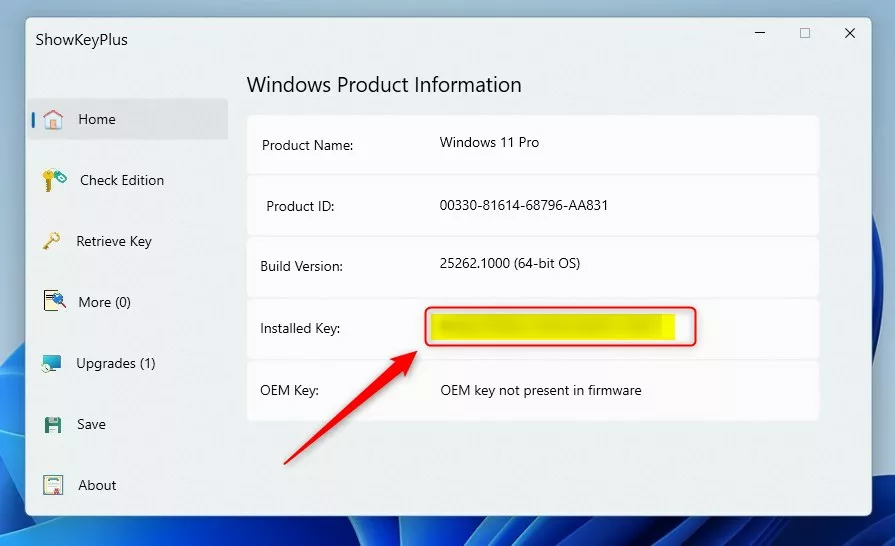
ShowKeyPlus is a free app from the Microsoft Store. It shows two things: the key for your current Windows installation and the original key stored in the hardware. This is the easier choice if you would rather not use the command line. The two keys can differ, for example after an upgrade or a reinstall, so note which one you copy.
- Click the Microsoft Store icon on your taskbar. If it isn’t pinned, open the Start menu and search for Microsoft Store. The Store window should open.
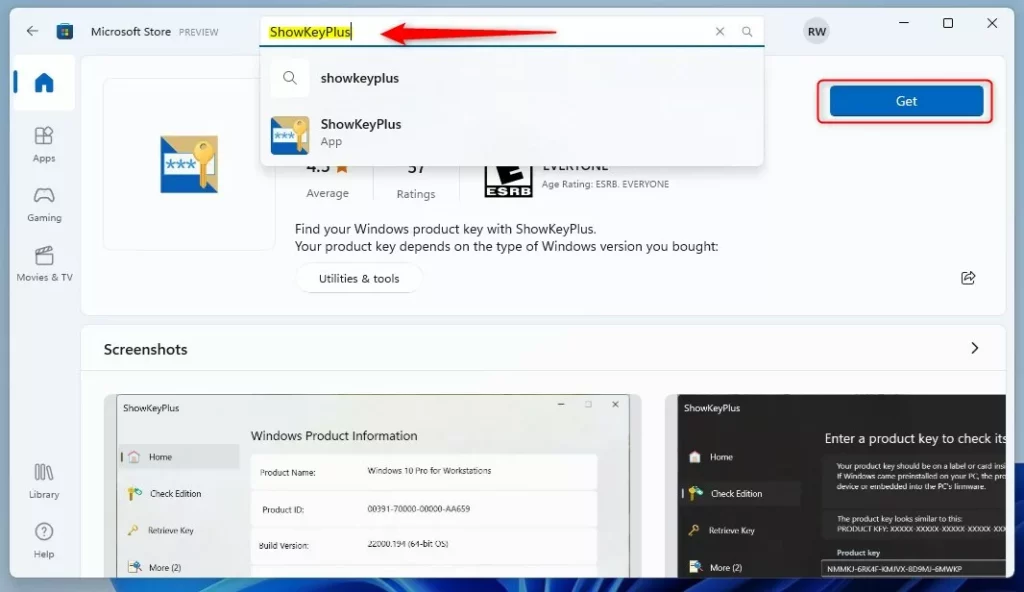
- Click the search box at the top of the Store, type “ShowKeyPlus” and press Enter. The app should appear in the results. Click it to open its page.
- Click the Get button to install the app. A progress indicator appears, and the install usually takes less than a minute.
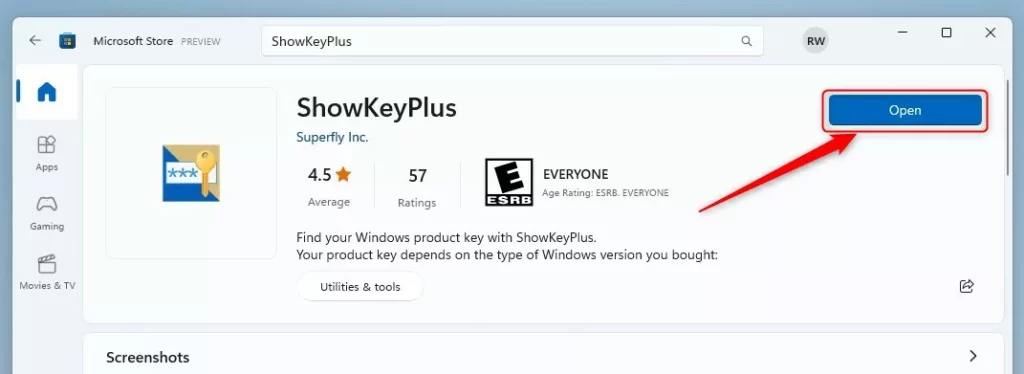
- Once installed, click the Open button. The button replaces Get on the same page. The ShowKeyPlus window should open.
- The app will automatically display your product key on the screen. You don’t need to click anything else. Write the key down or store it somewhere safe, away from the PC itself. If you no longer need the app, you can remove it at any time from Settings Apps Installed apps.
These sites often contain malware that can harm your computer, and some ask you to download an installer or enter personal details. Only use trusted tools from the Microsoft Store to find your Windows product key. Never post your full key in public, because anyone who has it can use it.
Activation Troubleshooting
If your installation isn’t activated, use the official Microsoft Activation Troubleshooter. This tool helps resolve issues triggered by hardware changes, such as a motherboard replacement. Windows 11 also has a built-in version. Open Settings System Activation. If Windows isn’t activated, a Troubleshoot option appears there. After a hardware change, sign in with the Microsoft account linked to your digital license and choose the option that says you changed hardware on this device recently.
Summary
Finding a Windows 11 product key takes little effort once you know where to look. Start with the physical hardware, packaging and email archives. If those don’t help, read the key from the firmware with Command Prompt or an app like ShowKeyPlus. If your PC uses a digital license, there may be no key to find, and a Microsoft account sign-in at Settings System Activation is all you need to reactivate.
Have a question about this guide?
Answered by AI from this guide. Good questions may be added to this page — please don't include personal details.
Did this guide fix your problem?

About the Author
Richard
Tech Writer, IT Professional
Richard is a writer at Geek Rewind who turns complex IT tasks into clear, step-by-step guides. He draws on years of hands-on experience in system administration and enterprise IT operations, focusing on Windows, Linux and WordPress: the problems people actually run into, and the fixes that work. His server and WordPress guides come from systems he runs himself. Richard builds and maintains the platform behind Geek Rewind, from its Ubuntu servers and Nginx configuration to its custom WordPress plugins. Many new tutorials start with readers' questions, and he's always glad to answer them in the comments.
[…] previous post showed you how to find your device’s product key. A Windows product key is a 25-character code used to activate Windows. The key is typically […]
[…] Not sure what your product key is? Check out our guide on how to find your Windows 11 product key. […]