How to Enable or Disable Touchpad in Ubuntu Linux


Disabling your laptop touchpad stops the mouse cursor from jumping around while you type. A touchpad is the touch-sensitive pad below your keyboard that lets you move the pointer without a separate mouse.
Most laptops let you turn the pad on or off instantly with a quick keyboard shortcut, such as pressing the Fn key alongside F9. If your keyboard lacks this shortcut, you can switch off the touchpad directly through the Ubuntu settings menu under Mouse & Touchpad.
You can disable or enable your Ubuntu touchpad by navigating to Settings Mouse & Touchpad and toggling the Touchpad switch. Some laptops also offer a dedicated keyboard shortcut or a tap-sensitive area on the touchpad itself for quick toggling.
How to turn off laptop touchpad when using Ubuntu Linux
You can enable disable touchpad Ubuntu settings quickly using the built-in system settings panel. Open the Activities menu, search for Settings, and go to the Mouse & Touchpad section to turn the switch off. This stops the cursor from jumping around when your palms brush the trackpad while you type.
Most configuration options live in a single centralized panel. The Settings app handles system configuration options like user accounts and system updates.
To get to System Settings, open the Activities overview and start typing Settings.
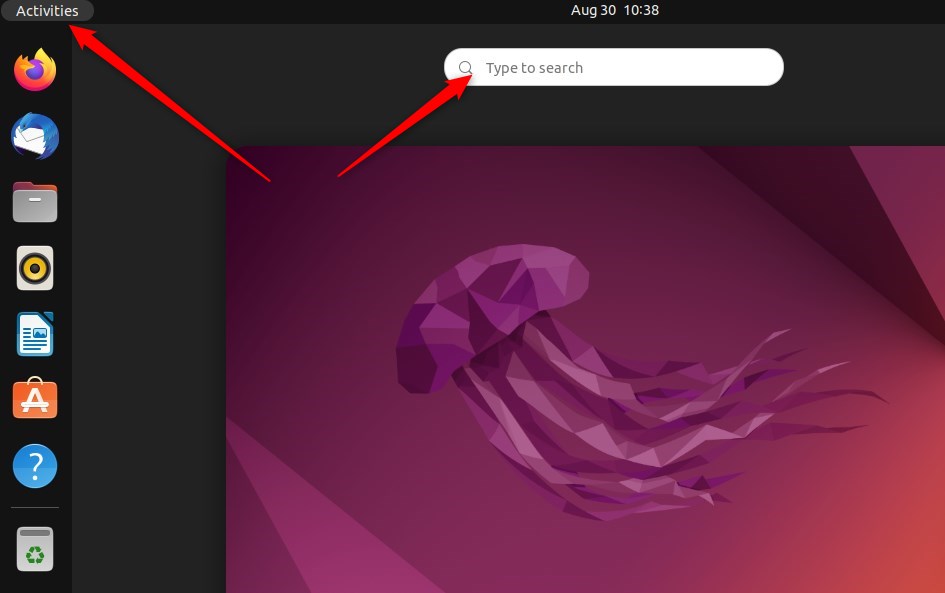
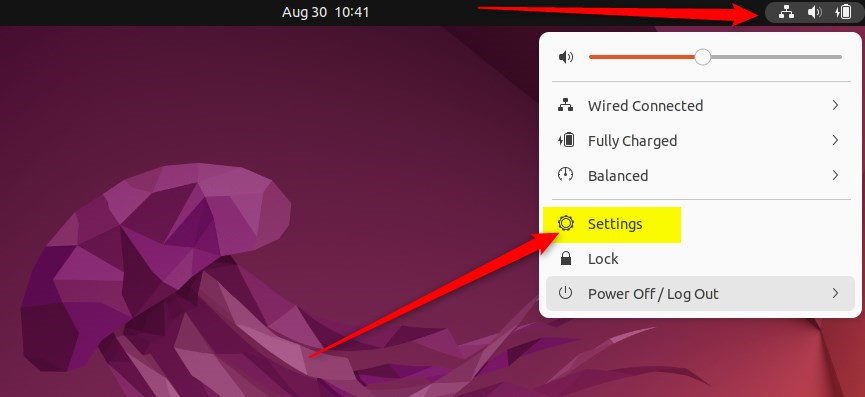
Alternatively, click on the System menu at the top-right corner of the top bar on your desktop.
On the System menu, select Settings, as highlighted below.
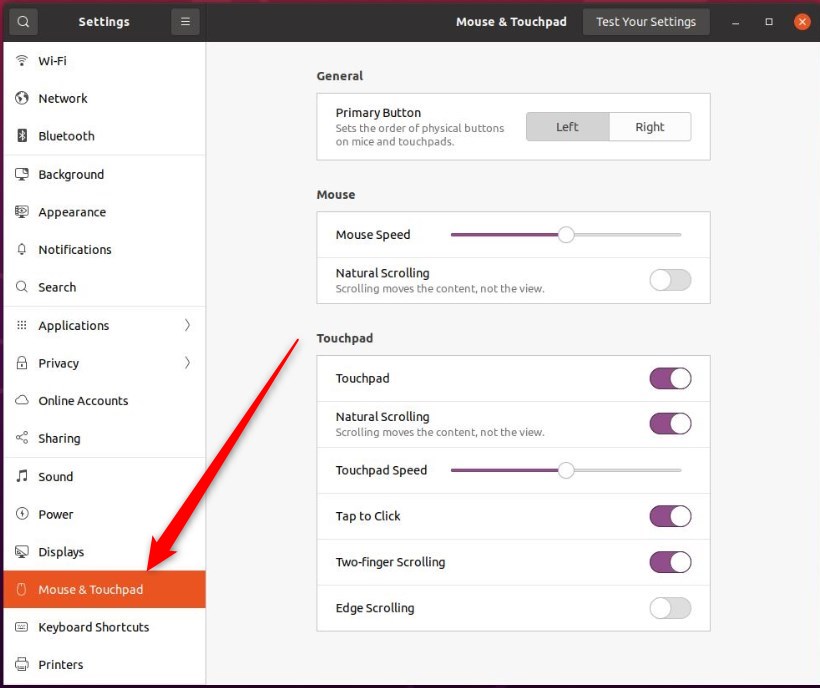
In the Settings app, click on the Mouse & Touchpad tile.
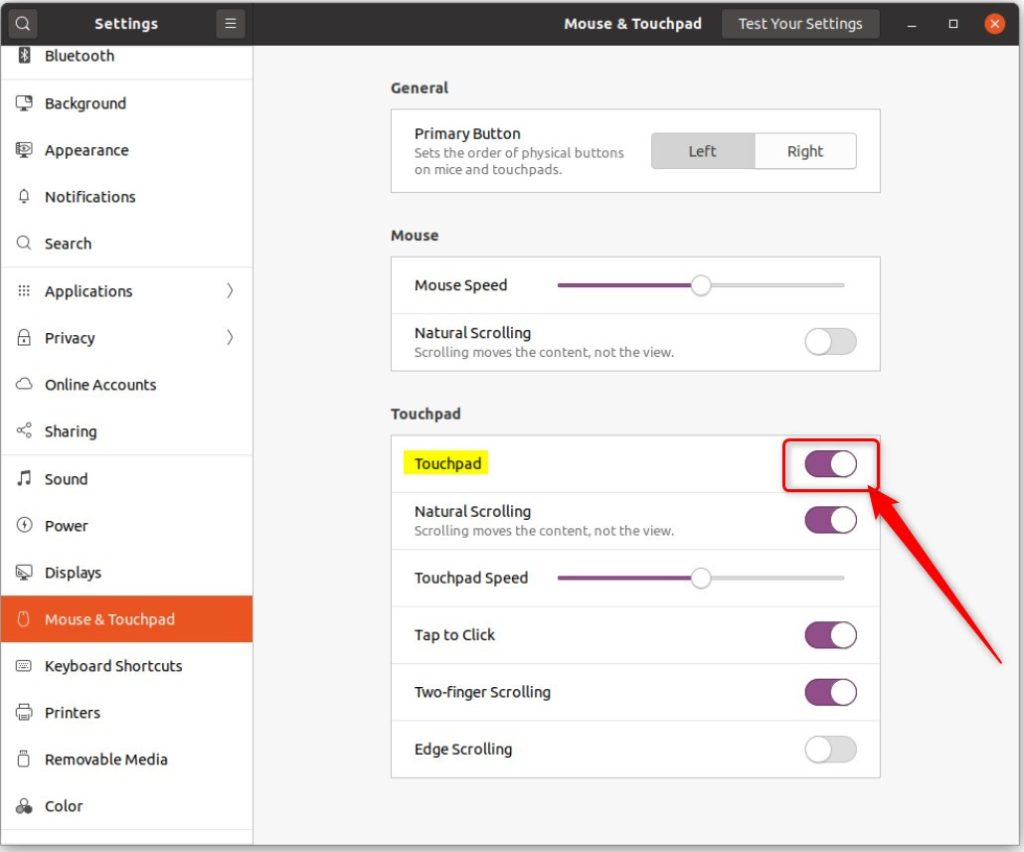
A dedicated switch appears for the touchpad hardware. Slide it to On to enable it, or slide it back to Off to deactivate the surface.
Alternatively, installing a third-party utility named Touchpad Indicator provides another method for controlling the pointer hardware.
Touchpad Indicator lets you disable the touchpad on demand and automatically disables the touchpad while typing and when a mouse is plugged in.
To install Touchpad Indicator, open a terminal and run these commands:
sudo add-apt-repository ppa:atareao/atareao
sudo apt update
sudo apt install touchpad-indicator
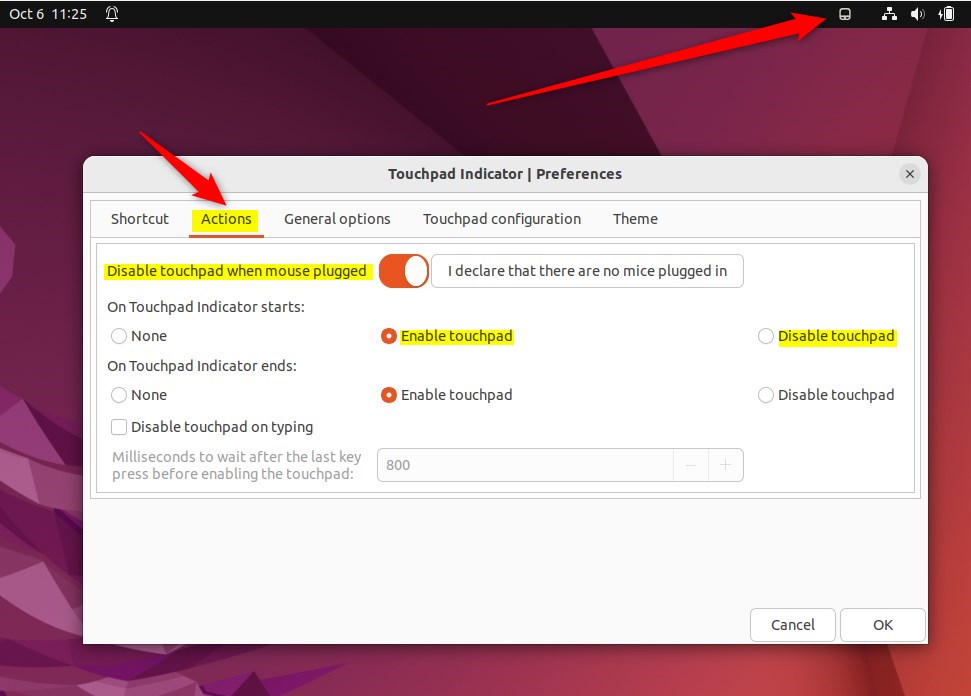
Once installed, search for and open the app from the Activities overview, then click on the Top bar and select the app's icon.
On the Actions tab, you can choose different settings to control the touchpad on your device.
That completes the setup process. The Settings app can now be closed.
Conclusion:
- Disabling or enabling the Touchpad on laptops running Ubuntu Linux is a straightforward process through the System Settings panel or using a third-party app like Touchpad Indicator.
- The Touchpad can be toggled on and off easily, allowing users to disable it when using an external mouse or to prevent accidental movements while typing.
- Users can choose between the System Settings method or installing the Touchpad Indicator app based on their preferences and specific needs.
- The step-by-step instructions and accompanying visual aids make it simple for users to follow along and successfully manage their Touchpad settings in Ubuntu Linux.
Was this guide helpful?

About the Author
Richard
Tech Writer, IT Professional
Richard is a writer at Geek Rewind who turns complex IT tasks into clear, step-by-step guides. He draws on years of hands-on experience in system administration and enterprise IT operations, focusing on Windows, Linux and WordPress: the problems people actually run into, and the fixes that work. His server and WordPress guides come from systems he runs himself. Richard builds and maintains the platform behind Geek Rewind, from its Ubuntu servers and Nginx configuration to its custom WordPress plugins. Many new tutorials start with readers' questions, and he's always glad to answer them in the comments.


No comments yet — be the first to share your thoughts!