How to Show Dock on All Displays in Ubuntu Linux

Ubuntu 22.04 and newer have a built-in setting that puts the dock, the vertical bar of app icons, on every connected monitor. With it on, you can launch or switch apps on whichever screen you are working on, without dragging the mouse across to your main display.
The short version: open Settings, go to Appearance, and under Dock set Show on to All displays. The steps below walk through it.
Open Settings, go to Appearance, and under Dock set Show on to All displays. The Dock appears on every connected monitor immediately, with no log out or restart needed. The option only shows when Ubuntu detects more than one display, so check that your second monitor appears under Settings Displays first.
How to show or hide the Dock on all displays in Ubuntu Linux
You change this in the Settings app, in the Appearance panel. By default the dock only shows on one screen, usually your primary display. This setting lets you keep it on every monitor you use.
If you only see one monitor, or the second one is not detected, you won’t find it. Check that the second screen is plugged in and shows up under Settings Displays. This is the Ubuntu Dock that ships with the standard Ubuntu desktop. If you installed a different GNOME-based desktop or a different flavor of Ubuntu, the Appearance panel may not have a Dock section.
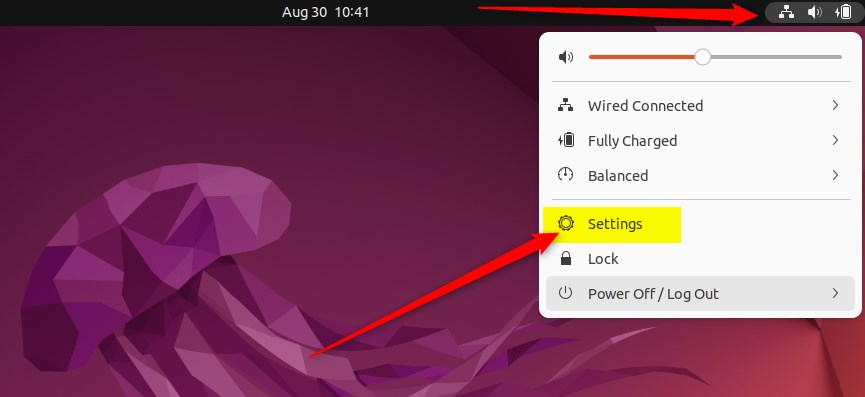
- Click the System menu in the top-right corner of the top bar. This is the area with the network, volume and power icons. A menu drops down.
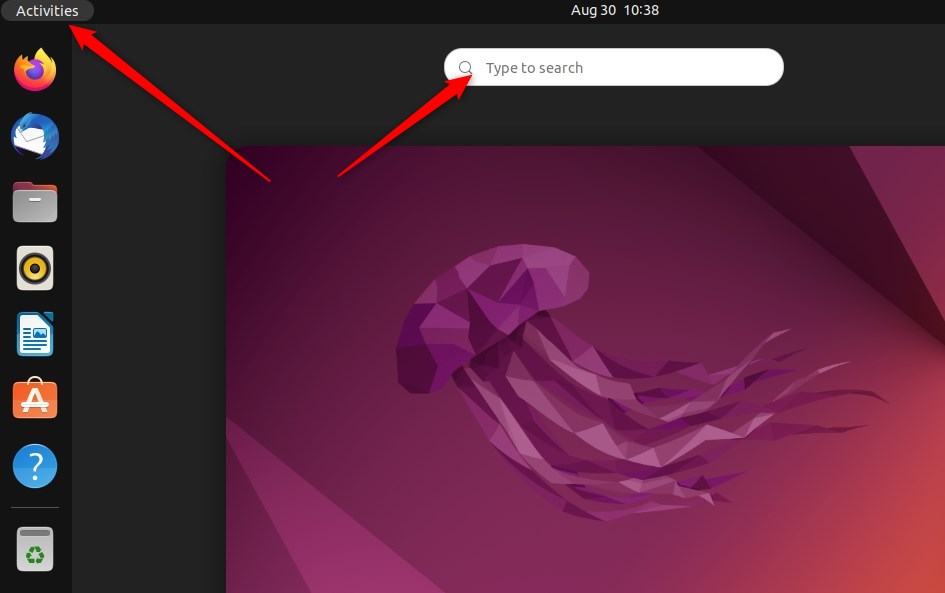
- Click Settings in that menu. The Settings app opens in a new window, with a list of categories on the left.
- Click Appearance in the left-hand list. The panel on the right shows the theme options, and further down a Dock section.
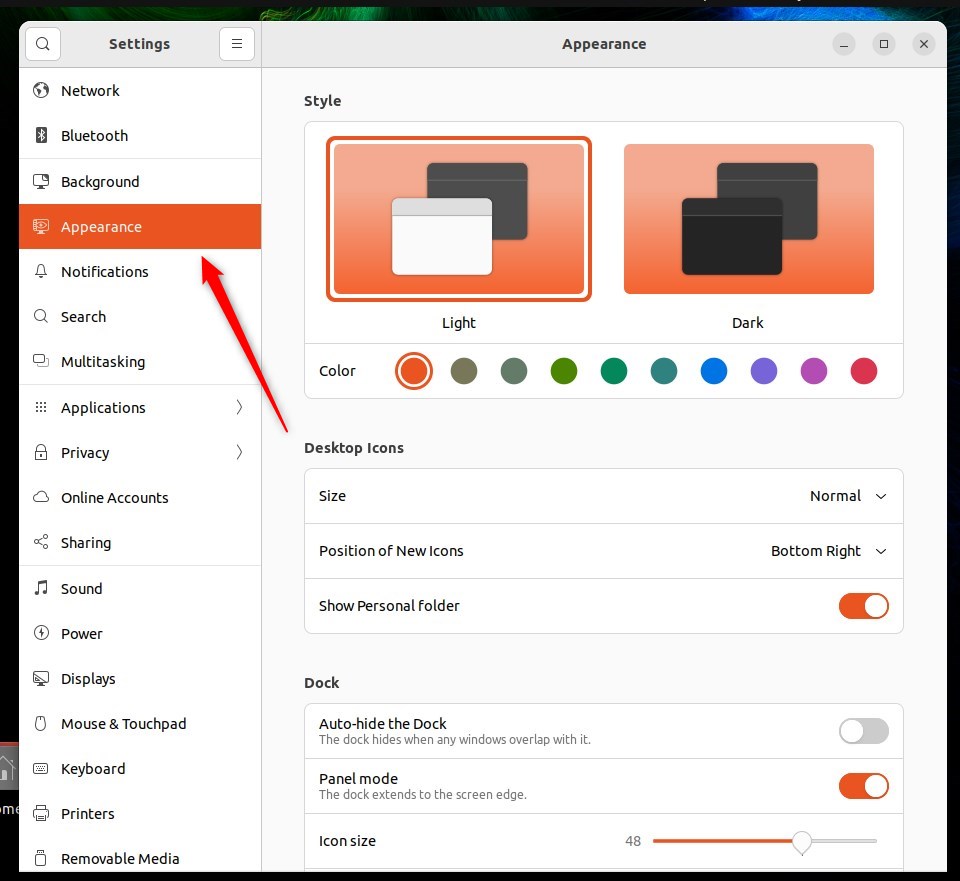
- In Settings Appearance, find the Dock section. You may need to scroll down a little.
- Click the Show on dropdown.
- Select All displays from the list. The dock should appear on every connected monitor right away. You do not need to log out or restart.
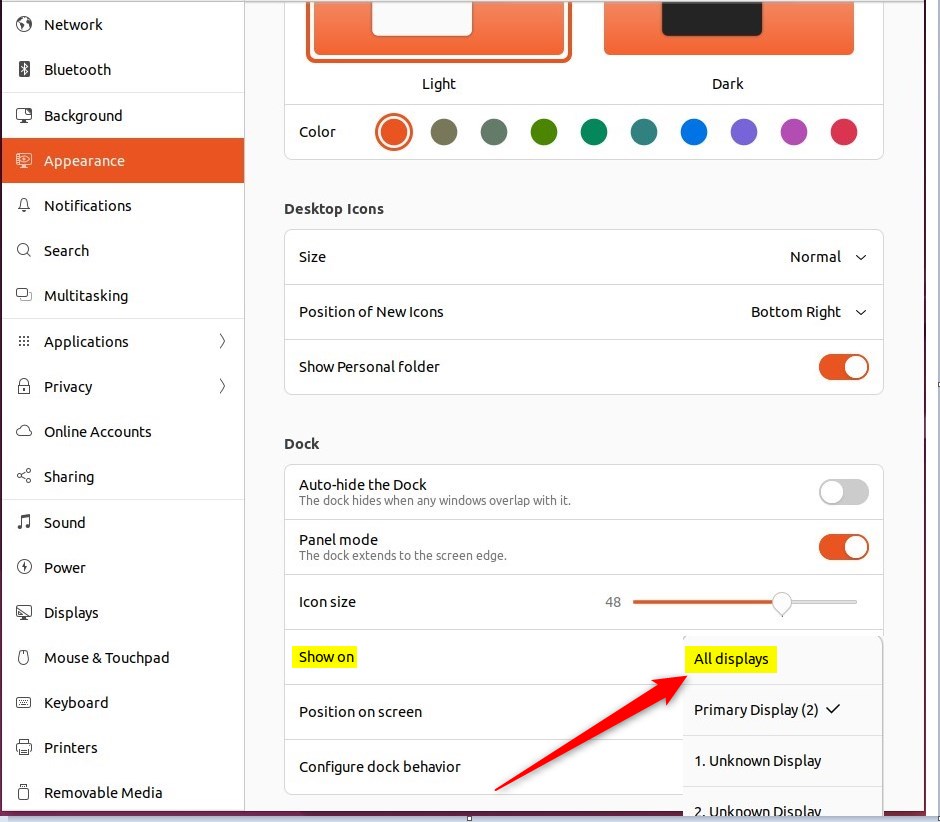
To undo the change, open the same Show on dropdown and pick a single display. The dock then goes back to showing on that one screen only.
That covers the main setup process.
Summary:
- Enabling the Dock on all displays in Ubuntu Linux allows for easy access to running applications
- User-friendly steps provided help in customizing the Dock visibility based on individual preferences
- Exploring additional settings in the System panel can further personalize the Ubuntu Linux experience
Have a question about this guide?
Answered by AI from this guide. Good questions may be added to this page — please don't include personal details.
Did this guide fix your problem?

About the Author
Richard
Tech Writer, IT Professional
Richard is a writer at Geek Rewind who turns complex IT tasks into clear, step-by-step guides. He draws on years of hands-on experience in system administration and enterprise IT operations, focusing on Windows, Linux and WordPress: the problems people actually run into, and the fixes that work. His server and WordPress guides come from systems he runs himself. Richard builds and maintains the platform behind Geek Rewind, from its Ubuntu servers and Nginx configuration to its custom WordPress plugins. Many new tutorials start with readers' questions, and he's always glad to answer them in the comments.
[…] Dock appears. One can hide it automatically, change its position, increase or decrease the icons, show it on all monitors, and […]