How to Check DirectX Version in Windows 11

You check your DirectX version in Windows 11 to confirm your system’s compatibility with games and graphics-intensive applications.
DirectX is a set of application programming interfaces (APIs) developed by Microsoft, crucial for handling multimedia tasks like video playback and gaming on your PC. It enables seamless communication between your hardware, especially your graphics card, and software.
Knowing your DirectX version, for example, DirectX 12 Ultimate on newer systems, helps troubleshoot issues like games failing to launch. It ensures your system supports the feature levels required by the software you intend to run.
Performing this check provides a clear report of your installed DirectX version, allowing you to verify if your PC meets the demands of modern software.
Press Windows key + R, type dxdiag, and press Enter. The DirectX Version is displayed on the System tab of the DirectX Diagnostic Tool.
Prerequisites
Before you begin, ensure your system is connected to the internet. You should also have your graphics card driver updated to the latest version provided by your manufacturer. While checking the version does not require special rights, installing updates may require admin privileges.
How to find your DirectX version
You can use a built-in tool called the DirectX Diagnostic Tool (dxdiag.exe) to see your information. Follow these simple steps:
- Click the Search icon on your taskbar.
- Type
dxdiagand press Enter. - Look at the System tab.
- Find the line that says DirectX Version to see your current number.
Alternatively, you can use the Run command:
- Press the Windows key + R on your keyboard.
- Type
dxdiaginto the box and press Enter.
If this is your first time opening the tool, it might ask if you want to check if your drivers are digitally signed. Select Yes to confirm your drivers are safe and verified.
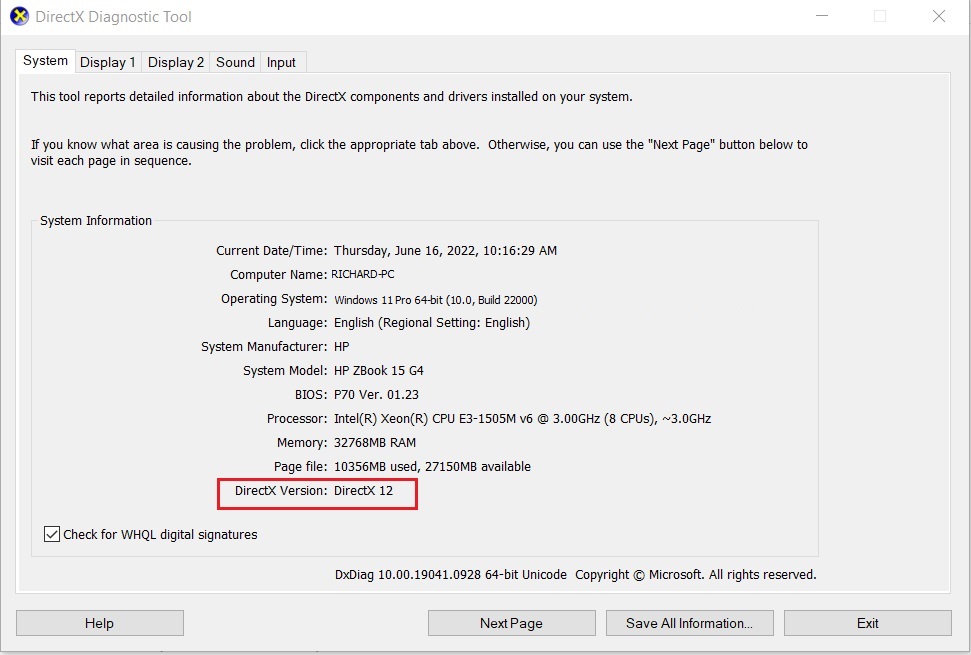
Note: This process does not require admin privileges.
Understanding DirectX Feature Levels
The DirectX version is not the only thing that matters. Your GPU must also support a specific DirectX feature level. This determines which advanced graphics effects your card can handle. You can check this in the Display tab within the dxdiag tool under the Drivers section.
Updating DirectX
Windows 11 updates DirectX automatically through Windows Update. If you are having issues, you can download the DirectX End-User Runtime Web Installer from the official Microsoft website to repair missing files.
Troubleshooting
If you see an error message when launching games, follow these steps:
- Update your graphics driver via Device Manager.
- Run the Windows Update tool to ensure your Windows Display Driver Model (WDDM) is current.
- Check if your game requires legacy components. You may need to enable them in Turn Windows features on or off.
Summary
Checking your DirectX version is a quick way to troubleshoot game errors or system performance issues. By using the dxdiag command, you can quickly verify your system settings and ensure your graphics drivers are working correctly. Keeping your version up to date ensures the best experience for your games and multimedia apps.
Does 🪟 Windows 11 support DirectX 9?
Yes, Windows 11 supports DirectX 9. While it is an older technology, Windows includes legacy components to ensure that older games and applications continue to run correctly. If a game fails to launch, you may need to manually enable the Legacy Components feature in the Windows Control Panel settings.
How do I reinstall DirectX?
You cannot uninstall DirectX because it is a core part of Windows. However, you can reinstall or repair it by downloading the DirectX End-User Runtime Web Installer from Microsoft. This tool scans your system for missing or corrupted files and replaces them with the correct versions automatically.
Why does dxdiag show a different version than my game requires?
The DirectX version shown in the tool is the highest version your Windows installation supports. If a game asks for a different version, it usually refers to the specific feature level of your graphics card. Ensure your GPU drivers are up to date to support the required feature level.
Was this guide helpful?

About the Author
Richard
Tech Writer, IT Professional
Richard, a writer for Geek Rewind, is a tech enthusiast who loves breaking down complex IT topics into simple, easy-to-understand ideas. With years of hands-on experience in system administration and enterprise IT operations, he’s developed a knack for offering practical tips and solutions. Richard aims to make technology more accessible and actionable. He's deeply committed to the Geek Rewind community, always ready to answer questions and engage in discussions.



No comments yet — be the first to share your thoughts!