How to Back Up Your BitLocker Recovery Key in Windows 11

You back up your BitLocker recovery key in Windows 11 to make sure you can still get into your encrypted drive, even if you forget your password or run into trouble with your TPM (Trusted Platform Module).
A BitLocker recovery key is a unique 48-digit numerical password that BitLocker drive encryption generates to protect your data. It’s your essential fallback for unlocking your drive.
Losing this key means permanently losing access to everything on your BitLocker-protected drive. So, saving it securely is crucial.
You have a few options for saving your recovery key: your Microsoft account, a USB flash drive, or printing it out. This process is straightforward on Windows 11 Pro and Enterprise versions.
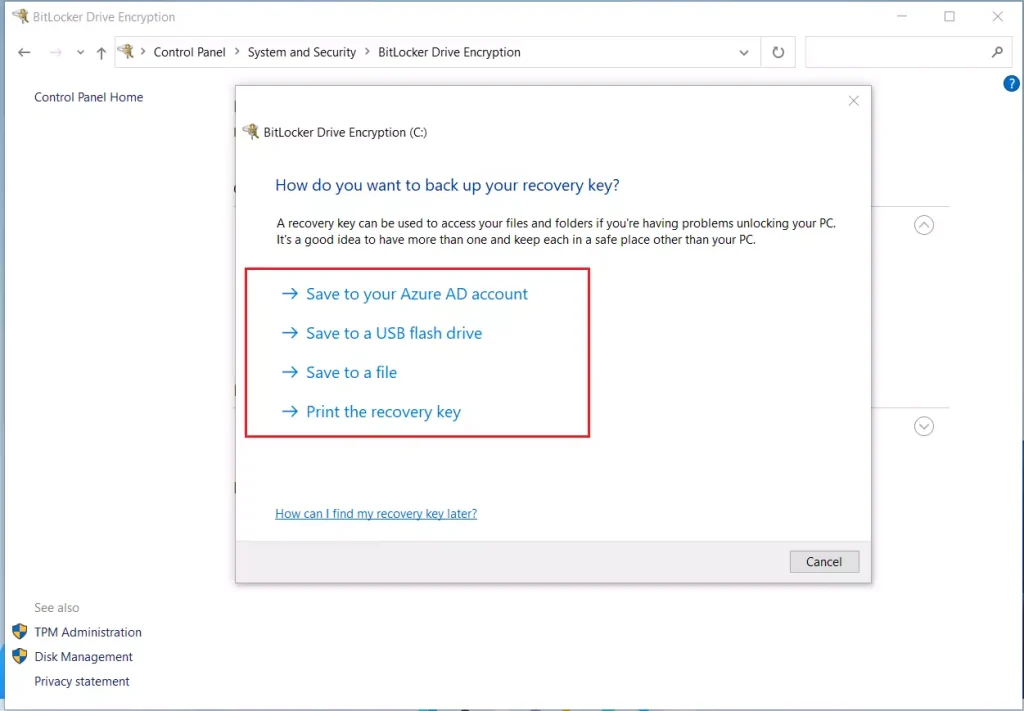
Open Control Panel, click BitLocker Drive Encryption, select your drive, and click “Back up your recovery key.” Choose to save it to your Microsoft account, a USB drive, a file, or print it.
What is BitLocker?
BitLocker is a built-in Windows feature that encrypts your drive, keeping your files safe. It ensures only you, or someone with the correct password, can access your data.
Windows might ask for your recovery key if it suspects unauthorized access or after certain hardware or software changes. This acts as an extra layer of security.
Think of your BitLocker recovery key as a special 48-digit number. You’ll need it to unlock your computer if Windows prompts you for it.
Why Back Up Your BitLocker Recovery Key?
It’s really important to keep a backup of your recovery key. If you lose it, you could be locked out of your files. In some situations, you might even have to reset Windows, which means losing your data.
Here’s what can happen if you don’t have the key:
- If Windows asks for the recovery key and you don’t have it, you can’t unlock your computer.
- If it’s a data or removable drive and you lose the key, the data will be lost unless you format the drive (which deletes everything).
How to Back Up Your BitLocker Recovery Key
Follow these steps to save your recovery key safely:
If necessary, switch the view to ‘Large icons’ or ‘Small icons,’ then click ‘BitLocker Drive Encryption.’
Click on Back up your recovery key.
- Save to your Microsoft account – saves your key online so you can get it anytime by logging in.
- Save to a USB flash drive – saves the key as a file on a USB stick.
- Save to a file – save the key on your computer or another location.
- Print the recovery key – print out a paper copy to keep somewhere safe.
Save to Your Microsoft Account
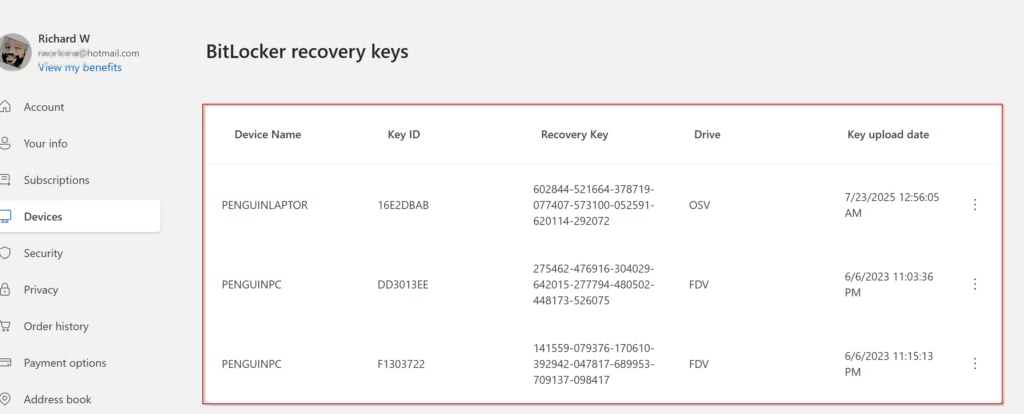
Click Save to your Microsoft account.
This stores the recovery key online, and you can access it anytime from the Microsoft Account Recovery Keys page.
Save to a USB Flash Drive
- Plug in a USB flash drive to your PC.
- Click Save to a USB flash drive.
- Select the USB drive from the list and click Save.
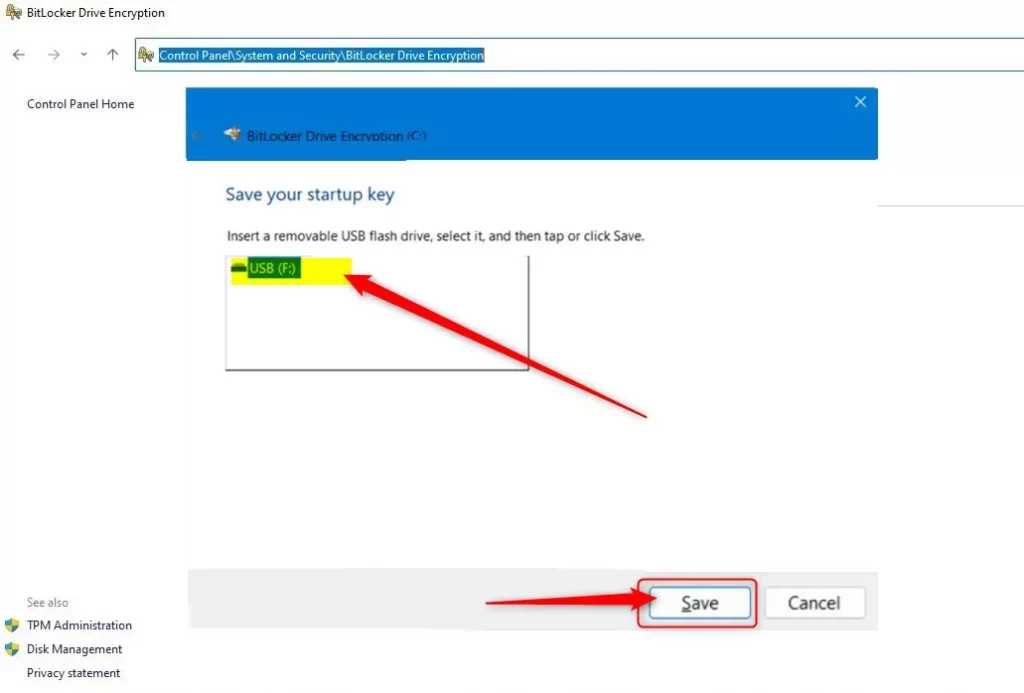
The recovery key will be saved as a text file on your USB drive.
Save to a File on Your Computer
- Click Save to a file.
- Choose a safe folder on your computer to save the file.
- Click Save.
Print the Recovery Key
- Make sure your printer is turned on and connected.
- Click Print the recovery key.
- Choose your printer and click Print.
Summary
- Backing up your BitLocker recovery key keeps your data safe and accessible.
- You can save your key to your Microsoft account, a USB drive, a file, or print it out.
- Store your recovery key somewhere secure to stop others from accessing it.
- If you lose the recovery key and are locked out, you risk losing access to your data.
- Check your backup methods regularly, especially if you change or update your computer.
If you want to learn more, check out the official Microsoft guide here: Back Up Your BitLocker Recovery Key – Microsoft Support.
Was this guide helpful?

About the Author
Richard
Tech Writer, IT Professional
Richard, a writer for Geek Rewind, is a tech enthusiast who loves breaking down complex IT topics into simple, easy-to-understand ideas. With years of hands-on experience in system administration and enterprise IT operations, he’s developed a knack for offering practical tips and solutions. Richard aims to make technology more accessible and actionable. He's deeply committed to the Geek Rewind community, always ready to answer questions and engage in discussions.



No comments yet — be the first to share your thoughts!