How to View Point-in-time Restore Points List in Windows 11

Point-in-time restore helps you fix your computer if something goes wrong. It takes a snapshot of your system files, apps, and settings. If your computer starts acting up after an update or a bad app install, you can go back to a time when it worked perfectly. This saves you from having to reinstall Windows from scratch.
How to View Restore Points in Settings
You can see your list of saved snapshots directly in the Windows settings menu. This requires administrative rights.
Steps:
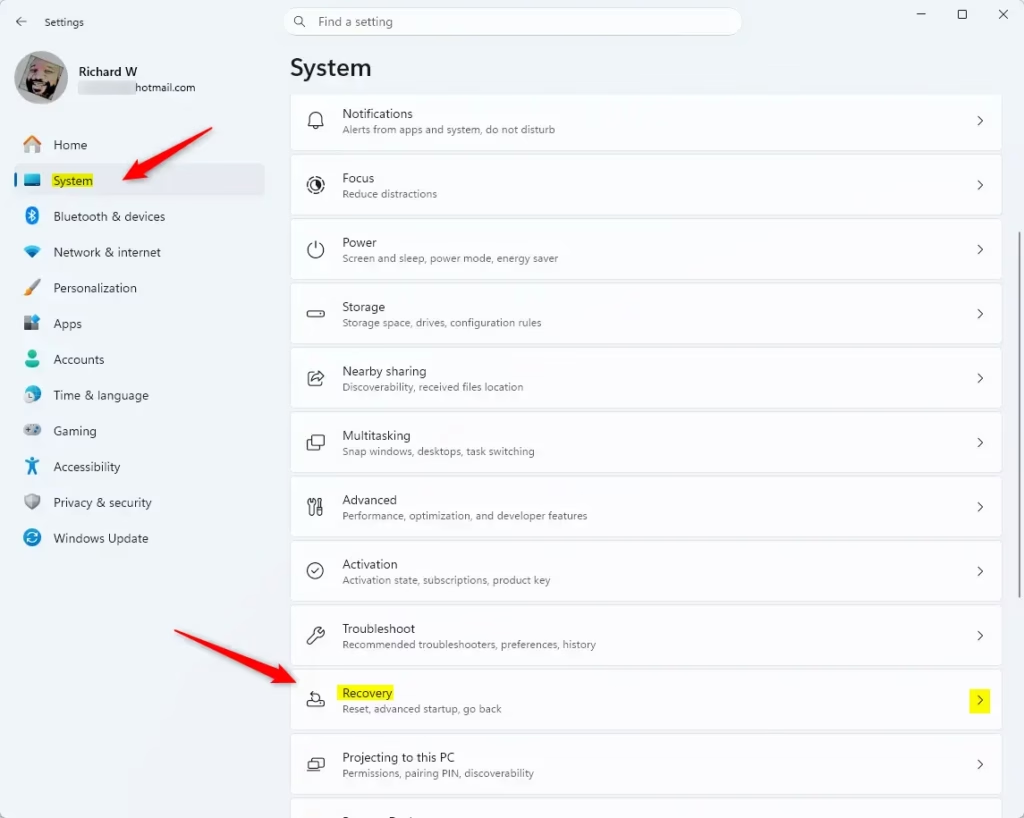
- Press Win + I to open Settings.
- Go to System and click on Recovery.
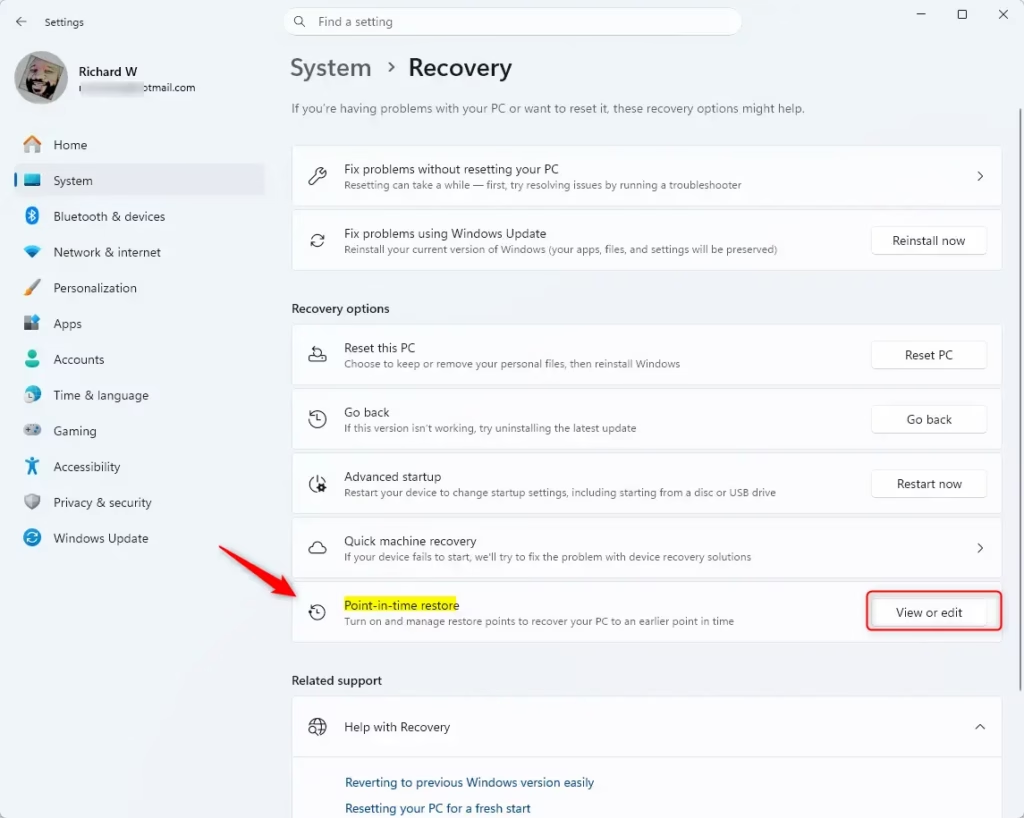
- Find Point-in-time restore and click View or edit.
- [ADMIN REQUIRED] Click Yes on the User Account Control (UAC) prompt.
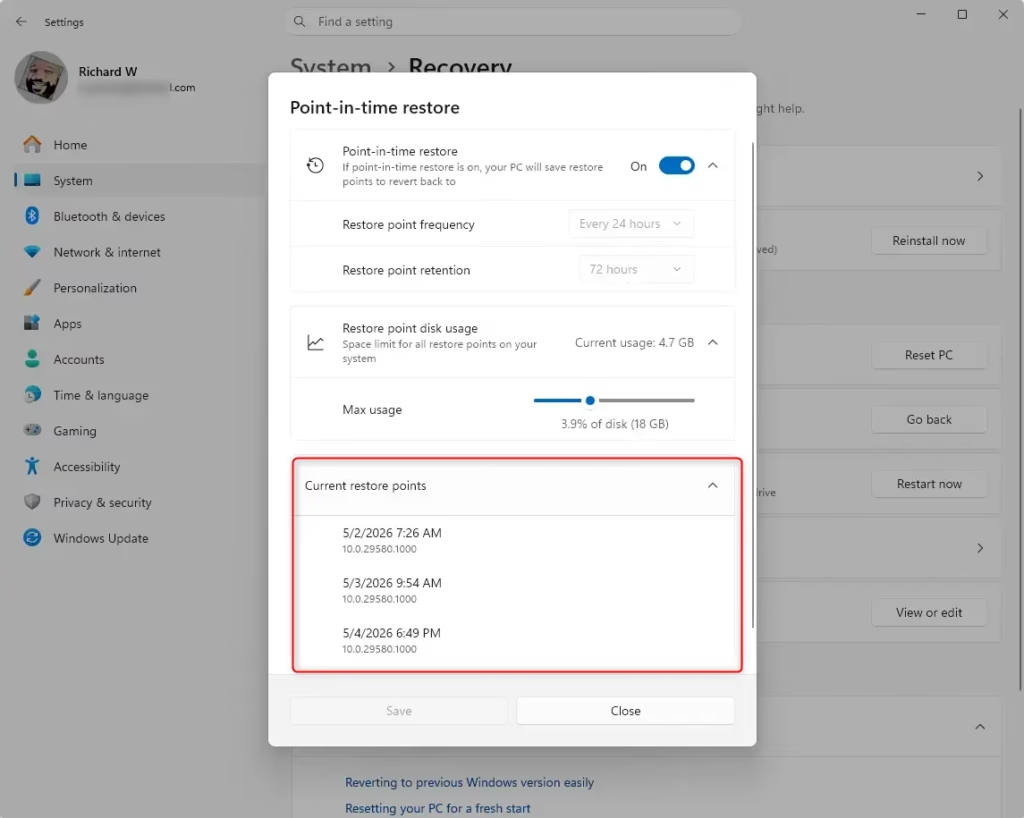
- You will see a list of available snapshots under Current restore points.
| Criteria | Point-in-time restore | System Restore |
|---|---|---|
| Configuration | System settings | Control panel |
| Restore point trigger | Scheduled frequency (automatic only) | Event-triggered or manual |
| Retention | Max 72 hours per restore point | Indefinite (subject to disk usage/cleanup) |
| Target scope | Full system state | System files and settings; app/user data coverage varies |
| Management | Will support remote management* | No modern management |
| Configuration | Defaults | Options |
|---|---|---|
| Feature On/Off | On | On, Off |
| Restore point frequency | Every 24 hours | 4, 16, 12, 24 hours |
| Restore point retention | 72 hours | 6, 12, 16, 24, 72 hours |
| Maximum usage limit | 2% of disk | Percent of disk (min 2GB, max 50GB equivalent) |
Viewing Restore Points via Command Line
Advanced users can use the Command Prompt to see shadow copies. This is useful if the Settings menu is not responding.
Steps:
- Press Win + S and type cmd.
- Right-click Command Prompt and select Run as administrator.
- [ADMIN REQUIRED] Type the following command and press Enter: Code
vssadmin list shadows
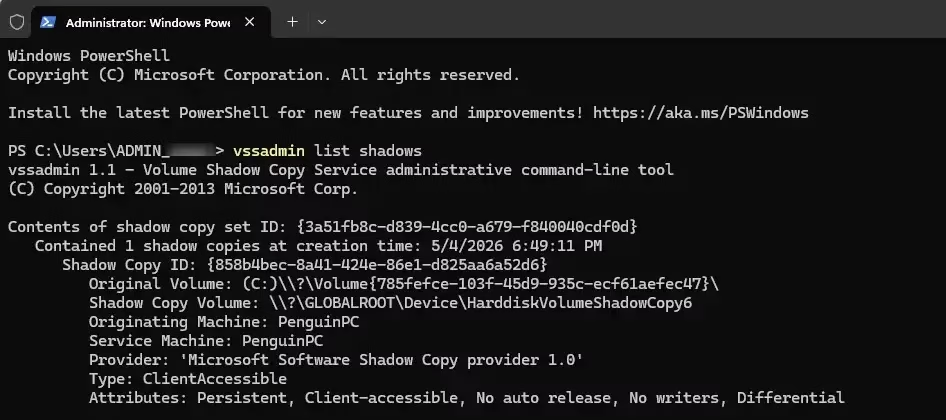
This command lists all shadow copies currently stored on your drive. If the list is empty, no restore points are available.
Troubleshooting Missing Restore Points
If you cannot find any restore points, check these common issues:
- System Protection is Off: Go to System Properties > System Protection and ensure it is turned On for your drive.
- Disk Space: If your drive is nearly full, Windows may delete old restore points to make room for new files.
- Age Limit: Restore points are typically kept for a maximum of 72 hours. If your last point is older than that, it may have been deleted automatically.
Summary
Point-in-time restore is a powerful tool for fixing Windows 11 issues. You can view your restore points through the Settings menu or the Command Prompt. Always remember that these points are temporary and depend on your available disk space. If you need to save space, you can manage these settings in the System Protection menu.
Why are my restore points not showing up in the list?
Restore points may not appear if System Protection is disabled for your drive or if your disk space is critically low. Additionally, Windows automatically deletes restore points older than 72 hours. Ensure your system protection settings are configured correctly in the System Properties menu to allow for regular snapshot creation.
How do I delete old restore points to free up disk space?
You can manage disk space by opening System Properties, selecting your drive, and clicking Configure. From there, you can adjust the Maximum Usage slider to limit how much space restore points consume. You can also click Delete to remove all existing restore points for that drive immediately.
Can I view restore points without initiating a restore?
Yes. Using the View or edit button in the Recovery settings menu allows you to see a list of available restore points without starting the recovery process. Similarly, using the vssadmin list shadows command in the Command Prompt lets you view technical details about your shadow copies safely.
Was this guide helpful?


Leave a Reply Cancel reply