Enable Night Light in Ubuntu Linux: A Quick Guide


Night Light in Ubuntu Linux automatically warms your screen colors as the sun goes down. This filters out harsh blue light and reduces eye strain. Ubuntu 22.04 LTS and newer versions (including 24.04 LTS and 26.04 LTS) include this color-shifting tool in Settings Displays
You can turn the feature on manually or set a custom schedule so your display adjusts itself every evening. This helps protect your sleep during late-night work.
Before you start: these steps apply to the default GNOME desktop that comes with Ubuntu. Official flavors use other desktops and other tools. Kubuntu has its own Night Color setting in KDE. Xubuntu and Lubuntu don’t ship a Night Light panel at all, so on those you would use a tool such as Redshift instead. If your Settings app looks like the screenshots below, you are on GNOME and can follow along.
You don’t need to install anything. Night Light is part of GNOME, and you need no administrator rights to change it.
Night Light in Ubuntu turns on in Settings Displays Night Light, where you switch the toggle on and can pick Sunset to Sunrise or a custom schedule. It warms your screen colors after dark to reduce eye strain. The feature is part of the default GNOME desktop on Ubuntu 22.04 LTS and newer, so no installation is needed.
How to enable or disable night light in Ubuntu Linux
Night Light reduces eye strain after dark by warming up the colors on your display. You turn it on or off in Settings by opening the Displays panel, selecting Night Light, and switching the toggle on or off. By default, the screen warmth follows your local sunset and sunrise times, unless you pick your own schedule.
It does not touch your files or apps, and you can switch it off at any time. Keep in mind that the warm tint changes how colors look, so turn it off while you do color-sensitive work such as photo editing.
All Night Light preferences live in the Settings panel, so you can find the toggle, schedule and warmth setting in one place. There is no separate app to open and no config file you need to edit.
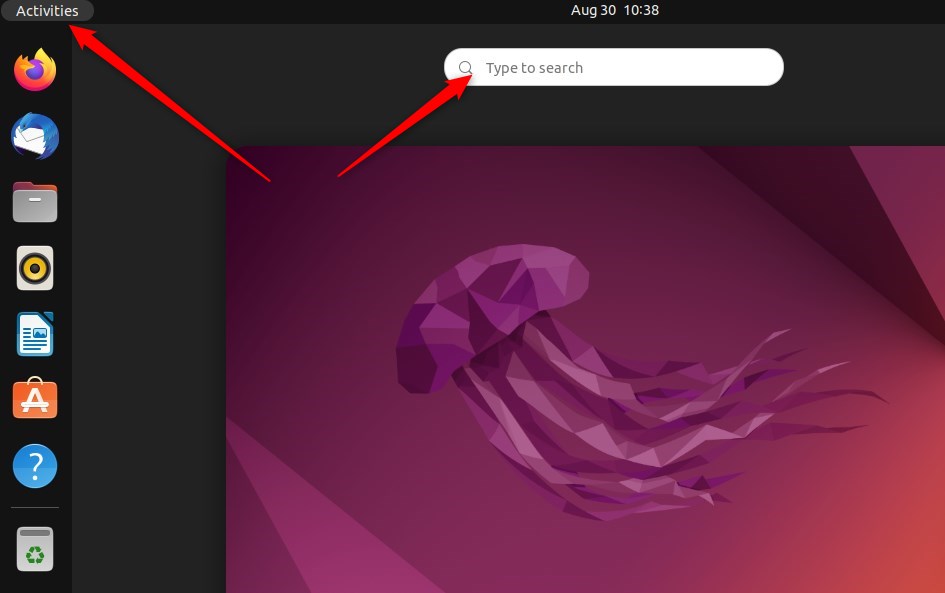
- Click the System menu at the top-right corner of your desktop's top bar. It holds the network, sound and power icons.
- Check the result: a menu with quick toggles and sliders should drop down.
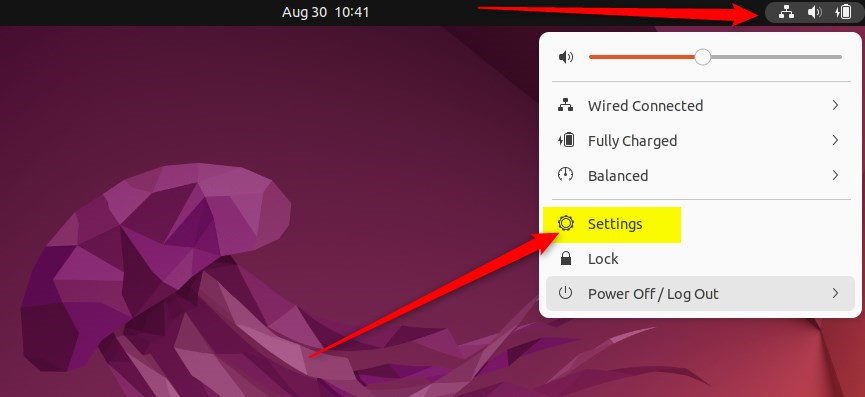
- On the System menu, select Settings, as shown below.
- Check the result: the Settings window should open with a list of categories on the left.
If you prefer the keyboard, you can also press the Super (Windows) key, type "Settings" and press Enter.
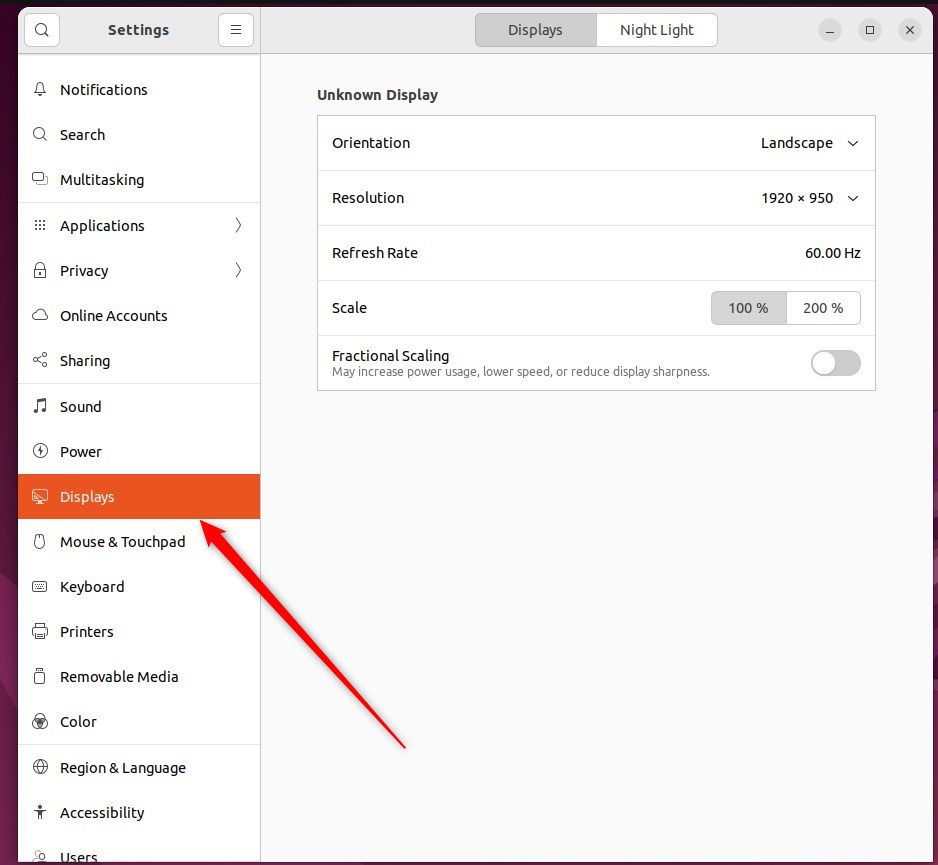
- In the Settings app, click the Displays tile to open that panel. In some versions it appears in the left sidebar rather than as a tile.
- Check the result: you should see your screen resolution, refresh rate and scale options.
If you can't find Displays, scroll the sidebar. The list is long and the entry can sit below the visible area. If the panel looks very limited, you may be in a virtual machine, where display options depend on the guest drivers.
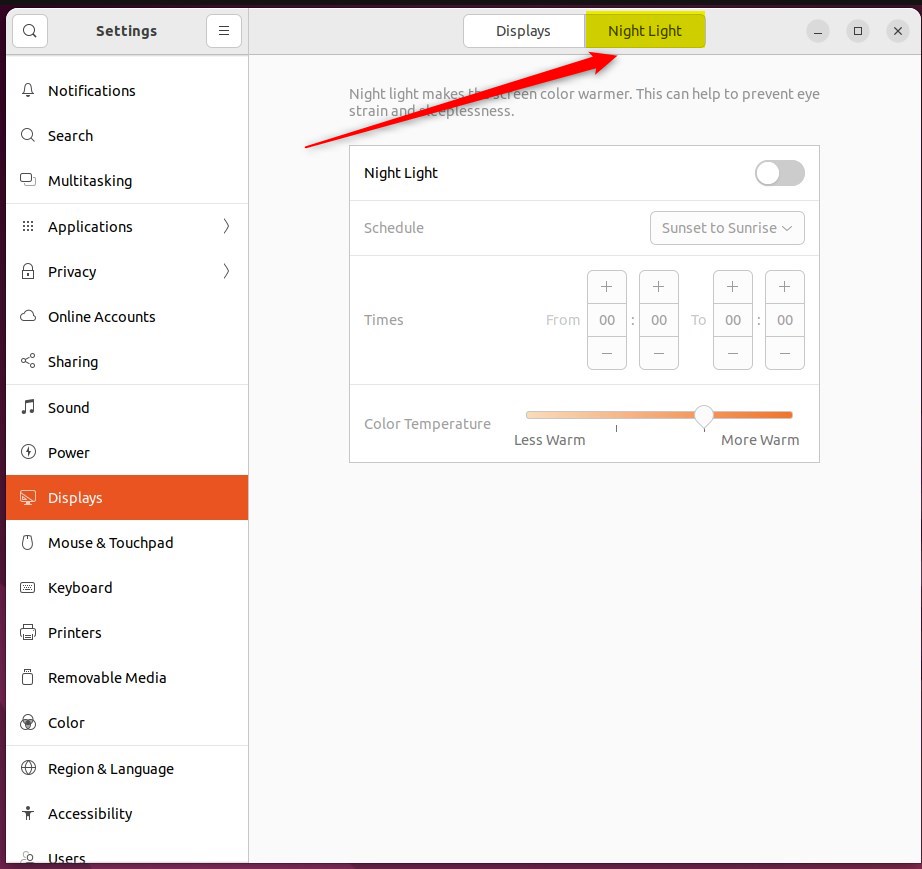
- In the Settings Displays panel, click Night Light in the header bar.
- Check the result: a Night Light window opens with the on/off switch and the schedule settings.
If you have more than one monitor, Night Light applies to all of them. You don't set it per screen.
- In the Settings Displays Night Light panel, toggle the Night Light switch to the On position.
- Check the result: your screen should take on a warmer, more yellow tint right away, or at the next scheduled time if you use a schedule.
- Adjust the Color Temperature slider. Drag it toward the warm end for a stronger orange tint, or toward the cool end for a lighter one.
- Check the result: the screen updates as you move the slider, so you can pick a level that is comfortable without making colors look wrong.
To disable Night Light, move the Night Light switch back to the Off position. The screen returns to normal colors straight away.
It switches the feature on or off without opening Settings. Older releases such as 22.04 LTS don't have this toggle, so use the Settings panel there.
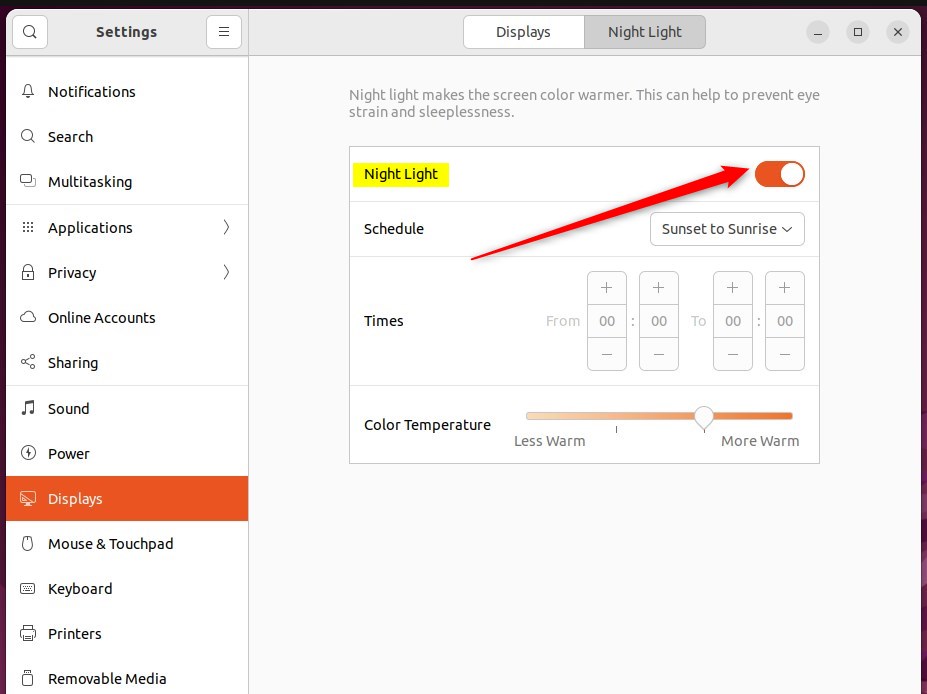
- In the Night Light panel, find the Schedule setting.
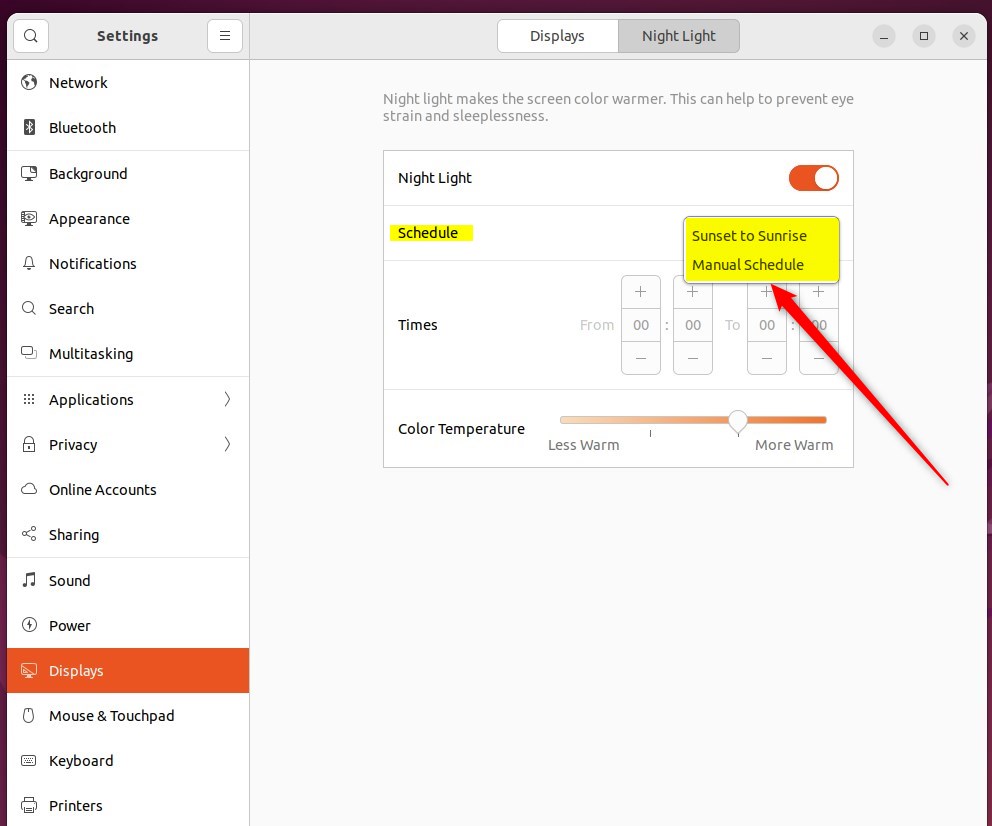
- Select Sunset to Sunrise to have the screen color adjust automatically based on your location's sunset and sunrise times.
This option needs your location. If Location Services is turned off, Ubuntu can't work out your sunset time, so check Settings Privacy if the schedule doesn't behave as expected. Also make sure the date, time and time zone are correct, because the sunset time is calculated from them.
- Under Schedule, select Manual Schedule to set a custom schedule.
- Use the Times fields to enter the hour and minute when Night Light should start and stop.
- Check the result: Night Light turns on and off at the times you entered, every day.
This is useful if you want the warm tint on earlier in the evening, or if you don't want to share your location. You can switch back to Sunset to Sunrise at any time.
While Night Light is active, the top bar shows an indicator, so you can tell at a glance that the tint is on. You can turn it off temporarily from the system menu. The schedule then resumes on its own, so you don't have to change your settings.
That completes the setup. You can close the Settings app. Night Light needs no restart, and your choices are saved automatically. To undo everything, open Settings Displays Night Light again and set the switch to Off.
Using Night Light on Ubuntu helps protect your eyes and improve sleep quality during late-night sessions:
- Night Light in Ubuntu Linux gives you a simple way to reduce eye strain and improve sleep quality when you use your computer at night.
- You can enable or disable Night Light in a few steps in Settings, and set a schedule that fits your routine.
- The Sunset to Sunrise option or a Manual Schedule gives you flexible control over when the warm colors appear, and the Color Temperature slider lets you adjust how strong they are.
- The indicator in the top bar shows at a glance when Night Light is active, and on newer releases a quick toggle in the system menu lets you switch it on or off fast.
- Overall, Night Light on the GNOME desktop in Ubuntu makes the screen easier on your eyes in low light.
Have a question about this guide?
Answered by AI from this guide. Good questions may be added to this page — please don't include personal details.
Did this guide fix your problem?

About the Author
Richard
Tech Writer, IT Professional
Richard is a writer at Geek Rewind who turns complex IT tasks into clear, step-by-step guides. He draws on years of hands-on experience in system administration and enterprise IT operations, focusing on Windows, Linux and WordPress: the problems people actually run into, and the fixes that work. His server and WordPress guides come from systems he runs himself. Richard builds and maintains the platform behind Geek Rewind, from its Ubuntu servers and Nginx configuration to its custom WordPress plugins. Many new tutorials start with readers' questions, and he's always glad to answer them in the comments.
No comments yet — be the first to share your thoughts!