How to Enable or Disable Capitalizing the First Letter in a Sentence in Windows 11 Touch Keyboard

You enable or disable capitalizing the first letter of a sentence in Windows 11’s Touch Keyboard through its settings.
This feature automatically capitalizes the initial letter of each new sentence as you type on the on-screen keyboard, making your input faster on touch devices.
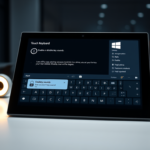
The Windows 11 Touch Keyboard is a virtual keyboard that appears on your screen when you need to input text without a physical keyboard, such as on a tablet or 2-in-1 laptop.
Enabling auto-capitalization means you never have to manually press Shift for the start of a new sentence, saving you a small but noticeable amount of time during frequent typing.
Go to Settings, then Time & language, and select Typing. Expand the Touch keyboard section and toggle “Capitalize the first letter of each sentence” on or off.
How to Turn On or Off Auto-Capitalization Using Windows Settings
This is the easiest way to change the setting. Follow these steps:
- Open the Settings app:
- Click the Start menu and select Settings, or
- Press Windows key + I on your keyboard.
- In the Settings window, click Time & language on the left side.
Windows 11 Time & Language button in Settings app - On the right, click the Typing section to open it.
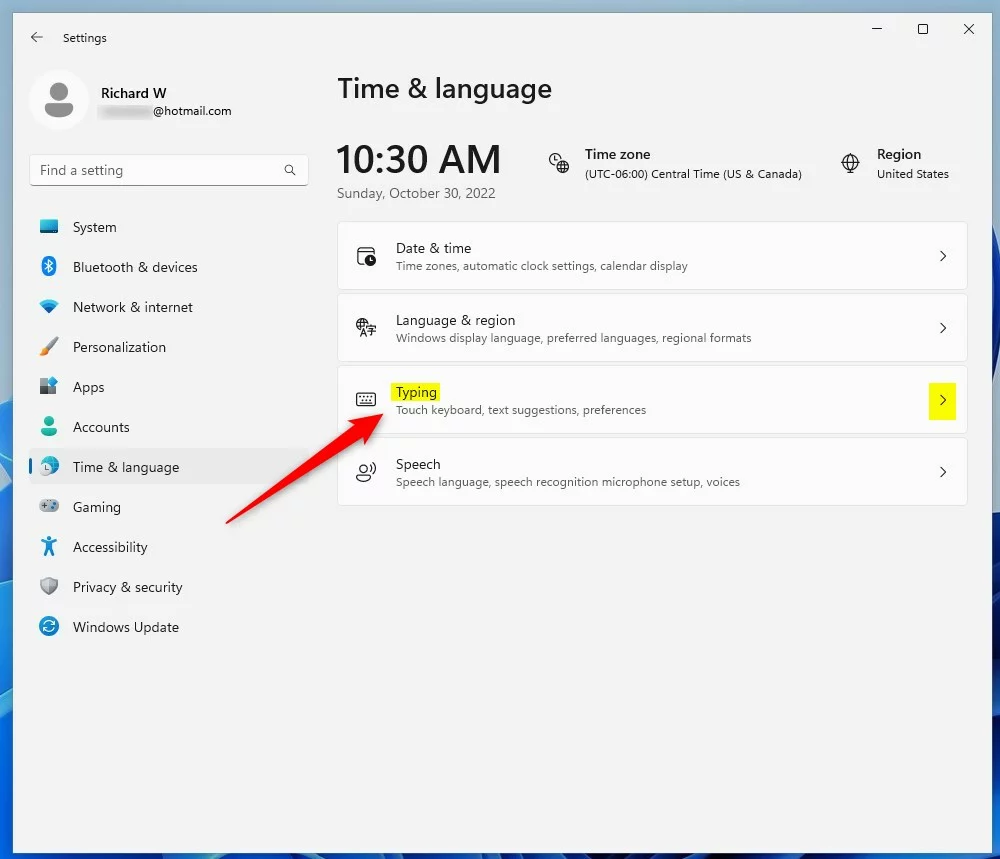
windows 11 time and language typing tile - Scroll down and find the Touch keyboard section. Click to expand it.
- Look for the option labeled “Capitalize the first letter of each sentence” and check the box to turn it on. Uncheck the box if you want to turn it off.
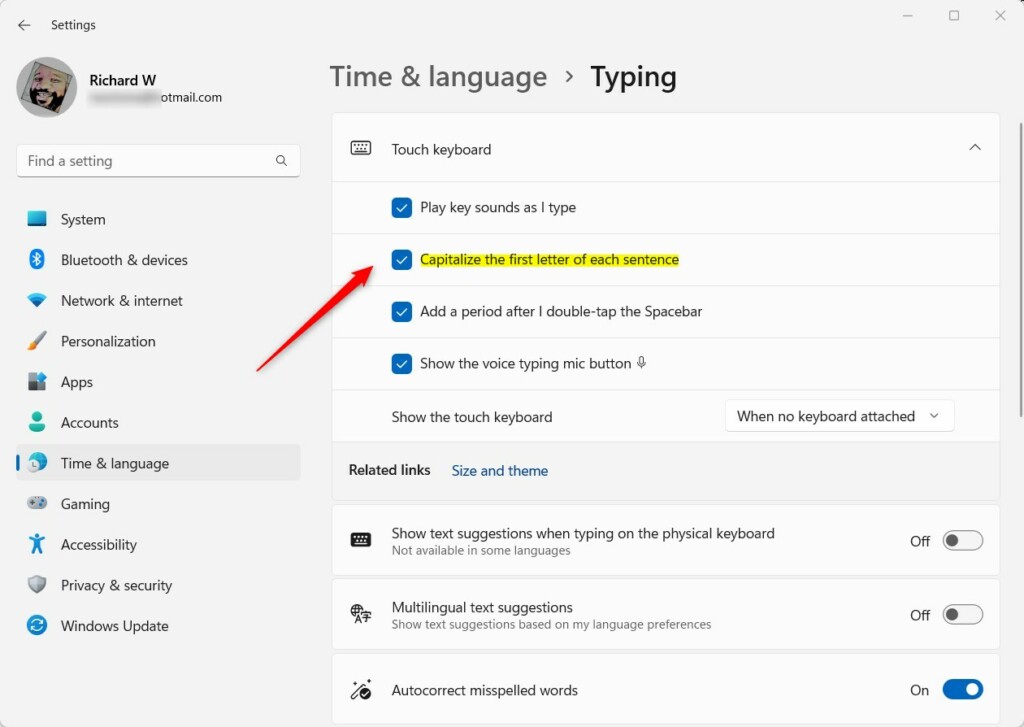
Enable or disable capitalize first letter of each sentence in Windows 11 Touch keyboard - Close the Settings app when you’re done. Your changes will apply right away.
How to Enable or Disable Auto-Capitalization Using the Windows Registry (Advanced)
If you are comfortable using the Windows Registry, you can also change this setting there. This method is for advanced users only.
Warning: Be careful when editing the Registry. Changing the wrong settings can cause problems with your PC.
- [Admin Required] Open the Registry Editor:
- Press Windows key + R, type
regedit, and press Enter.
- Press Windows key + R, type
- Navigate to this folder (key):
HKEY_CURRENT_USER\Software\Microsoft\TabletTip1.7
- If you don’t see the 1.7 folder, right-click on TabletTip, select New > Key, and name it 1.7.
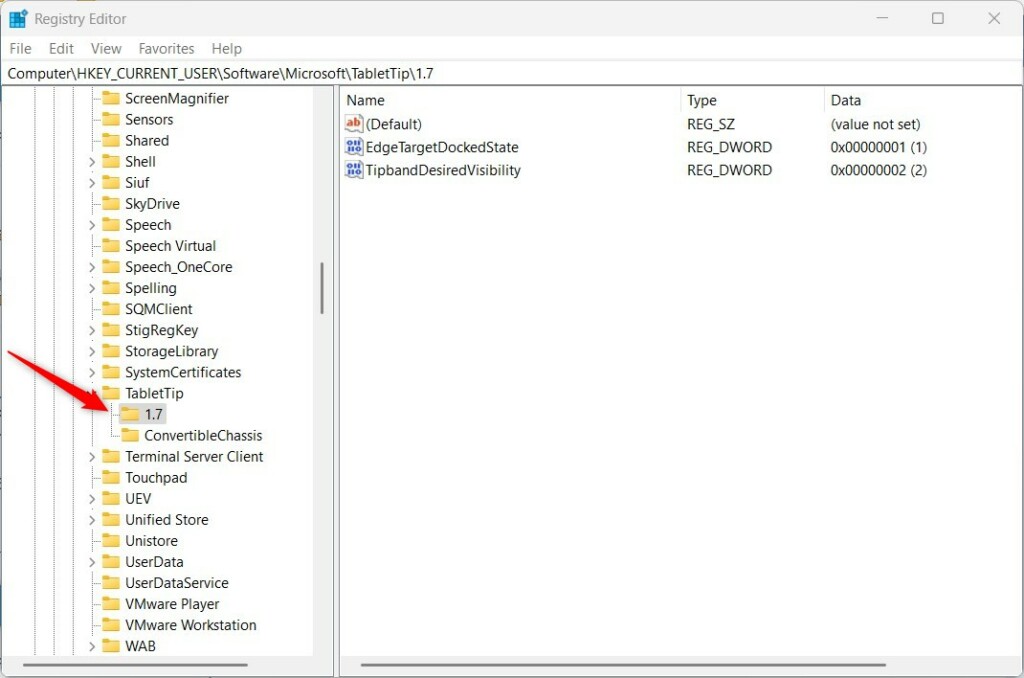
Windows Registry - TabletTip key - Inside the 1.7 folder, right-click on an empty area in the right pane. Select New > DWORD (32-bit) Value.
- Name the new entry:
EnableAutoShiftEngage - Double-click
EnableAutoShiftEngageand set the value:1to turn on auto-capitalization0to turn it off
Make sure the base is set to Decimal.
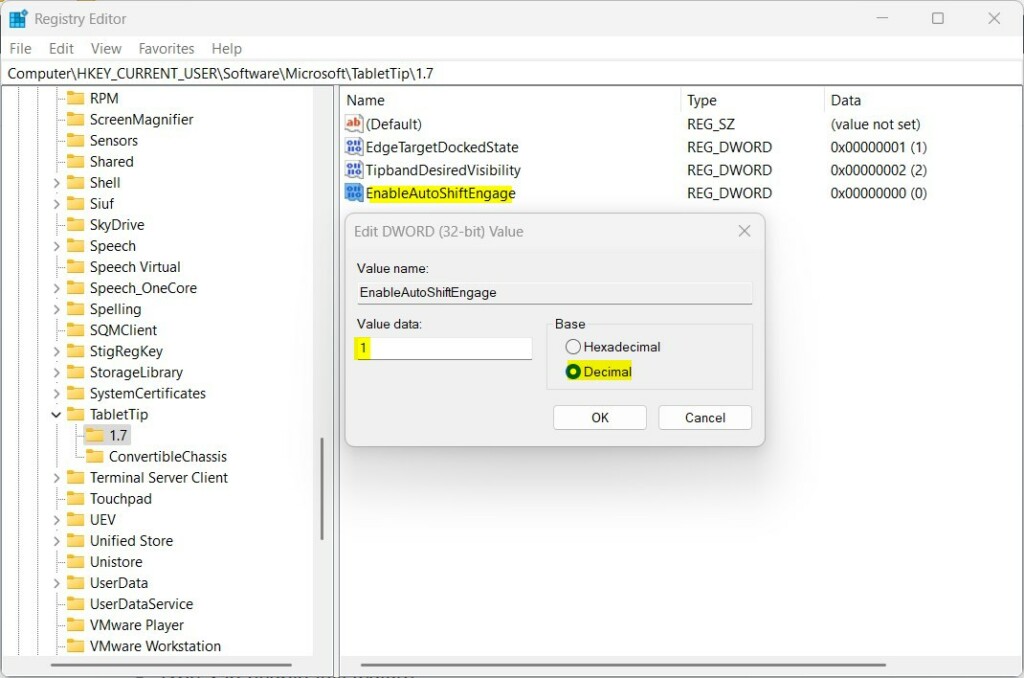
Windows Registry EnableAutoShiftEngage value - Click OK, close the Registry Editor, and restart your PC for changes to take effect.
Summary
Auto-capitalization makes typing on the Touch keyboard easier by automatically starting sentences with a capital letter. You can change this setting anytime from the Windows Settings app or the Registry Editor for advanced users. This helps you type faster and more accurately on your Windows 11 touchscreen device. Enjoy easier typing!
Was this guide helpful?

About the Author
Richard
Tech Writer, IT Professional
Richard, a writer for Geek Rewind, is a tech enthusiast who loves breaking down complex IT topics into simple, easy-to-understand ideas. With years of hands-on experience in system administration and enterprise IT operations, he’s developed a knack for offering practical tips and solutions. Richard aims to make technology more accessible and actionable. He's deeply committed to the Geek Rewind community, always ready to answer questions and engage in discussions.


No comments yet — be the first to share your thoughts!