
Windows File Explorer is a file manager app that comes built into Windows. It gives you a simple way to view, copy, move, delete, and rename your files and folders.
Windows has a helpful feature that can automatically restore your File Explorer folders when you sign out, restart, or shut down the computer. When you enable the “Restore previous folder windows at logon” setting in File Explorer, Windows remembers all the extra tabs and windows you had open. The next time you sign in, those folders come right back.
Why Use This Feature?
This feature saves you time. You don’t have to reopen all your folders after logging in. Everything is exactly where you left it.
What Happens When You Enable It?
Windows will remember your open File Explorer windows and tabs. When you log back in, they automatically reopen.
Method 1: Use File Explorer Settings
This is the easiest way to turn this feature on or off.
- Open File Explorer Folder Options.
- Click on the View tab at the top.
- Look for the box next to “Restore previous folder windows at logon”.
- Check the box to turn the feature on. Uncheck it to turn it off.
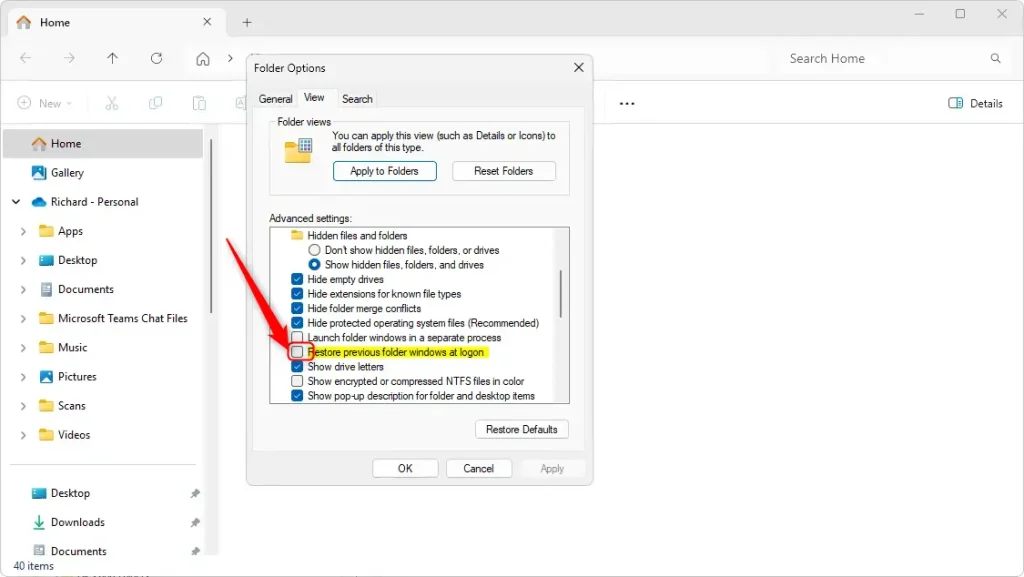
- Click OK to save your changes.
Method 2: Use Windows Registry Editor
This method is for users who prefer advanced options. The Windows Registry stores important settings for your computer.
⚠️ ADMIN PRIVILEGES REQUIRED: You need administrator access to edit the registry.
Before you make any changes, back up your registry or create a System Restore point just to be safe.
- Open the Windows Registry (search for “regedit” in Windows).
- Navigate to this folder path:
Computer\HKEY_CURRENT_USER\Software\Microsoft\Windows\CurrentVersion\Explorer\Advanced - Right-click on Advanced and choose New > DWORD (32-bit) Value.
- Name the new entry
PersistBrowsers. - Double-click
PersistBrowsersand set the value to1to turn on the feature. Use0to turn it off.
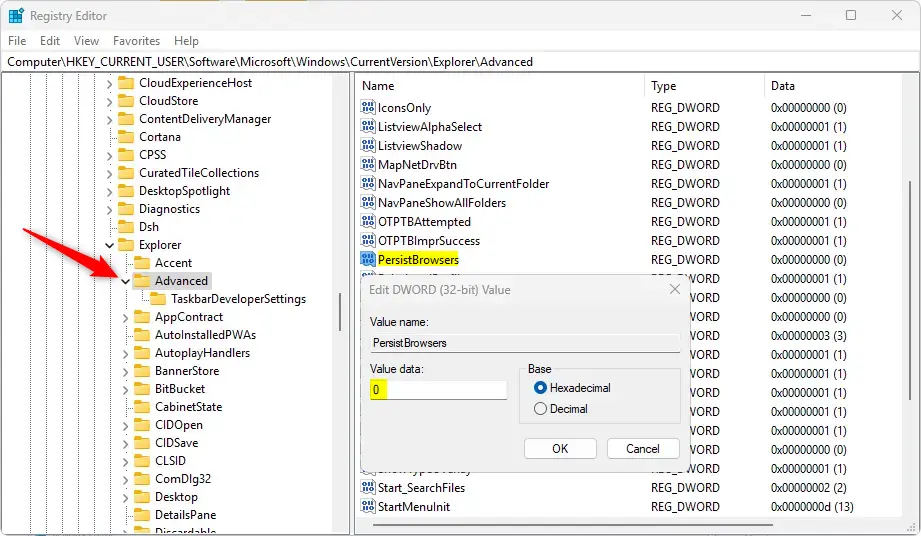
You may need to restart your computer for the changes to take effect.
Summary
Turning the “Restore previous folder windows at logon” feature on or off is simple. You have two options:
- Easy method: Use the File Explorer Folder Options menu to enable or disable the feature in just a few clicks.
- Advanced method: Edit the Windows Registry to control this setting. Remember to back up your registry first.
- Always create a System Restore point before making registry changes for extra safety.
- Your computer may need to restart for changes to work properly.
- This feature helps you work faster by remembering where you left off.
Frequently Asked Questions
How do I enable the 'Restore previous folder windows at logon' feature in Windows 11?
Can I disable the 'Restore previous folder windows at logon' feature?
What is the Windows Registry Editor and how can it help with restoring folders?
Is it safe to edit the Windows Registry for restoring previous folders?
Will I need to restart my computer after changing the folder restore settings?


Leave a Reply Cancel reply