How to Reset AutoPlay Settings in Windows 11


AutoPlay in Windows 11 controls what happens on your screen when you plug in a removable device like a USB drive or memory card. Resetting these settings restores the original default behavior for every connected drive.
Windows 11 includes over 20 different media types and device actions that you can reset at once through the Settings app. Fixing broken AutoPlay triggers stops random programs from opening or ensures Windows recognizes your plugged-in accessories right away.
Open Control Panel , go to Hardware and Sound, then click AutoPlay. Select “Reset all defaults” at the bottom and click Save. This restores AutoPlay to its original settings.
Why reset AutoPlay?
Resetting AutoPlay in Windows 11 helps fix connected devices that do not open automatically or respond correctly when plugged in. Clearing your saved choices lets you start fresh so Windows asks what to do each time you plug in a camera, phone, or memory card.
What happens when done?
When you reset AutoPlay settings in Windows 11, your computer stops using your saved preferences for devices. Instead of opening a specific app automatically, Windows will ask you what you want to do each time you connect something new, like a USB stick or memory card.
How to reset AutoPlay in 🪟 Windows 11
Resetting AutoPlay in Windows 11 takes just a few clicks inside the Control Panel . You can restore factory defaults by opening the hardware settings, scrolling to the bottom of the page, and clicking the reset button to clear all custom actions.
- Open the Control Panel by searching for it in the Start menu .
- Select the Hardware and Sound group.
- Click on AutoPlay.
- At the bottom of the window, click the Reset all defaults button.
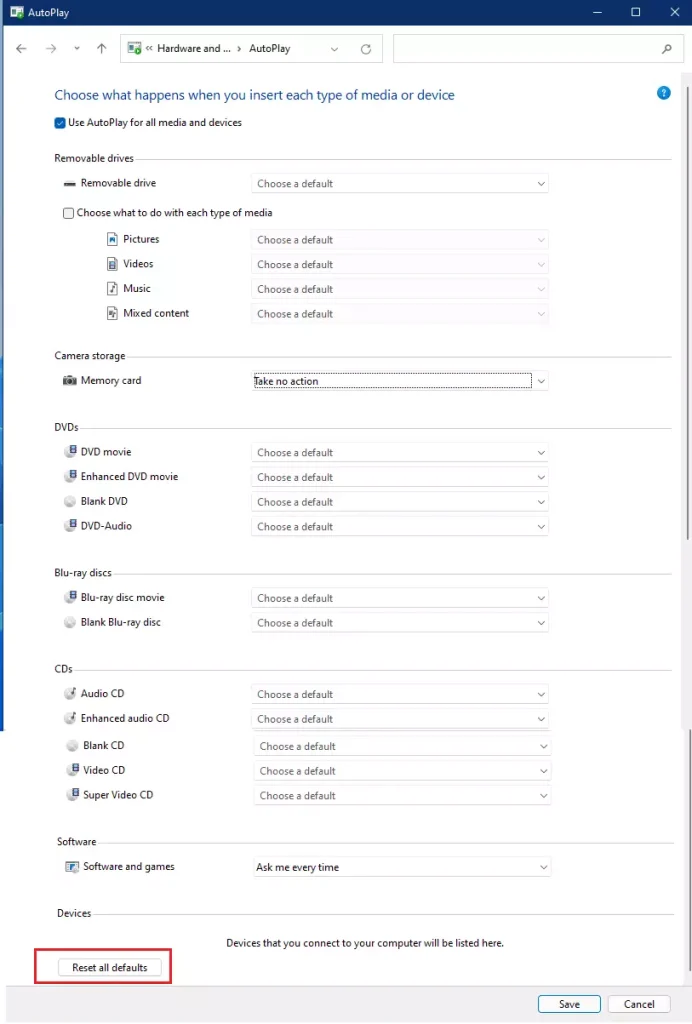
Click the Save button to finish. Your settings are now reset.
Troubleshooting AutoPlay failures
AutoPlay problems with a specific USB drive or device often have quick fixes. Trying a different USB port or updating device drivers (small programs that help Windows communicate with hardware) can solve many AutoPlay issues.
Checking Shell Hardware Detection
Shell Hardware Detection (a background service that monitors connected hardware) must run in the background for AutoPlay to work properly. If AutoPlay fails to pop up when you connect a device, you need to check this service in the Windows Services app to make sure it is turned on.
- Press Win + R, type services.msc, and hit Enter.
- Scroll down to find Shell Hardware Detection.
- Right-click it and select Properties.
- Ensure the Startup type is set to Automatic.
- If the service is stopped, click Start.
Advanced Registry and Policy Fixes
Advanced users can reset AutoPlay in Windows 11 by deleting specific registry keys using the Registry Editor. This forces Windows to rebuild the default handler list when standard Control Panel options fail to fix stubborn device behavior.
reg delete "HKEY_CURRENT_USER\Software\Microsoft\Windows\CurrentVersion\Explorer\AutoplayHandlers" /fSummary
Resetting AutoPlay settings in Windows 11 involves clearing your saved app choices in the Control Panel and checking background services if devices fail to trigger an action. You can fix most problems by restoring default values or updating your system drivers.- Access Control Panel: Navigate to the Control Panel to find your AutoPlay settings.
- Reset to Defaults: Click the "Reset all defaults" button to clear your custom choices.
- Check Services: Ensure the Shell Hardware Detection service is running if AutoPlay fails.
- Update Drivers: Reinstall USB drivers via Device Manager to fix connection issues.
- Immediate Effect: Your computer will now prompt you for actions when you connect new devices, just like when it was new.
Was this guide helpful?

About the Author
Richard
Tech Writer, IT Professional
Richard is a writer at Geek Rewind who turns complex IT tasks into clear, step-by-step guides. He draws on years of hands-on experience in system administration and enterprise IT operations, focusing on Windows, Linux and WordPress: the problems people actually run into, and the fixes that work. His server and WordPress guides come from systems he runs himself. Richard builds and maintains the platform behind Geek Rewind, from its Ubuntu servers and Nginx configuration to its custom WordPress plugins. Many new tutorials start with readers' questions, and he's always glad to answer them in the comments.
No comments yet — be the first to share your thoughts!