How to Install HEVC Codec on Windows 11 for H.265


The HEVC video extension for Windows 11 adds playback support for H.265 video files. H.265 is a modern compression format used by 4K Blu-ray discs and many smartphones to keep picture quality sharp while shrinking file sizes. Without the codec, these videos often open to a black screen (sometimes with sound only) or fail with a playback error in Windows Media Player.
Microsoft charges $0.99 for the official version in the Microsoft Store. You can bypass the fee and install it for free using a quick command in PowerShell. The setup takes less than two minutes and fixes playback right away, and you usually don’t need to restart. Close and reopen your video app afterward so it picks up the new codec.
Install the HEVC Video Extensions from the Microsoft Store for a fee, or download the free VLC Media Player which includes the necessary codecs. Either option will allow Windows 11 to play H.265 video files.
Option 1The Official Microsoft Store Method
The safest and most reliable method is to buy and download the official HEVC Video Extensions app from the Microsoft Store. It adds native H.265 support to the built-in Photos app and Windows Media Player, with no extra third-party software. It also works in other apps that use the Windows codec system.
Some new PCs already include a free version called “HEVC Video Extensions from Device Manufacturer”. If your video already plays, you may not need to install anything. The steps below are for a PC that doesn’t have the codec yet.
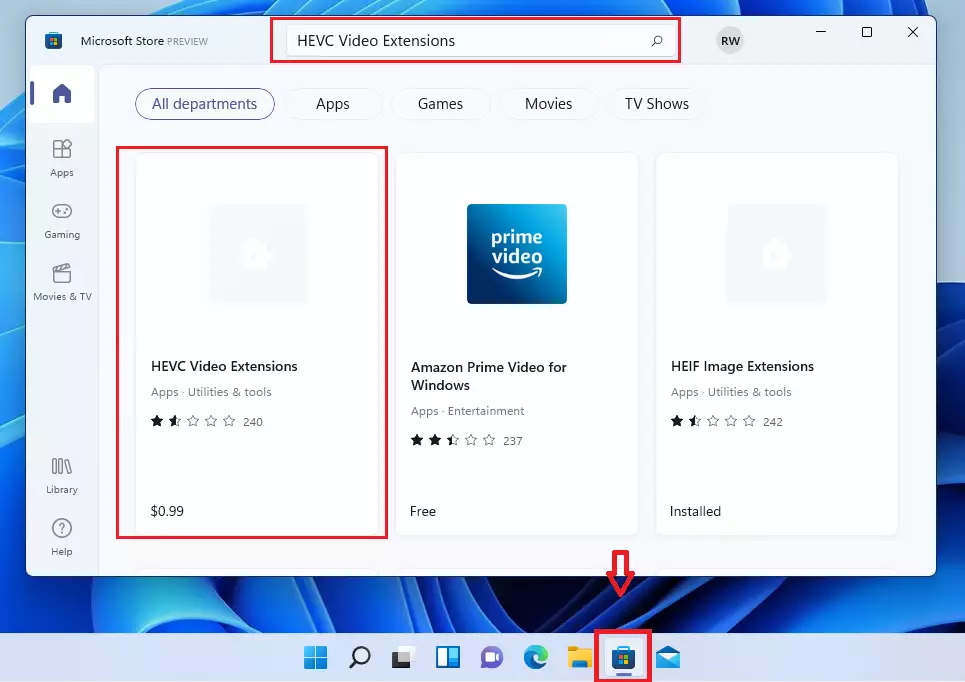
- Open the Microsoft Store from your taskbar. If it isn’t pinned there, click Start and type “Microsoft Store”. The Store window should open on the home page.
- Search for HEVC Video Extensions. Click the search box at the top of the Store and press Enter. A list of results should appear.
- Select the app from the results. Pick the one published by Microsoft Corporation, not a similarly named app from another publisher. Its page should open with the price and a purchase button.
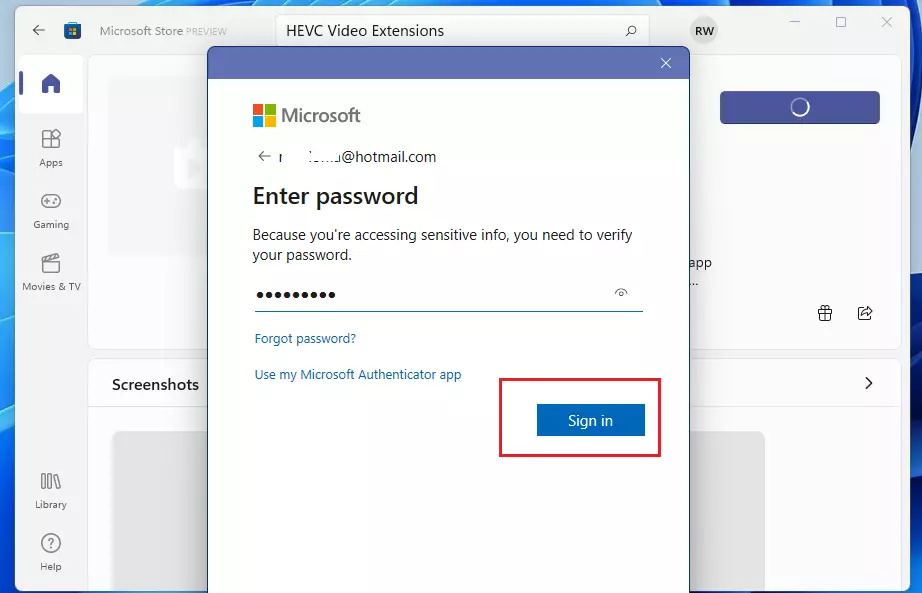
- Sign in to your Microsoft account. If the Store prompts you, enter your email and password. If you are already signed in, your profile picture or name appears at the top right of the Store, and you can move on. You need an account because the purchase and the app license are tied to it.
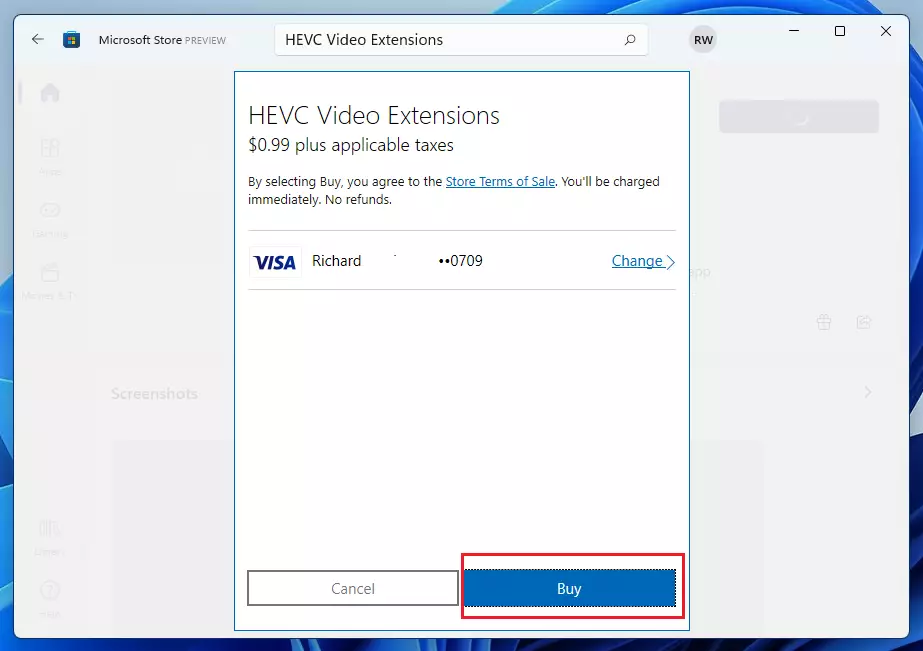
- Click the Buy button to complete the purchase. Follow any payment prompts. When the payment goes through, the Store downloads and installs the extension automatically, and the button changes to show it is installed. Then open a H.265 video to test it. If the video still doesn't play, close the player and open it again.
To install apps from the Microsoft Store, you need standard user permissions. These permissions ensure that only authorized users can add new software to a Windows 11 system, which prevents unauthorized installations and potential security risks. Without standard user permissions, the HEVC codec installation fails.
On a work or school PC, an administrator may also have restricted the Store. If the Store won't open or the install button is missing or greyed out, ask your IT team. You can't work around that policy from your own account.
Option 2The Free VLC Method
You can play H.265 files on Windows 11 for free by downloading the VLC media player, which comes with its own built-in HEVC decoders. You can watch your videos immediately without paying for the Microsoft Store extension. The catch is that this only works inside VLC. The built-in Windows apps, such as Photos and Windows Media Player, still can't play H.265 files.
- Visit the VLC download page for Windows. Download the official VLC media player for Windows - VideoLAN Download the installer from the official page only, since fake download sites often bundle unwanted software.
- Download and install the program. Run the downloaded installer and accept the default options. Click Yes if Windows asks whether to allow changes. When the installer finishes, VLC is ready to open.
- Set VLC as your default media player. Go to Settings Apps Default apps, search for VLC, and choose the video file types you want it to open, such as .mp4 or .mkv. Windows 11 sets defaults one file type at a time, so you may need to repeat this for each type. To undo it, set the default back to your previous app in the same place.
If you are on a standard account, Windows asks for an administrator password during setup.
Installing Codec Packs
Another way to enable HEVC playback is to install a codec pack. These packs bundle many different codecs, including HEVC, so various media players can play a wider range of file types. Popular options include the K-Lite Codec Pack and the Media Player Codec Pack Plus.
Be cautious when downloading from third-party sites, and get codec packs only from reputable sources. Read each installer screen and decline any bundled extras you don't want. A codec pack changes how many file types play on your system, so if something behaves oddly afterward, you can remove the pack in Settings Apps Installed apps
You might also want to grab the High-Efficiency Image Format (HEIF) support from the Microsoft Store. It lets you view modern photo formats from iPhones that Windows 11 doesn't handle out of the box. Some of these photos (HEIC files) also rely on HEVC, so having both extensions installed gives you the best chance of seeing them in Photos and File Explorer thumbnails.
Summary
You can fix a broken HEVC installation on Windows 11 by removing conflicting files with Windows PowerShell (a command-line tool for advanced tasks) and then reinstalling the extension. Running a quick removal command clears out corrupted app data that often stops the Microsoft Store from finishing the installation.
Before you do that, try the simple fixes first. Restart the PC, make sure Windows is up to date in Settings Windows Update, and check that your Microsoft account is still signed in to the Store. If the install still fails, use the command below, then open the Store and install the extension again. If you want to remove the extension later, find it in Settings Apps Installed apps and choose Uninstall.
How It Compares
- Microsoft Store Extensions:
- Pros: Official, integrates directly with Windows.
- Cons: Can be paid, might not always be available for free.
- VLC Media Player:
- Pros: Free, plays HEVC without extra installation, supports many formats.
- Cons: Requires using VLC player for HEVC files.
Was this guide helpful?

About the Author
Richard
Tech Writer, IT Professional
Richard is a writer at Geek Rewind who turns complex IT tasks into clear, step-by-step guides. He draws on years of hands-on experience in system administration and enterprise IT operations, focusing on Windows, Linux and WordPress: the problems people actually run into, and the fixes that work. His server and WordPress guides come from systems he runs himself. Richard builds and maintains the platform behind Geek Rewind, from its Ubuntu servers and Nginx configuration to its custom WordPress plugins. Many new tutorials start with readers' questions, and he's always glad to answer them in the comments.




No comments yet — be the first to share your thoughts!