How to Check Computer Specs in Windows 11


- 12 steps
- Needs administrator rights
Checking your computer specs in Windows 11 shows the hardware inside your machine, such as the processor, RAM and storage size, in under a minute. Specs are the core details of your PC build. They tell you how fast it runs and what programs it can handle.
You can see all of this with the built-in Settings app or the System Information tool, with no extra software. Command Prompt and PowerShell can show it too. Knowing whether you have 8 GB of RAM or an Intel Core i5 processor tells you if your PC meets the system requirements for a new game or a heavy app. It also helps when you’re buying a replacement part or describing a problem to tech support.
You can check your computer specs in Windows 11 by opening Settings, going to System, and clicking About. For more detailed information, search for and open the System Information tool.
Check Specs in the Settings App
The Settings app is the quickest way to see your processor, installed RAM and system type. It works the same on Windows 11 Home and Pro, and you don’t need an administrator account just to look.
The steps below take you to the About page. Settings is the fastest option, but it only gives a summary. If you need more detail, use the System Information tool or the command line methods later in this guide.
- Open the Settings app. You can also press the Win+I on your keyboard. The Settings window opens with a list of categories on the left.
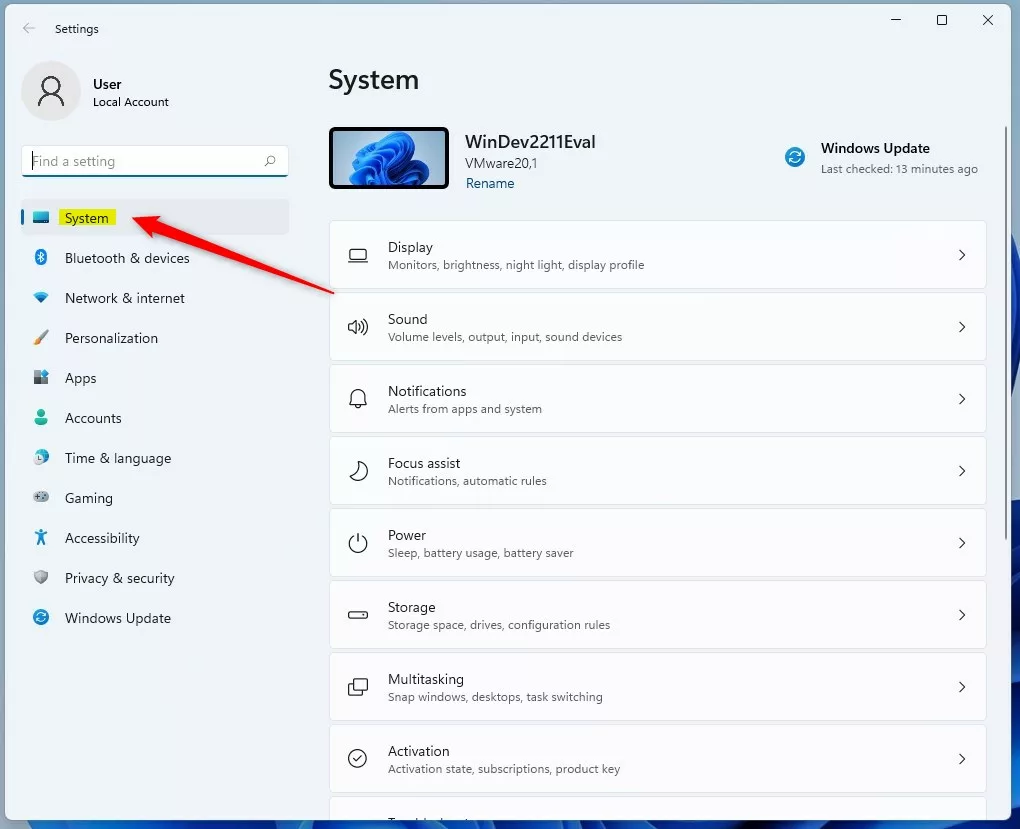
- Click on the System button on the left side of the window. The right side now shows system options such as Display, Sound, Storage and Power.
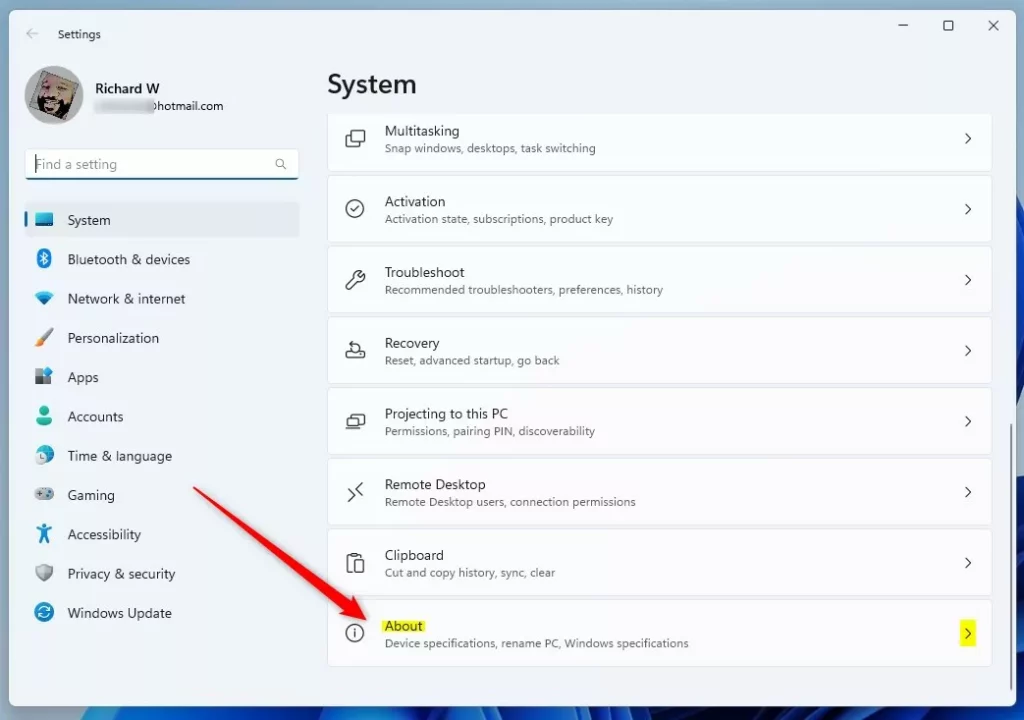
- Look for the About tile on the right side and click it. It sits at the bottom of the System list, so you may need to scroll down. The About page opens.
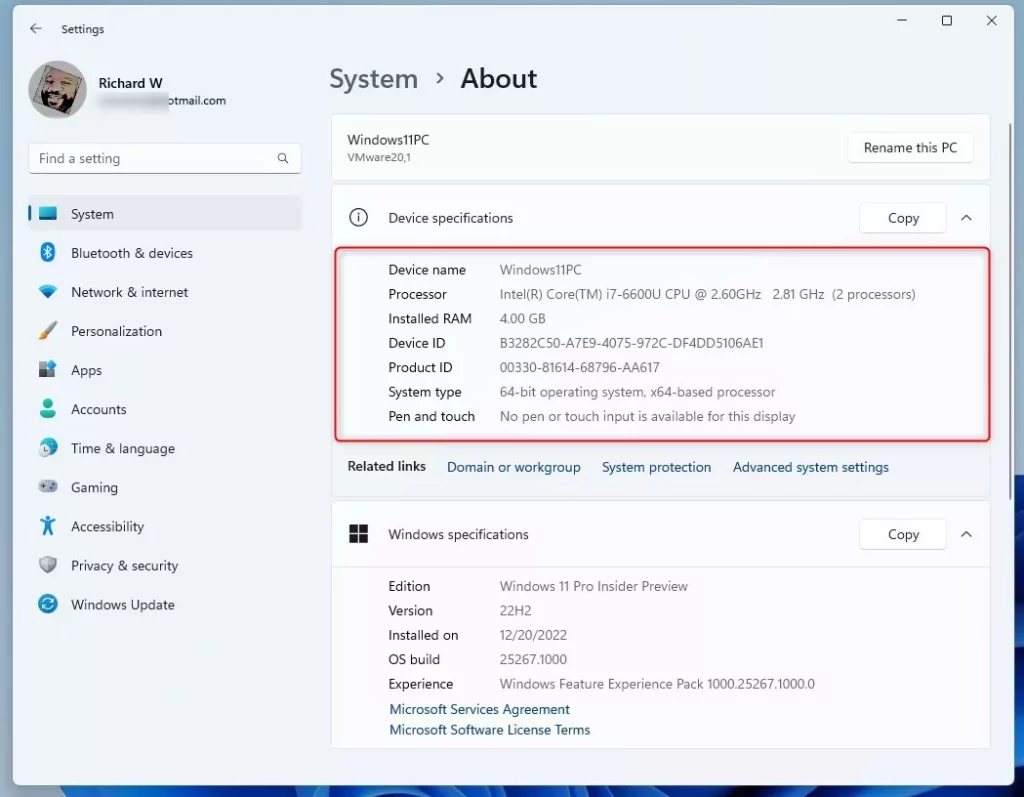
Under the “Device specifications” section, the main details about your computer appear. Here is what the lines mean:
- Device name is the name your PC uses on the network.
- Processor shows the CPU model and its base speed.
- Installed RAM shows how much memory is fitted. If it shows a second number in brackets, that is the part of it Windows can actually use.
- System type tells you whether Windows is 64-bit or 32-bit.
Next to the device name there is a Copy button. It copies these details so you can paste them into an email or a support request. Scroll down to “Windows specifications” to see your Windows edition and version. Settings does not list your graphics card or drive details on this page. For storage, open Settings System Storage.
Use the System Information Tool
The System Information tool gives a much fuller breakdown of your hardware than Settings does. It is built into every edition of Windows 11, so it works on Home and Pro alike. It is a good choice when you need a specific detail, such as your BIOS version or the exact model of your PC.
- Click the Start menu button.
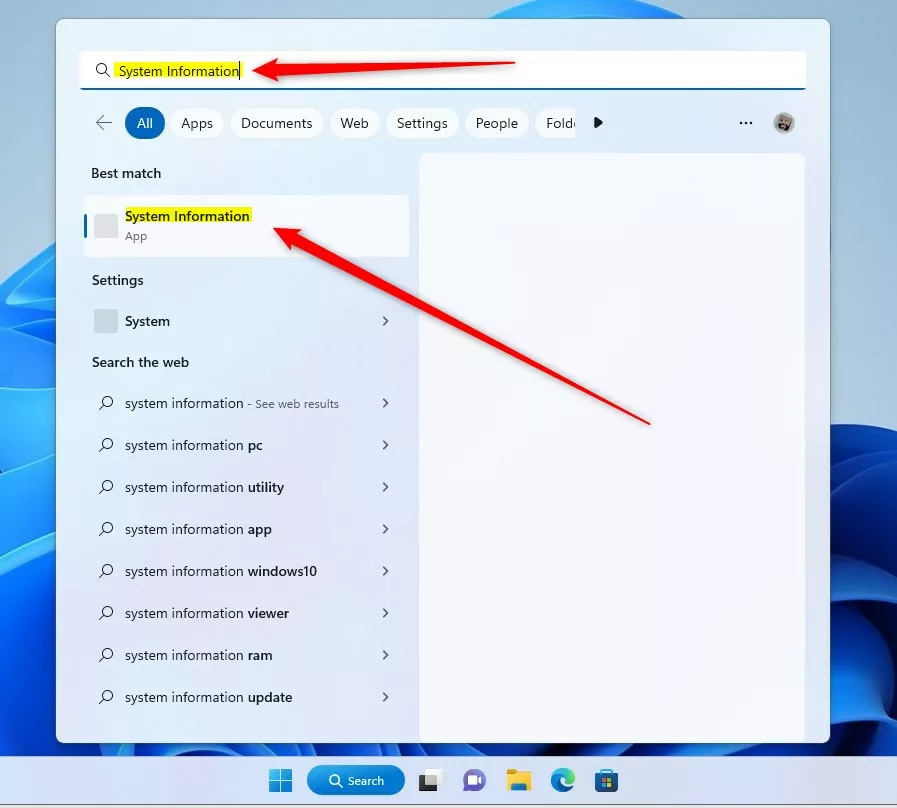
- Type “System Information” into the search box. The System Information app should appear at the top of the results.
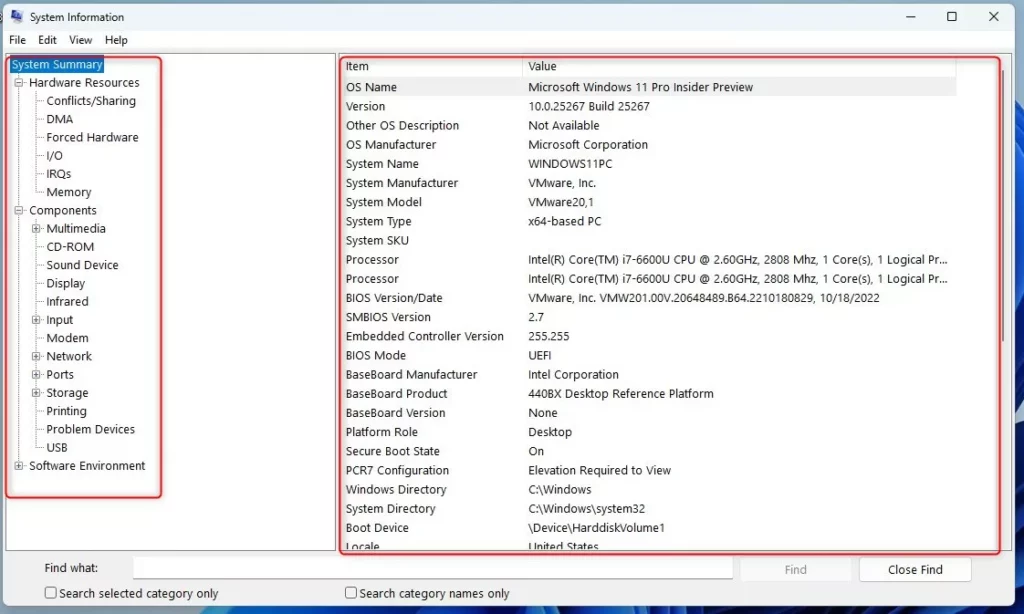
- Click the app in the results to open it. A window opens with a tree of categories on the left and the System Summary page selected.
The System Summary page lists the OS name, system model, processor, BIOS version and date, and installed physical memory (your RAM). It also shows the BIOS mode and Secure Boot state, which matter if you are checking Windows 11 compatibility.
Clicking through the categories on the left reveals more technical details about your hardware on the right. Open the plus sign next to Components to find entries such as Display and Storage. There is also a search box at the bottom of the window. Type a word such as “processor” and click Find to jump straight to that line.
To save the report, use File Export. This is handy when someone asks you to send your full system details.
Use Command Prompt or PowerShell
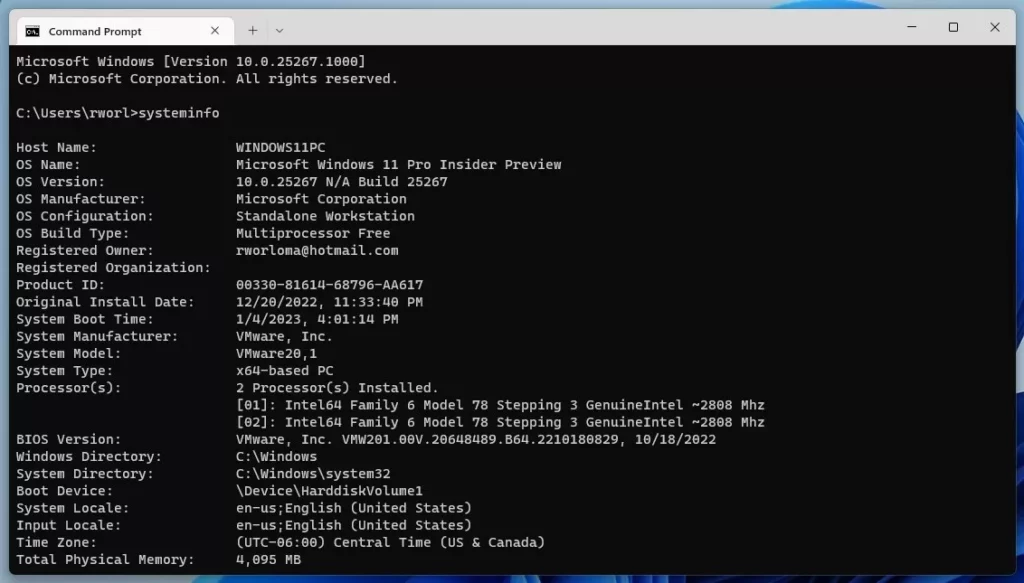
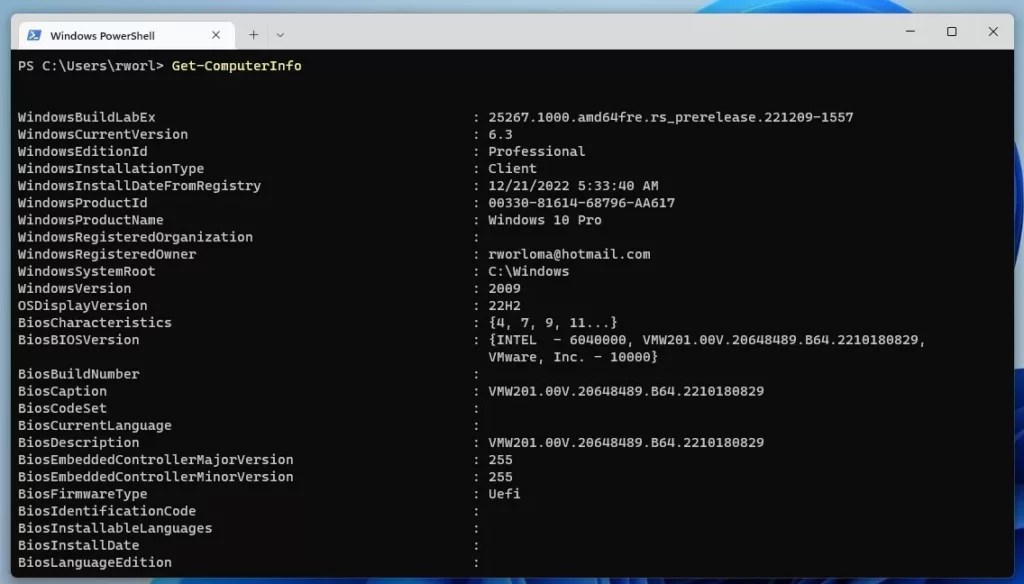
Command Prompt and PowerShell show your system information as a plain text list. Both run the same built-in command and give you the core hardware details in one window. This is useful when you work over a remote session, or when you want to copy the output as text.
You don’t need to run either one as an administrator for this. The command can take a few seconds to collect everything, so wait for the prompt to return before you read the results.
To use Command Prompt:
- Search for “Command Prompt” in the Start menu , then click the result to open it. A window with a blinking cursor opens.
- Type the following command and press Enter:
systeminfo
To use Windows PowerShell:
- Search for “PowerShell” in the Start menu , then click the result to open it. A blue window opens.
- Type the following command and press Enter:
Get-ComputerInfo
🪟 Windows 11 Compatibility and Requirements
Checking the Windows 11 requirements helps you confirm whether your computer can run the operating system before you upgrade. Your PC needs at least a 1 GHz processor with 2 or more cores, 4 GB of RAM (short-term memory your computer uses to run active programs), and 64 GB of storage space.
Those three numbers are only part of the list. Windows 11 also needs a 64-bit processor, a PC that starts in UEFI mode with Secure Boot support, TPM 2.0 (a security chip or firmware feature), and DirectX 12 compatible graphics. Older PCs most often fail on TPM or Secure Boot. Both can be switched off in the firmware settings, so a PC that fails here is not always truly incompatible. Check the firmware settings before you decide to replace the machine.
| Requirement | Minimum Specification |
|---|---|
| Processor | 1 GHz or faster with 2 cores |
| RAM | 4 GB |
| Storage | 64 GB or larger |
| System Firmware | UEFI, Secure Boot capable |
| TPM | Trusted Platform Module version 2.0 |
The official Microsoft PC Health Check app helps you find out if your computer meets the Windows 11 upgrade requirements. It checks your machine against the minimum hardware standards, so you know where you stand before you try an upgrade.
Open the app and click Check now in the Windows 11 section. It tells you either that the PC meets the requirements or which ones it fails. If a check fails, compare the result with the specs you found earlier. That shows you whether the fix is a firmware setting or a hardware upgrade.
Summary
Checking computer specs in Windows 11 takes just a few moments. Use the Settings app for a quick overview, the System Information tool for detailed hardware, or Command Prompt for a text list. Match the method to the level of detail you need for your PC.
- Use the Settings app for a quick look at your basic hardware.
- Use the System Information tool for a deep dive into individual parts.
- Use Command Prompt or PowerShell for a text-based list of your system details.
- Always check for TPM 2.0 and Secure Boot when verifying Windows 11 compatibility.
- Use the official PC Health Check app to confirm if your hardware is ready for updates.
Have a question about this guide?
Answered by AI from this guide. Good questions may be added to this page — please don't include personal details.
Did this guide fix your problem?

About the Author
Richard
Tech Writer, IT Professional
Richard is a writer at Geek Rewind who turns complex IT tasks into clear, step-by-step guides. He draws on years of hands-on experience in system administration and enterprise IT operations, focusing on Windows, Linux and WordPress: the problems people actually run into, and the fixes that work. His server and WordPress guides come from systems he runs himself. Richard builds and maintains the platform behind Geek Rewind, from its Ubuntu servers and Nginx configuration to its custom WordPress plugins. Many new tutorials start with readers' questions, and he's always glad to answer them in the comments.
No comments yet — be the first to share your thoughts!