How to Stream or Mirror Google Drive Files in Windows 11

You can stream or mirror Google Drive files directly in Windows 11 to manage your cloud storage efficiently.
Streaming downloads files on demand, saving local disk space, while mirroring keeps a full local copy of your Google Drive contents. This choice significantly impacts how you access and use your files on your PC.
This functionality is primarily managed through the Google Drive for desktop application. The latest version, typically updated regularly, offers these distinct synchronization options.
Choosing the right method ensures you balance cloud accessibility with your computer’s storage capacity and internet bandwidth.
Open the Google Drive icon in your taskbar, click the Settings gear icon, select Preferences, then Folders from Drive. Choose either Stream files or Mirror files to manage how your Google Drive content syncs to your Windows 11 PC.
Why should you change how Google Drive works?
You might want to change these settings to save space on your computer or to ensure your files are available when you are not online. Managing your cloud synchronization settings effectively helps you balance local disk management with cloud convenience.
What happens when you are done?
Once you finish, your computer will either stream files from the internet or save a full copy of them directly onto your hard drive. This choice directly impacts your bandwidth usage and how your computer handles offline access.
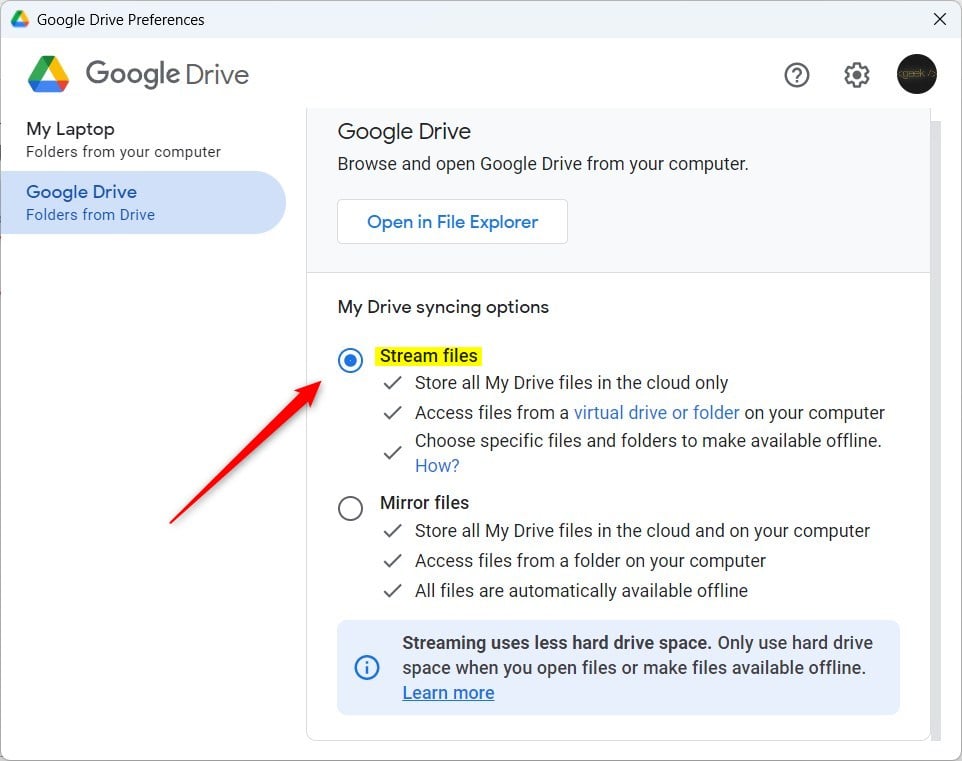
Stream files
This stores your files in the cloud. You access them through a virtual folder on your computer. This saves space on your hard drive. It is the best choice for users with limited storage or fast, reliable internet.
Mirror files
This stores a copy of your files in the cloud AND on your computer. This lets you work on your files even without an internet connection. It is ideal for users who need constant offline access to their documents.
Access files from a folder on your computer.

All files are automatically available offline.
How to switch between Stream and Mirror
Note: Some settings may require admin privileges if you are working on a company-managed computer. Ensure your account has the necessary permissions before modifying system-level sync settings.
- Open the Google Drive icon in your taskbar. You may need to click the Taskbar overflow arrow first.

- Click the Settings (gear icon) and select Preferences.

- Click Folders from Drive on the left side of the window.
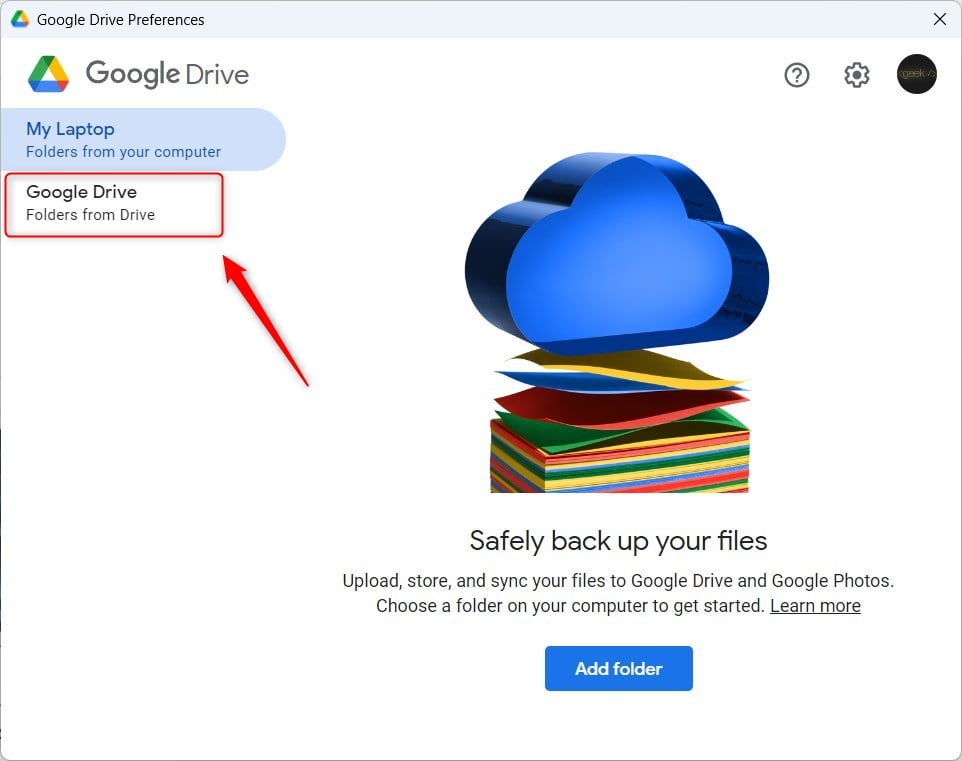
- Choose either Stream files or Mirror files.
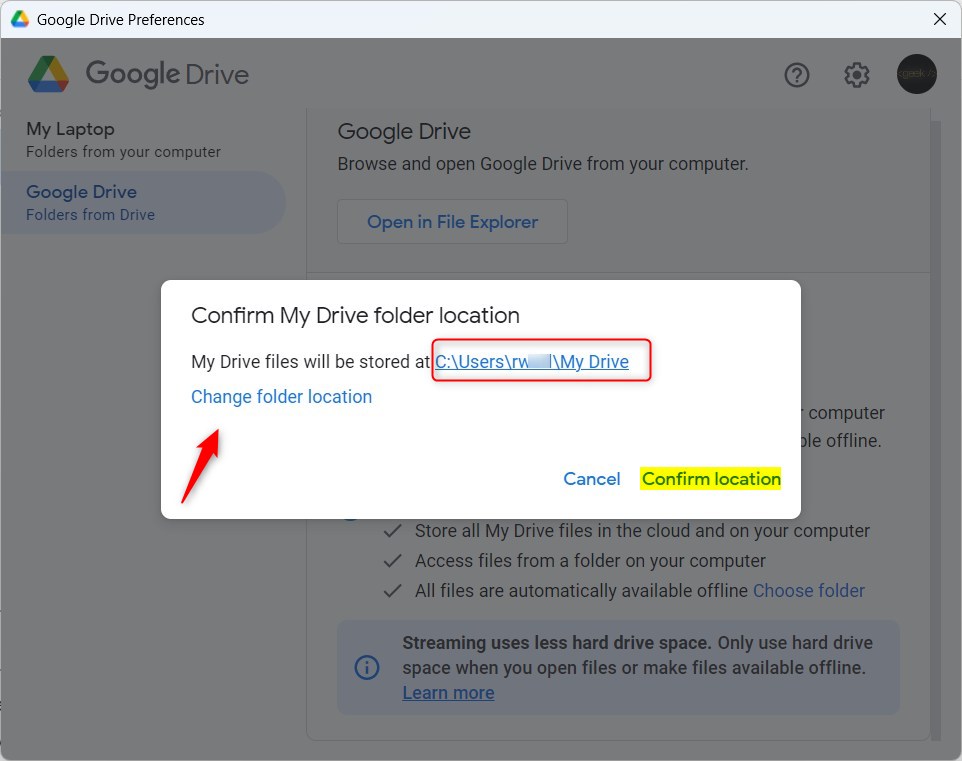
- If you choose to mirror, you must pick a folder on your computer. By default, it creates a folder at
C:\Users\genericuser\My Drive.
You can change this location to any folder you prefer. Click Confirm location to finish.
Any changes you make in that folder will now sync automatically to the cloud.
Storage Impact and Local Disk Management
Mirroring takes up space on your computer because it downloads every file to your local drive. If you have a small hard drive, this can quickly fill up your storage. Streaming, however, keeps files in the cloud and only downloads them when you open them, which is much better for disk space management.
Troubleshooting and Common Errors
If you face sync issues, check your internet connection first. If files are not showing up, try restarting the Google Drive for desktop app. For persistent errors, you may need to clear the cache. To do this, navigate to C:\Users\genericuser\AppData\Local\Google\DriveFS and delete the contents of the cache folder. Note: This requires the app to be closed.
Use-Case Decision Matrix
Choose Streaming if you have limited local storage or a fast internet connection. Choose Mirroring if you travel often, have a slow internet connection, or need to work offline frequently. You can switch modes at any time, but be aware that switching from mirroring to streaming will remove local copies to free up space.
Summary
Google Drive gives you two ways to manage your files. You can Stream them to save local storage space, or you can Mirror them to keep a full copy on your computer for offline use. You can switch between these two modes anytime through the Preferences menu inside the Google Drive application. Always consider your available disk space and internet reliability before choosing your sync method.
Does mirroring take up space on my computer?
Yes, mirroring creates a full copy of your files on your local hard drive. This means your computer will use as much storage space as the total size of your files in Google Drive. If you are running low on disk space, streaming is a better option.
Which mode is better for slow internet connections?
Mirroring is better for slow or unstable internet connections. Because the files are stored locally on your computer, you do not need to wait for them to download every time you open them. You can work on your files offline, and they will sync once your connection is restored.
Was this guide helpful?

About the Author
Richard
Tech Writer, IT Professional
Richard, a writer for Geek Rewind, is a tech enthusiast who loves breaking down complex IT topics into simple, easy-to-understand ideas. With years of hands-on experience in system administration and enterprise IT operations, he’s developed a knack for offering practical tips and solutions. Richard aims to make technology more accessible and actionable. He's deeply committed to the Geek Rewind community, always ready to answer questions and engage in discussions.
[…] Turning on chat backup will prompt you to select a folder to store the backups into or create a new folder. If you want your backup synced to the cloud, save it into a backup folder like OneDrive, Dropbox, or Google Drive. […]
[…] to a folder or driver letter, pause syncing, add files and photos to sync with Google Drive, stream or mirror files on Google Drive, and […]
[…] Drive to a folder or driver letter, pause syncing, add files and photos to sync with Google Drive, stream or mirror their files on Google Drive, and […]