Install WordPress on Ubuntu with OpenLiteSpeed

You can install WordPress on Ubuntu with OpenLiteSpeed by setting up the OpenLiteSpeed web server and then installing the WordPress application.
OpenLiteSpeed is a fast, open-source web server, often chosen as a modern alternative to Apache or Nginx for its performance and user-friendly interface.
This guide focuses on getting WordPress 6.5.1 running on your Ubuntu machine using this efficient stack.
You will learn to configure OpenLiteSpeed and manage your WordPress site directly through its intuitive web admin panel.
Install OpenLiteSpeed and the MariaDB server first. Then, download WordPress, move it to the OpenLiteSpeed directory, and set permissions. Create a WordPress database and user, then configure OpenLiteSpeed’s Virtual Hosts to point to your WordPress installation and enable rewrite rules.
How to install OpenLiteSpeed on Ubuntu Linux
Installing OpenLiteSpeed on Ubuntu Linux is the first step to running WordPress smoothly, and this guide will show you exactly how to do it.
This post below shows you how to install OpenLiteSpeed, the latest PHP version, and the MariaDB database server. Those three components are required to run WordPress.
How to Install OpenLiteSpeed on Ubuntu Linux – Website for Students
After installing OpenLiteSpeed, continue below.
How to download WordPress on Ubuntu Linux for OpenLiteSpeed
After setting up OpenLiteSpeed on Ubuntu, you’ll need to download the WordPress package to get your site files ready.
cd /tmp
wget https://wordpress.org/latest.tar.gz
tar -zxvf latest.tar.gz
After extracting the WordPress archive, move the WordPress content into the OpenLiteSpeed default VirtualHost directory.
sudo mv /tmp/wordpress /usr/local/lsws/Example/wordpressNext, run the commands below to change the permissions of the WordPress folder to run on OpenLiteSpeed.
sudo chown -R nobody:nogroup /usr/local/lsws/Example/wordpress/
sudo chmod -R 755 /usr/local/lsws/Example/wordpress/
How to create a WordPress database on Ubuntu
Creating a WordPress database on Ubuntu is essential for storing your website’s content, and we’ll walk you through setting one up.
To create a database for WordPress, run the commands below:
sudo mysql -u root -p
Then, create a database called wpdb
CREATE DATABASE wpdb;Next, create a database user called wpdbuser and set a password
CREATE USER 'wpdbuser'@'localhost' IDENTIFIED BY 'new_password_here';
Then, grant the user full access to the database.
GRANT ALL ON wpdb.* TO 'wpdbuser'@'localhost' WITH GRANT OPTION;Finally, save your changes and exit.
FLUSH PRIVILEGES;
EXIT;
How to configure OpenLiteSpeed to support WordPress
Configuring OpenLiteSpeed to support WordPress involves adjusting settings in its admin panel, which we’ll guide you through step-by-step.
https://localhost:7080/login.php
Login using the admin login details above.
After logging on, go to the Virtual Hosts ==> General tab and edit the Document Root location section.
Then, edit the Document Root to point to the WordPress folder created above.
$VH_ROOT/wordpress/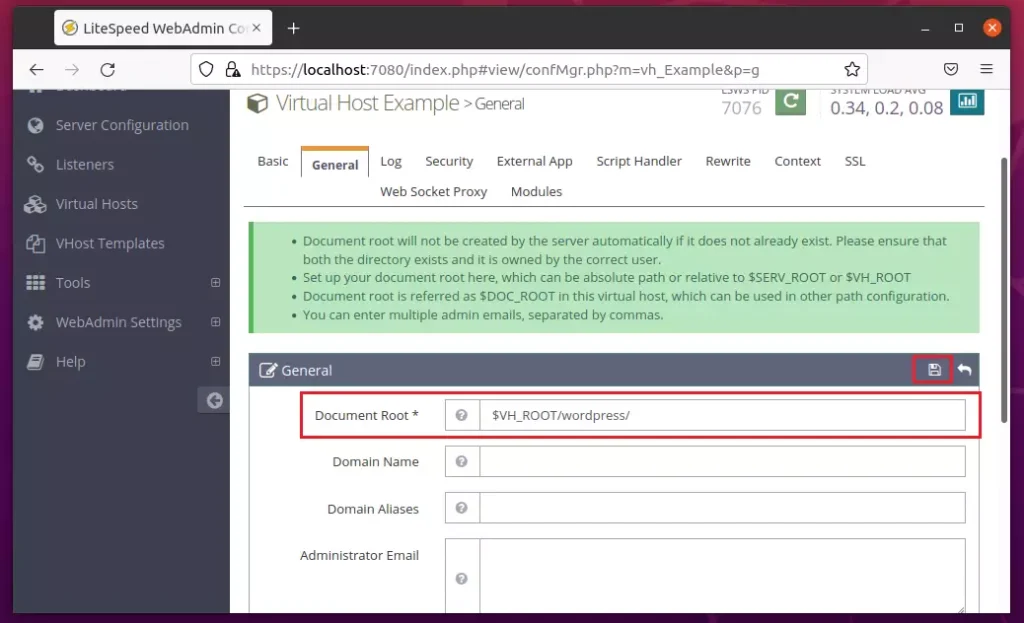
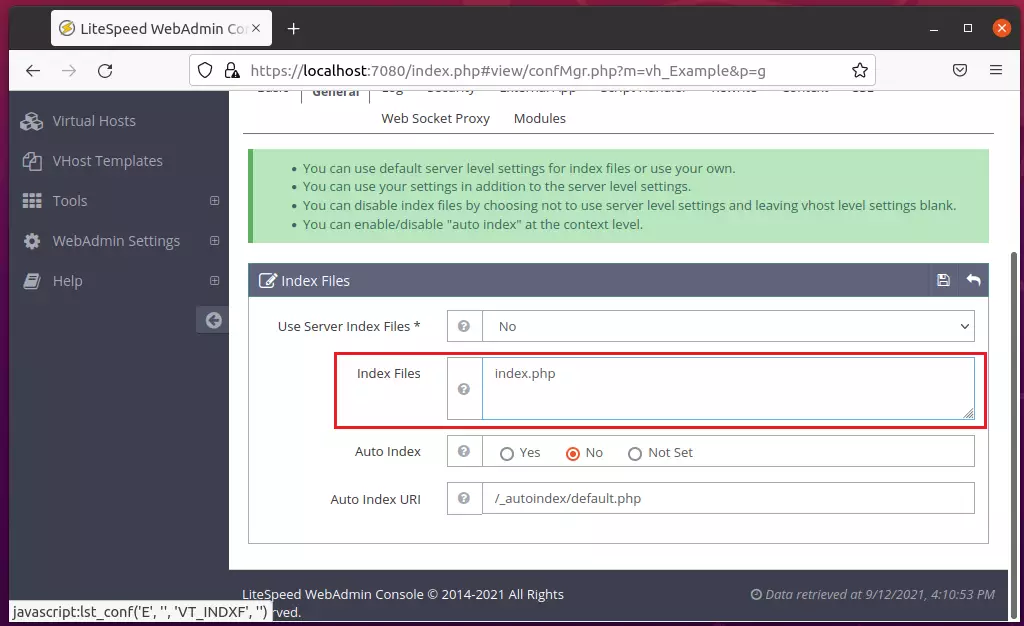
On the same General tab, edit the Index Files section and replace index.html with index.php, as shown below.
index.php
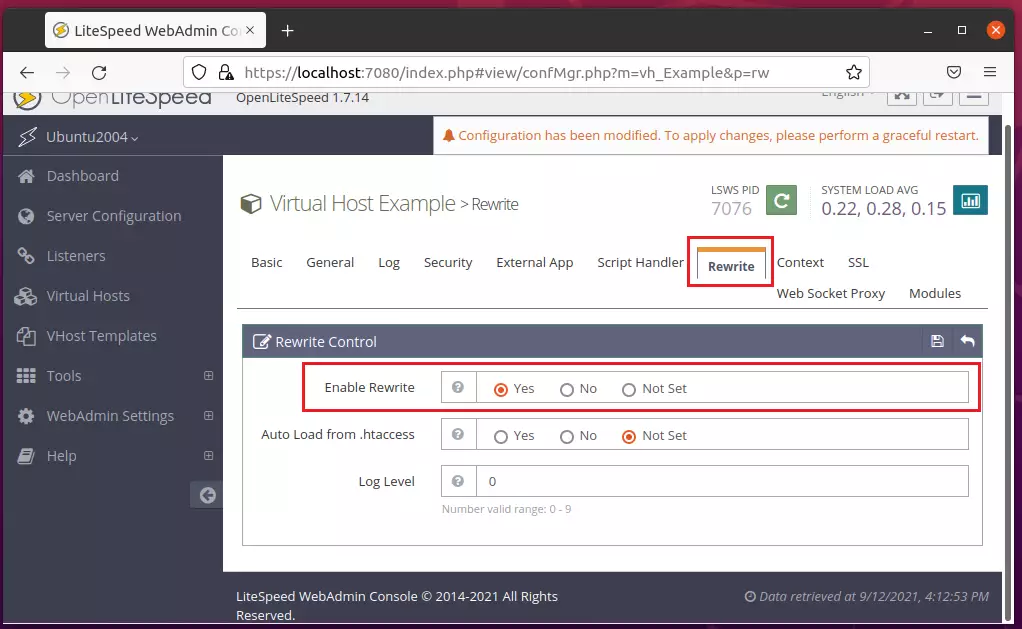
Next, go to Virtual Hosts ==> Rewire Rules, edit Rewrite Control, then choose Yes to enable rewrite.
Save your change.
Next, under Virtual Hosts ==> Rewrite, edit the Rewrite Rules. Copy and paste the lines below into the rules box and save.
RewriteRule ^index.php$ - [L]
RewriteCond %{REQUEST_FILENAME} !-f
RewriteCond %{REQUEST_FILENAME} !-d
RewriteRule . /index.php [L]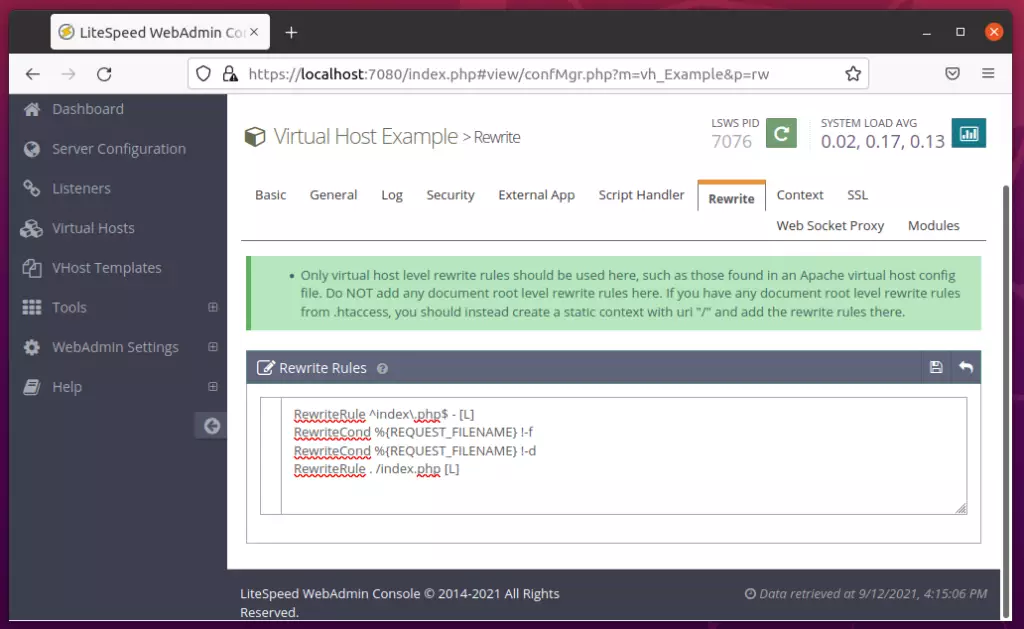
After making all the changes above, reload OpenLiteSpeed.
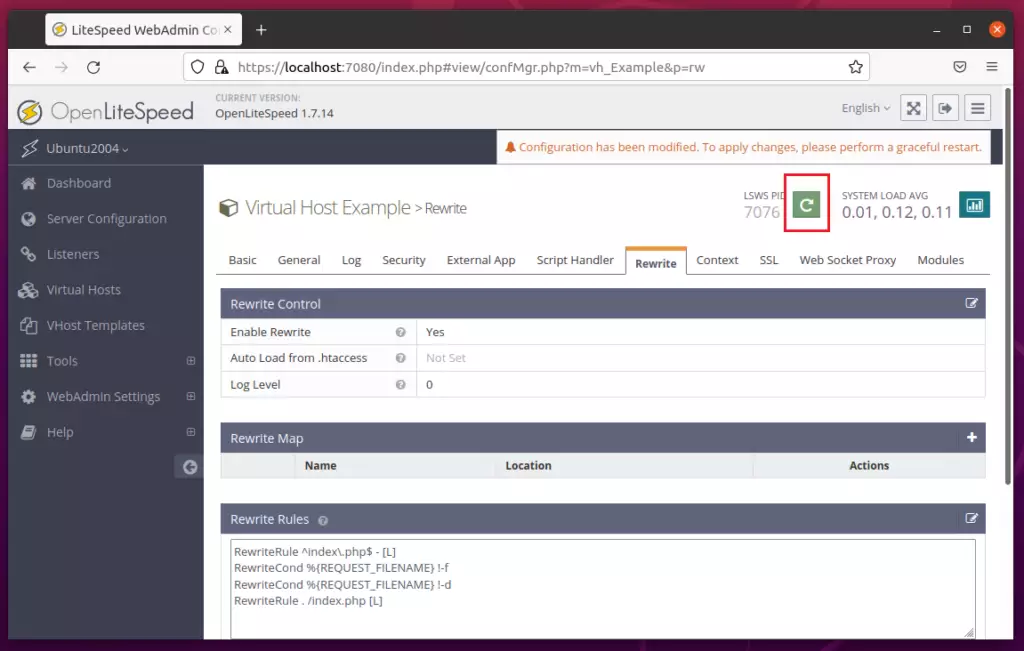
Finally, open your web browser and browse to the server hostname or IP address.
http://localhost
A WordPress setup wizard should appear. Follow the wizard to complete the setup.
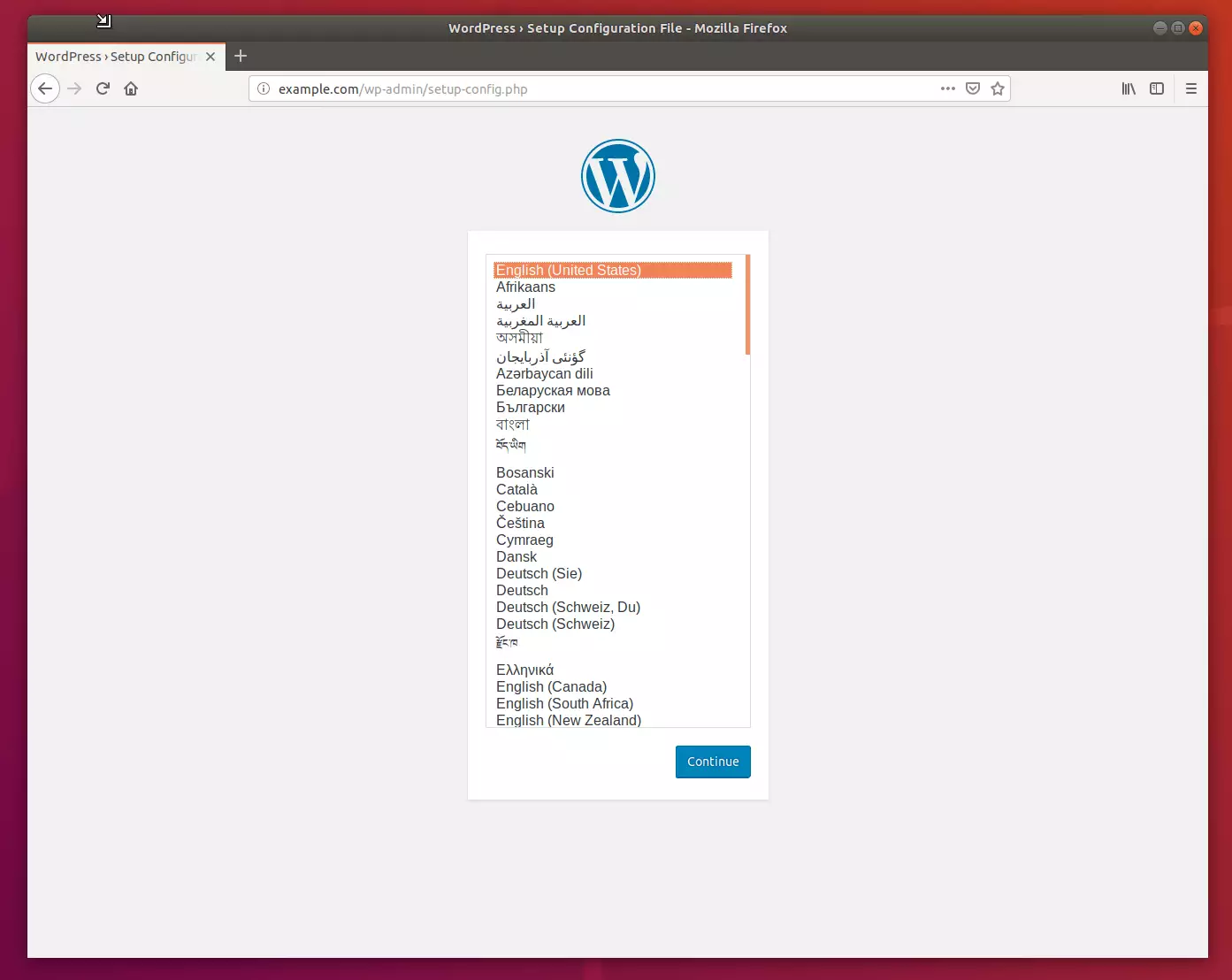
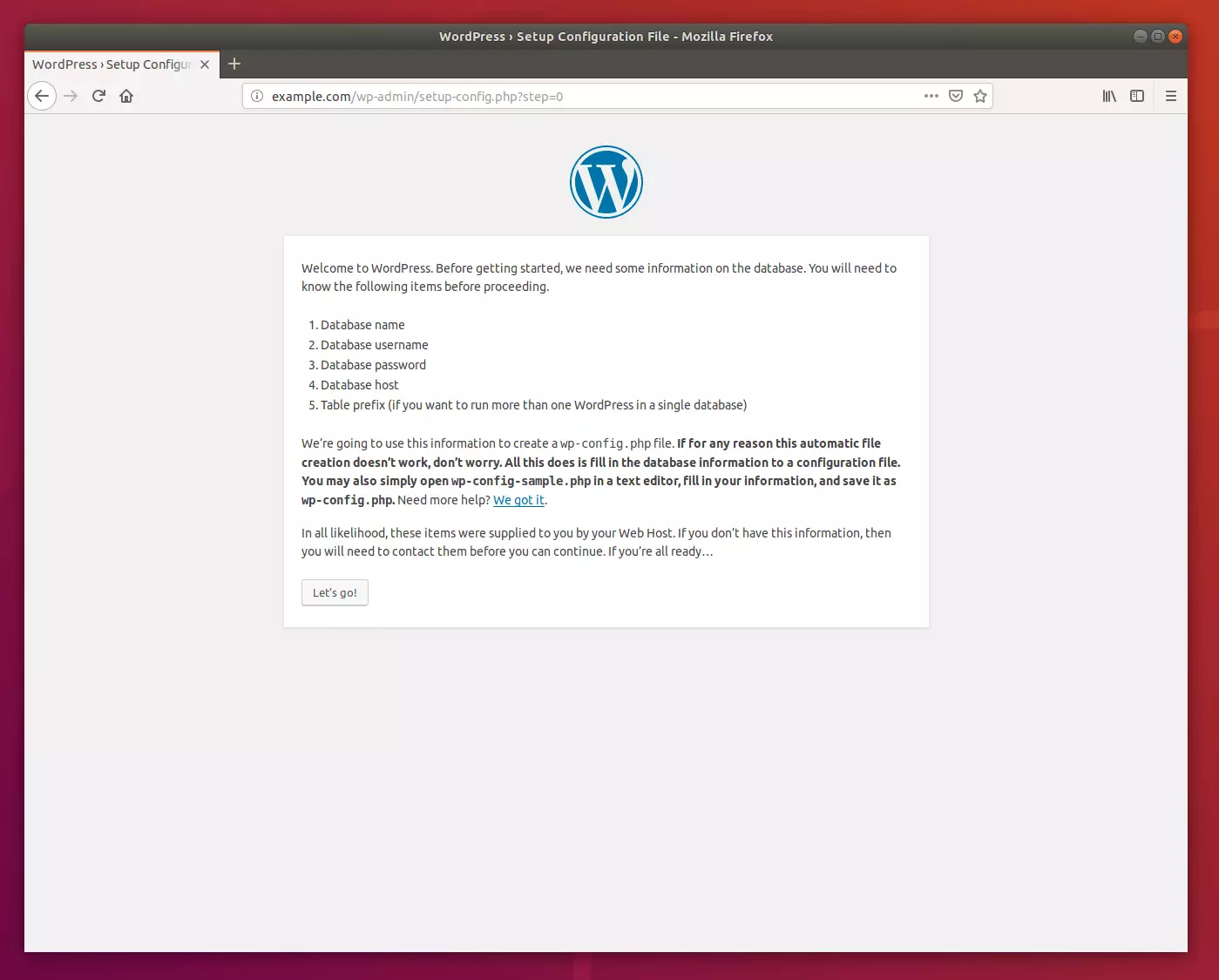
You will need to know the following items before proceeding. Use the database connection info you created above.
- Database name
- Database Username
- Database password
- Database host
- Table prefix (if you want to run more than one WordPress in a single database)
The wizard will use the database information to create a wp-config.php file in the WordPress root folder.
If this automatic file creation doesn’t work for any reason, don’t worry. All this does is fill in the database information to a configuration file. You may also simply open wp-config-sample.php in a text editor, fill in your information, and save it as wp-config.php.
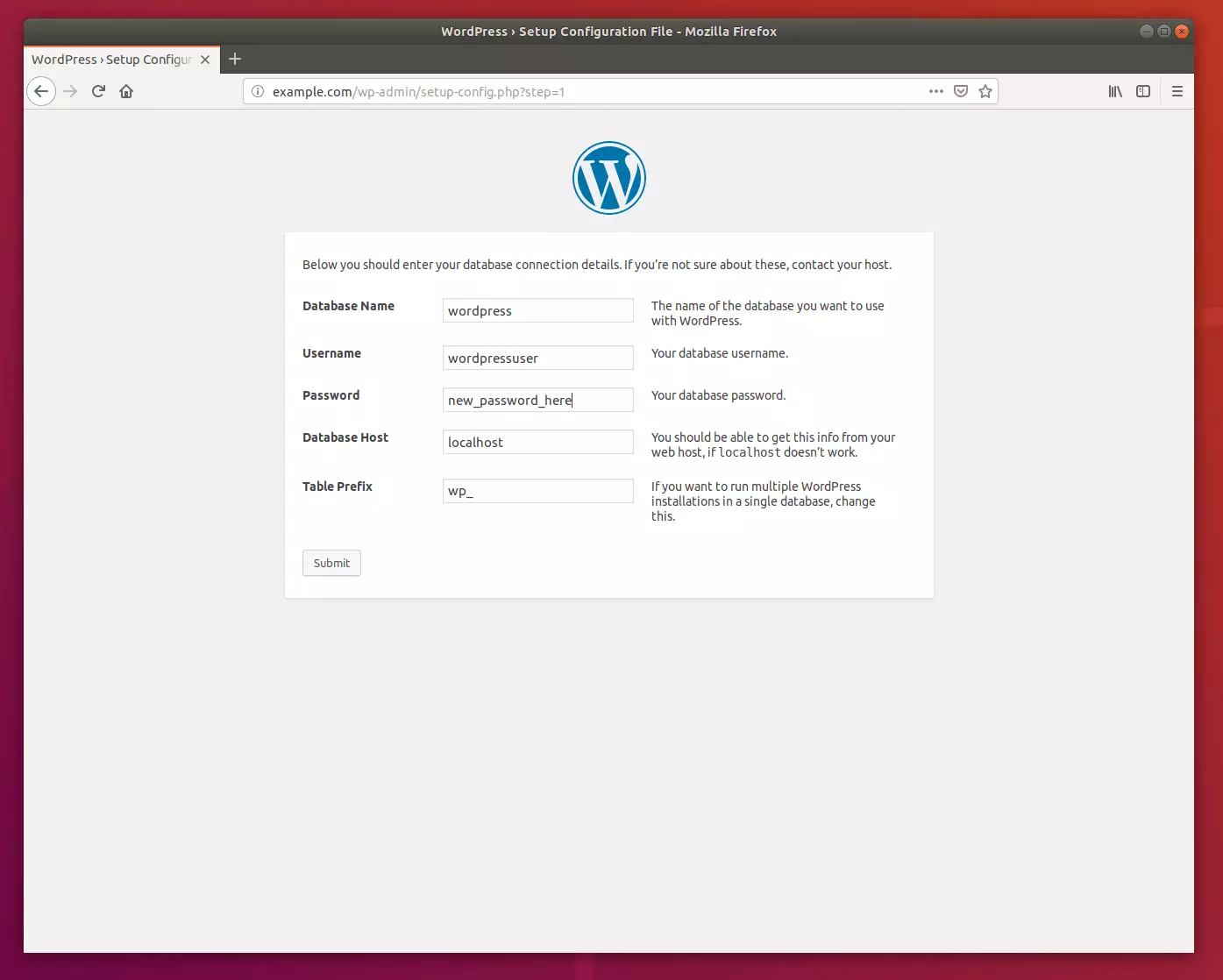
Next, type in the database connection info and click Submit
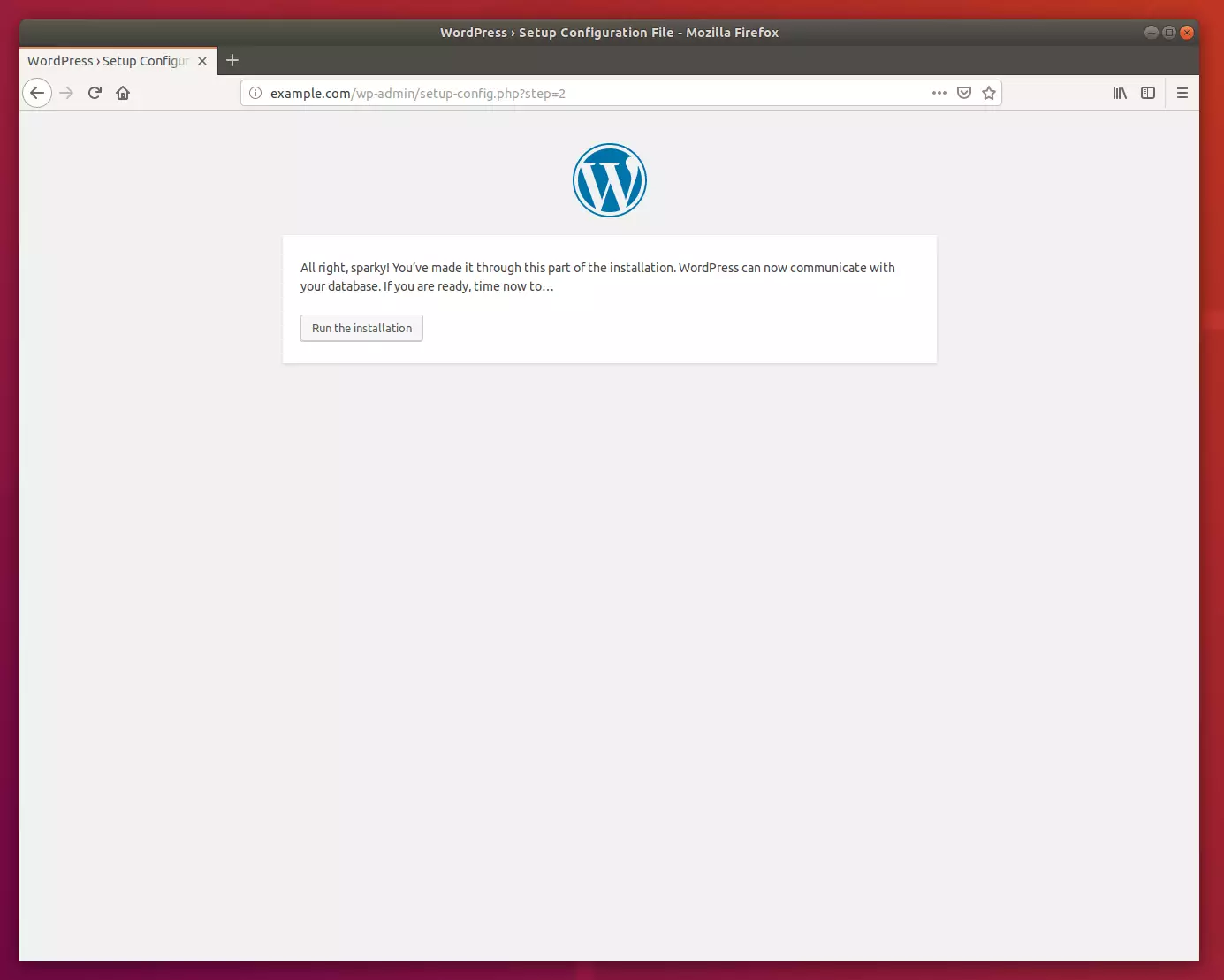
After that, click the Run the Installation button to have WordPress complete the setup.
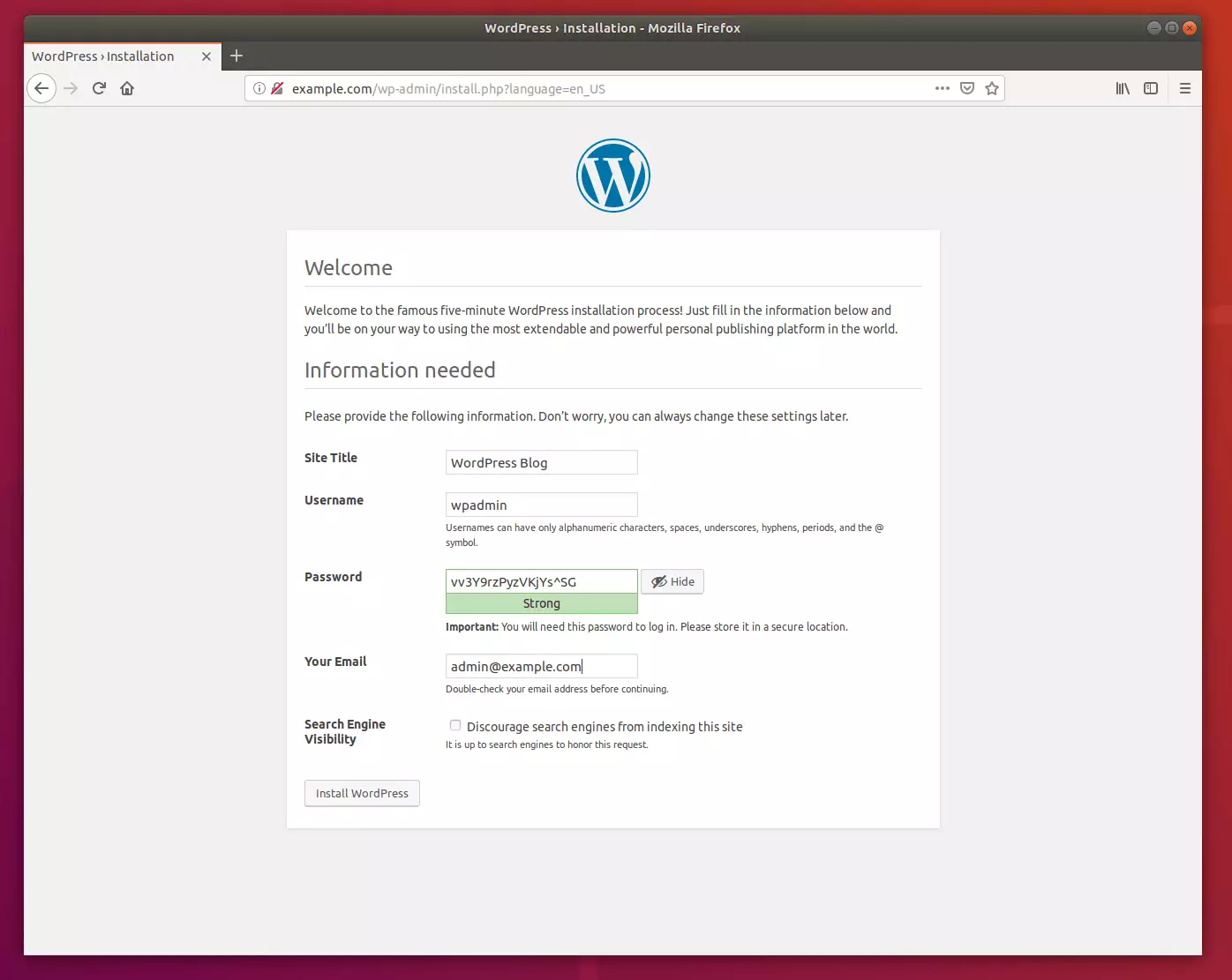
Next, create the WordPress site name and the backend admin account, then click Install WordPress.
When you’re done, WordPress should be installed and ready to use.
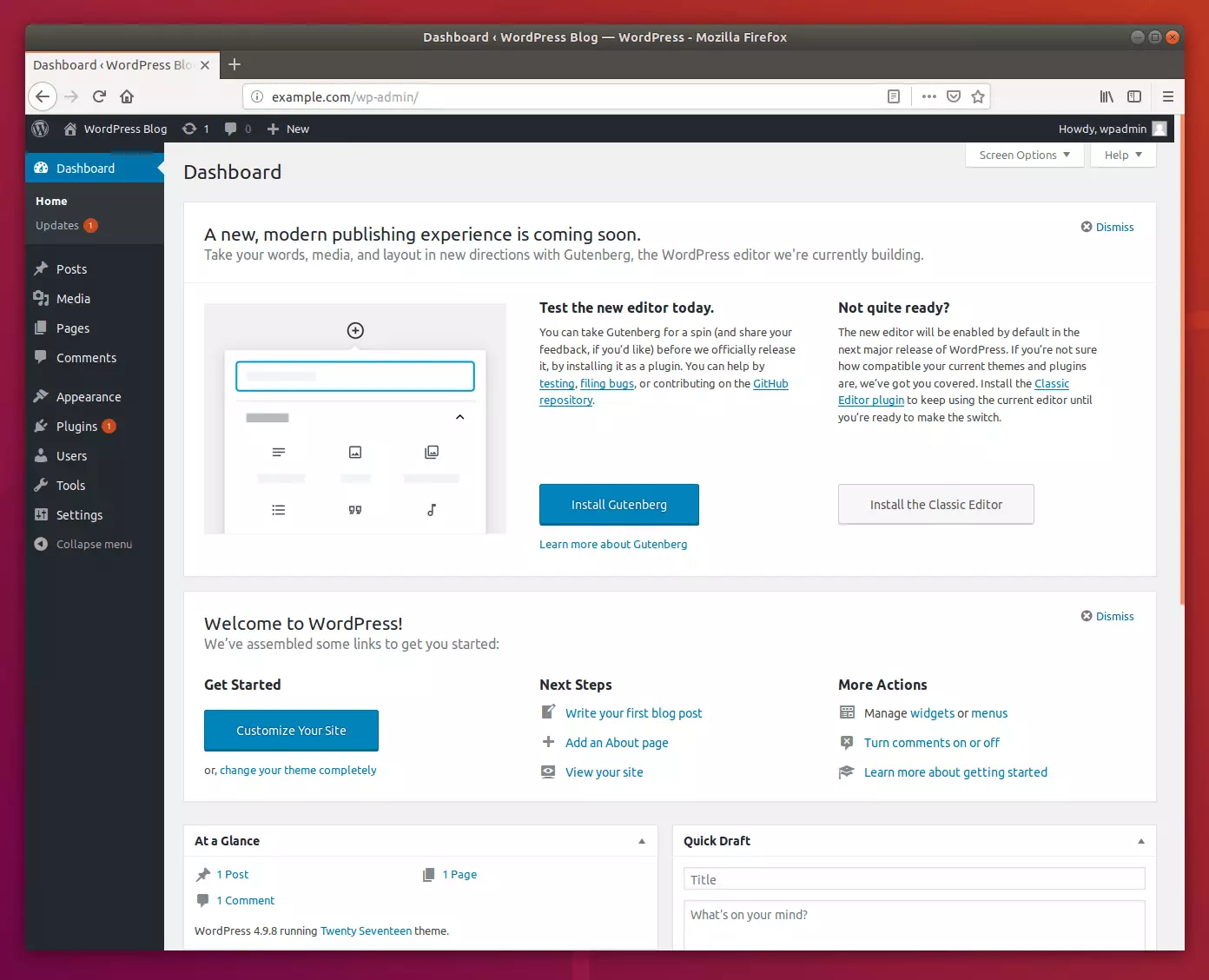
That should do it!
Conclusion:
This post showed you how to install WordPress on Ubuntu Linux with an OpenLiteSpeed web server. Please use the comment form below if you find any errors above or have something to add.
Was this guide helpful?

About the Author
Richard
Tech Writer, IT Professional
Richard, a writer for Geek Rewind, is a tech enthusiast who loves breaking down complex IT topics into simple, easy-to-understand ideas. With years of hands-on experience in system administration and enterprise IT operations, he’s developed a knack for offering practical tips and solutions. Richard aims to make technology more accessible and actionable. He's deeply committed to the Geek Rewind community, always ready to answer questions and engage in discussions.




No comments yet — be the first to share your thoughts!