How to Install RabbitMQ on Ubuntu Linux


RabbitMQ is an open-source message broker that lets different software programs send messages and data to each other even when they run at different times. Messages stay safe in the queue until the receiving program comes back online, making this tool ideal for background tasks.
This setup guide walks you through installing RabbitMQ version 3.x and its required dependency, Erlang/OTP, on Ubuntu 20.04 LTS or newer versions.
Install Erlang/OTP by adding its repository, importing the key, and running `sudo apt install erlang`. Then, add the RabbitMQ repository, import its key, and run `sudo apt install rabbitmq-server`. Finally, enable the management plugin with `sudo rabbitmq-plugins enable rabbitmq_management`.
Install Erlang/OTP
Installing Erlang/OTP is the required first step because RabbitMQ runs on top of this programming language environment. You set up the official software repository and add its security key using your terminal so your system can download and install the correct version safely.
sudo sh -c 'echo "deb https://packages.erlang-solutions.com/ubuntu $(lsb_release -sc) contrib" >> /etc/apt/sources.list.d/erlang.list'
wget https://packages.erlang-solutions.com/ubuntu/erlang_solutions.asc
sudo apt-key add erlang_solutions.asc
Finally, install the Erlang software.
sudo apt update
sudo apt install erlang
Add the RabbitMQ Repository
Adding the official RabbitMQ software source to your system lets your package manager find and download the message broker files. You append the repository link to your sources list and import the security key to verify the download.
sudo sh -c 'echo "deb https://dl.bintray.com/rabbitmq/debian $(lsb_release -sc) main" >> /etc/apt/sources.list.d/rabbitmq.list'
Add the security key for RabbitMQ.
wget -O- https://dl.bintray.com/rabbitmq/Keys/rabbitmq-release-signing-key.asc | sudo apt-key add -
wget -O- https://www.rabbitmq.com/rabbitmq-release-signing-key.asc | sudo apt-key add -
Now, install the RabbitMQ package itself.
sudo apt update
sudo apt install rabbitmq-server
Set RabbitMQ to start automatically whenever your computer boots up.
sudo systemctl enable rabbitmq-server
sudo systemctl start rabbitmq-server
sudo systemctl stop rabbitmq-server
Enable the Web Management Console
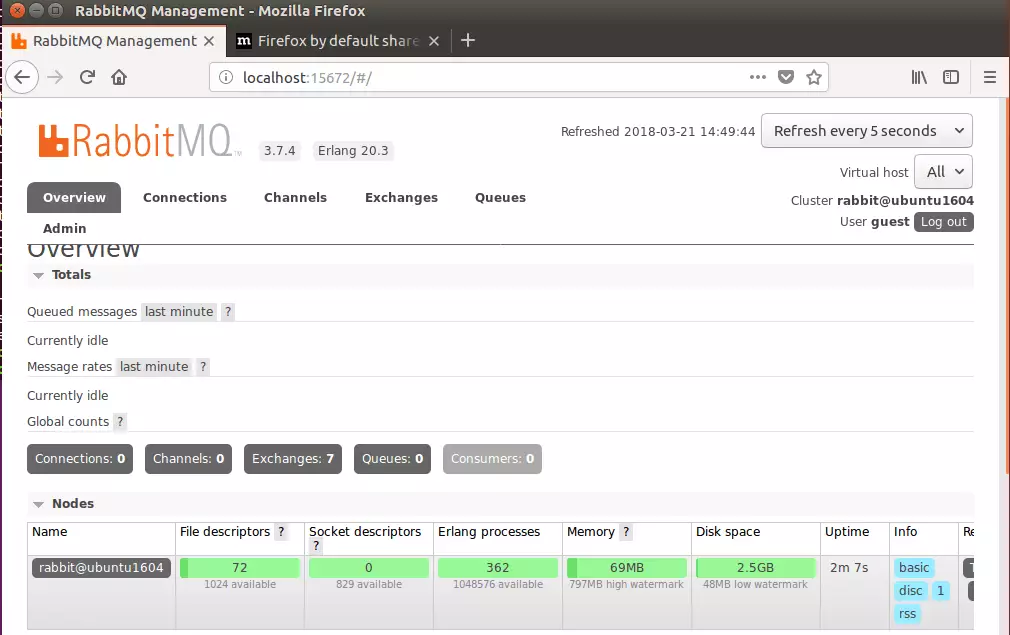
Enabling the RabbitMQ web management console gives you a visual dashboard to monitor queues, connections, and message traffic in your browser. You turn on the management plugin using a simple terminal command and access it through port 15672.
sudo rabbitmq-plugins enable rabbitmq_management
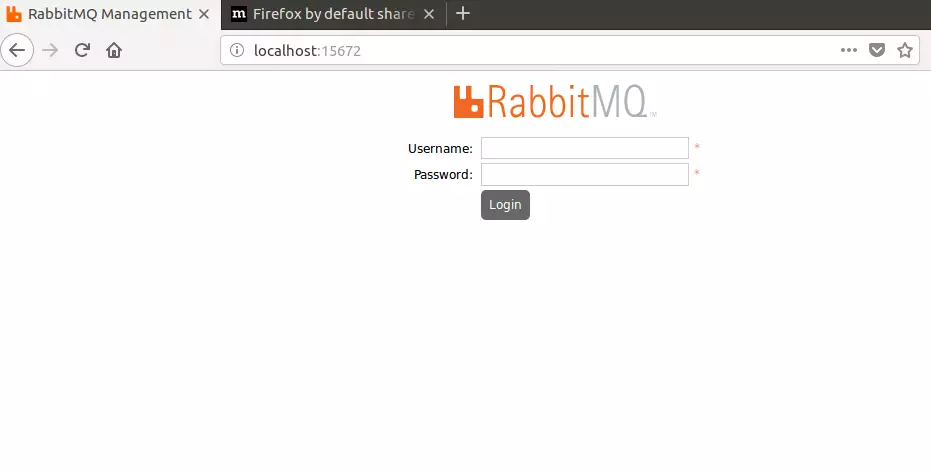
Open your web browser and type your server's address followed by the port 15672. For example: http://your-server-ip:15672
A login screen will appear. Use the default credentials:
- Username: guest
- Password: guest
For users of Ubuntu 18.04, manual file downloads might be necessary from these links: https://packages.erlang-solutions.com/erlang/ and https://www.rabbitmq.com/install-debian.html.
Summary
This guide prepared your Ubuntu server by installing the Erlang base, adding the RabbitMQ software repository, and enabling a user-friendly web dashboard. You are now ready to start sending messages between your applications.
Does RabbitMQ use Erlang OTP?
RabbitMQ is written in Erlang and shares its key features of scalability, reliability, and fault-tolerance. At Erlang Solutions, we are world-leaders in Erlang/OTP & Elixir development and consultancy.
Was this guide helpful?

About the Author
Richard
Tech Writer, IT Professional
Richard, a writer for Geek Rewind, is a tech enthusiast who loves breaking down complex IT topics into simple, easy-to-understand ideas. With years of hands-on experience in system administration and enterprise IT operations, he’s developed a knack for offering practical tips and solutions. Richard aims to make technology more accessible and actionable. He's deeply committed to the Geek Rewind community, always ready to answer questions and engage in discussions.


thanks! this was clear, and even better than that on the rabbitMQ website
try install erlang:
The following packages have unmet dependencies:
erlang : Depends: erlang-diameter but it is not going to be installed
Depends: erlang-eldap but it is not going to be installed
Depends: erlang-ftp but it is not going to be installed
Depends: erlang-tftp but it is not going to be installed
Recommends: erlang-jinterface but it is not going to be installed
Recommends: erlang-ic-java but it is not going to be installed
Recommends: erlang-mode but it is not going to be installed
Recommends: erlang-src but it is not going to be installed
Recommends: erlang-examples but it is not going to be installed
esl-erlang : Depends: libwxbase2.8-0 but it is not installable or
libwxbase3.0-0 but it is not installable or
libwxbase3.0-0v5 but it is not going to be installed
Depends: libwxgtk2.8-0 but it is not installable or
libwxgtk3.0-0 but it is not installable or
libwxgtk3.0-0v5 but it is not going to be installed
Depends: libsctp1 but it is not going to be installed
Recommends: erlang-mode but it is not going to be installed
libssl-dev : Depends: libssl1.0.0 (= 1.0.2g-1ubuntu4.13) but 1.0.2g-1ubuntu4.12 is to be installed
Recommends: libssl-doc but it is not going to be installed
E: Unmet dependencies. Try ‘apt-get -f install’ with no packages (or specify a solution).
How to install ssl in rabbitmq mqtt?
superb
Reading package lists… Done
Building dependency tree
Reading state information… Done
rabbitmq-server is already the newest version (3.7.10-1).
0 upgraded, 0 newly installed, 0 to remove and 0 not upgraded.
1 not fully installed or removed.
After this operation, 0 B of additional disk space will be used.
Do you want to continue? [Y/n] Y
Setting up rabbitmq-server (3.7.10-1) …
dpkg: error processing package rabbitmq-server (–configure):
installed rabbitmq-server package post-installation script subprocess returned error exit status 1
Errors were encountered while processing:
rabbitmq-server
E: Sub-process /usr/bin/dpkg returned an error code (1)
Well after spending 3 hours trying to get Rabbit installed this is my savior. Thank you!!
Great Article..
Easy & simple steps to install RabbitMQ.