
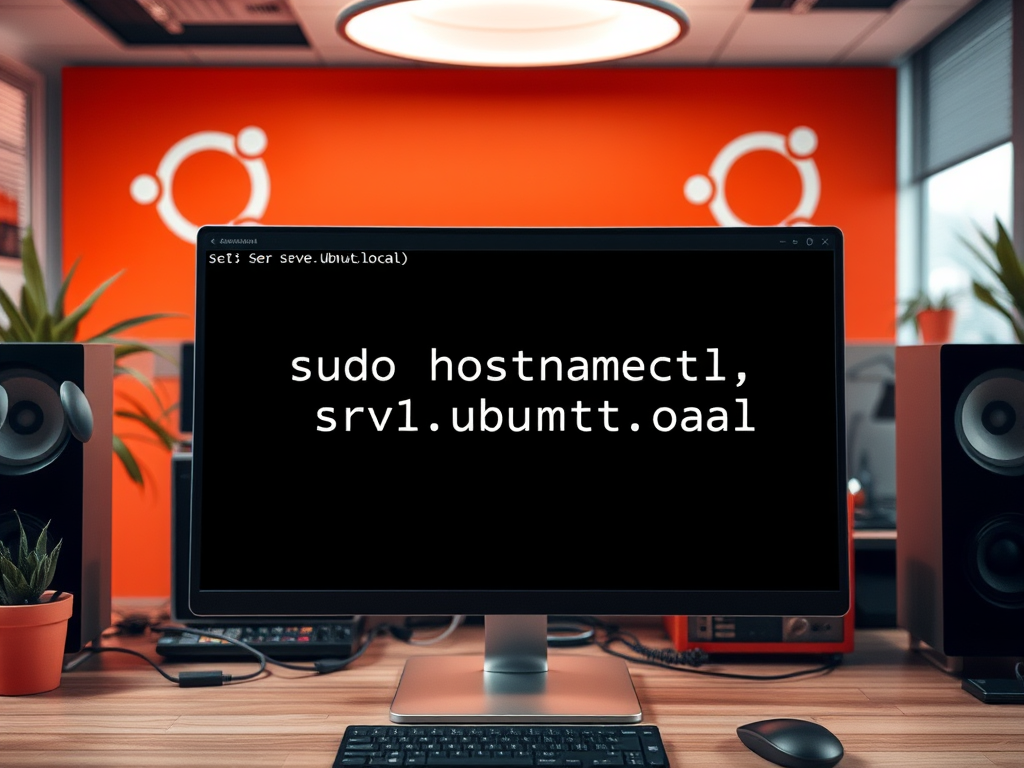
This article explains how to change the hostname on Ubuntu 24.04.
A hostname is a human-readable label that identifies a device on a network, distinguishing one machine from another and making the communication and management of devices easier.
Using distinct hostnames when managing multiple systems improves identification. Modifying the hostname can assist when systems are deployed or relocated.
To change the hostname in Ubuntu, you typically use the command line or edit configuration files based on your version of Ubuntu.
Show the current hostname
To view the current hostname on Ubuntu before making any changes or updates, execute the following commands.
hostnamectl
This should display text similar to the lines below and a hostname for your Ubuntu computer.
 Static hostname: srv1.ubuntu.local
       Icon name: computer-vm
         Chassis: vm 🖴
      Machine ID: f95989a019994920b26e3b317b0d3f27
         Boot ID: 3c115a8be03d4a0194ca6cd9fe488e2d
  Virtualization: vmware
Operating System: Ubuntu 24.04.2 LTS
          Kernel: Linux 6.11.0-19-generic
    Architecture: x86-64
 Hardware Vendor: VMware, Inc.
  Hardware Model: VMware Virtual Platform
Firmware Version: 6.00
   Firmware Date: Thu 2020-11-12
    Firmware Age: 4y 4month 1w 1d
Change the hostname
Once you know your Ubuntu machine’s hostname, you can easily change or rename it using a simple command.
To change the hostname on Ubuntu, use the `hostnamectl` command.
For example, to change the device hostname to srv1.ubuntu.local, you will run the command below.
sudo hostnamectl set-hostname srv1.ubuntu.local
The command above will replace the device name in the [/etc/hostsname] file to reflect the new name.
/etc/hostname
The [/etc/hosts] file won’t be updated to the hostname. You may have to edit it to replace the hostname there as well.
sudo nano /etc/hosts
Then, replace the old name with the new one, save the file, and exit.
127.0.0.1 localhost
127.0.1.1 srv1.ubuntu.local

# The following lines are desirable for IPv6 capable hosts
::1     ip6-localhost ip6-loopback
After changing the hostname, you may have to restart the device. Run the command below to do that.
sudo reboot
When you log back in, the system should have a new name you assigned.
That should do it!
Conclusion:
- Changing the hostname in Ubuntu 24.04 is a straightforward process using the
hostnamectlcommand. - Always check your current hostname using
hostnamectlbefore making changes. - Update both the
/etc/hostnameand/etc/hostsfiles to ensure the hostname is configured correctly. - Restart your device to apply the changes effectively.
- Using clear and distinct hostnames is essential for better network management and identification of devices.
Leave a Reply Cancel reply