How to Setup a Proxy in Windows 11


A proxy server in Windows 11 routes your internet traffic through a separate computer. That hides your real network details from the sites you visit and lets an organization control web access. Windows 11 version 22H2 and later has built-in settings for a custom proxy, so you don’t need extra software.
There are two ways to set it up. An automatic setup script (also called a PAC file) is a web address that tells Windows which proxy to use for each site. A manual setup means typing in one proxy address and port yourself. Ask your network administrator or proxy provider which one you need. You only need one of the two.
Configure your proxy settings in Windows 11 by going to Settings Network & internet Proxy You can then choose to use a setup script or manually enter the proxy server address and port. Click Save to apply your changes.
Setting up a proxy using a script
Use this method when your administrator gave you a script address, usually a URL ending in .pac or .dat. Open Settings , go to Network & internet, and click Proxy. Find the Automatic proxy setup section and click Set up next to Use setup script. Paste the script address and click Save.
Keep the script address handy before you start. You can’t guess it, and a wrong address means Windows can’t work out which proxy to use.
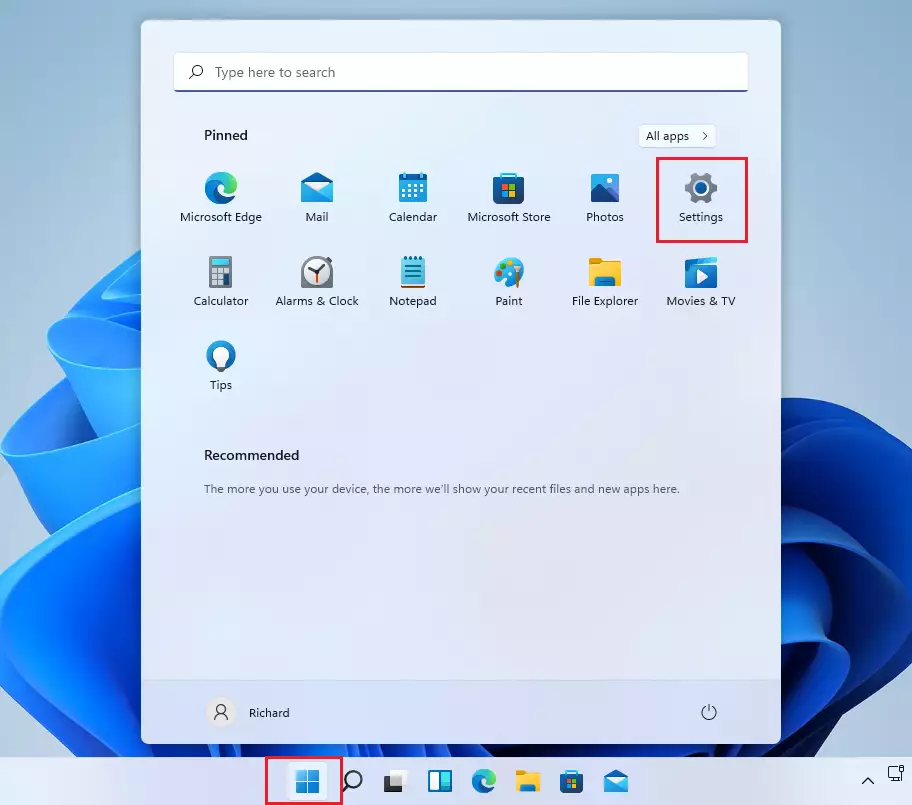
- Open Settings by pressing Win+I on your keyboard. The Settings window opens with a list of categories on the left.
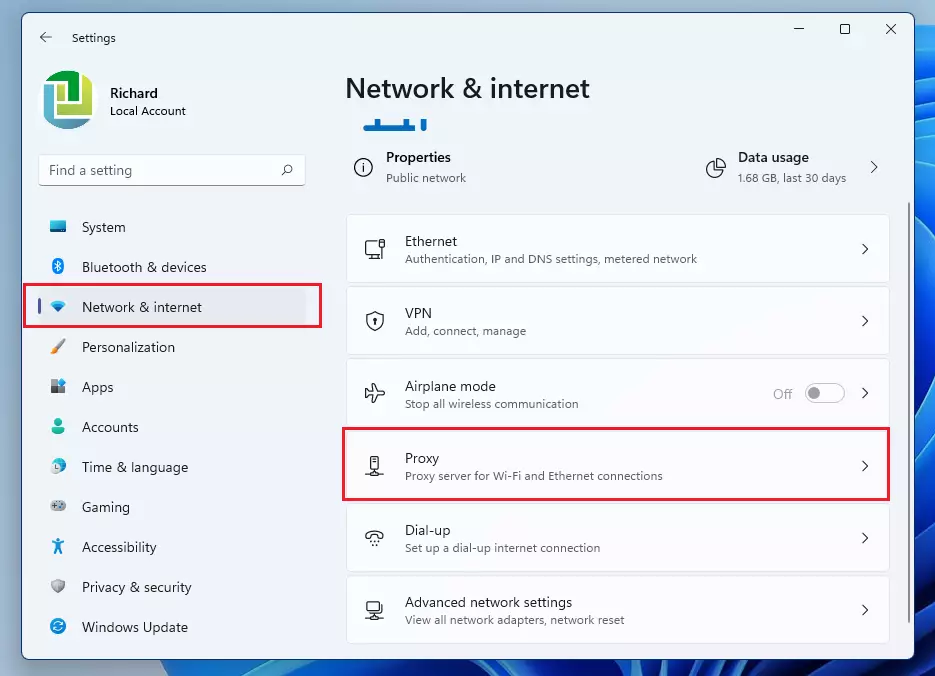
- In the left-hand menu, click Network & internet. The page on the right shows your Wi-Fi and Ethernet connections and other network options.
- Select Proxy from the list on the right. You may need to scroll down a little to see it. The Proxy page opens with an Automatic proxy setup section at the top and a Manual proxy setup section below it.
If the options on this page are greyed out, or a message says some settings are managed by your organization, a policy on a work or school PC controls them. Ask your IT department. You can’t override that from this page.
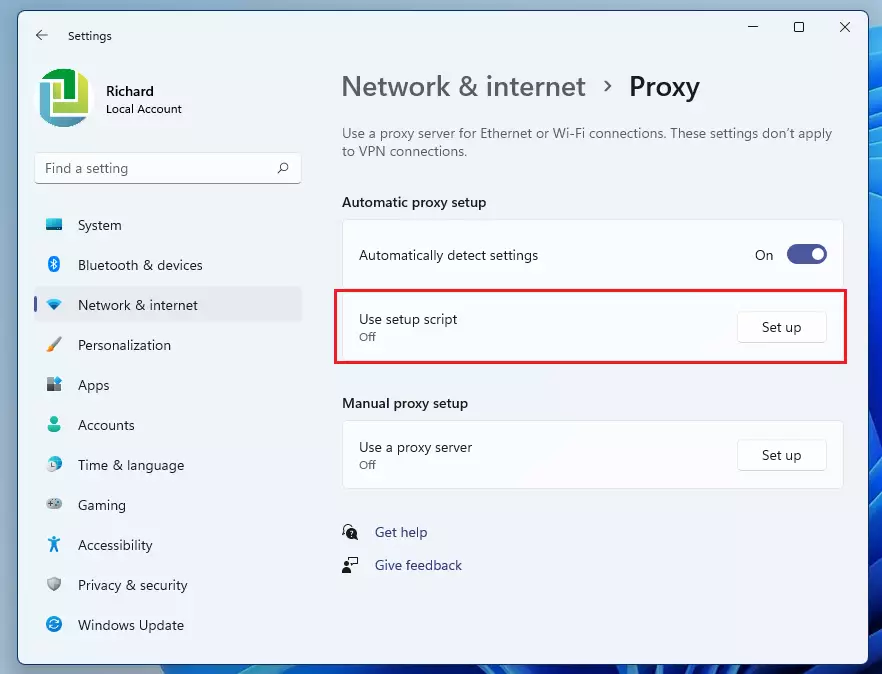
- Click the Set up button next to Use setup script. A small dialog opens with a toggle and a box for the script address.
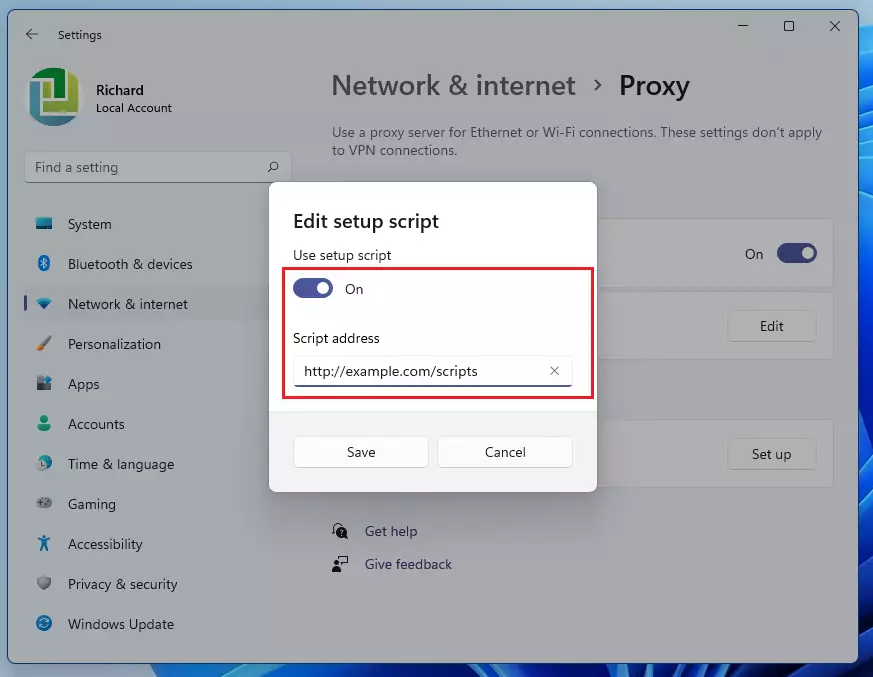
- Switch the toggle to On.
- Enter the script address provided by your administrator in the Script address box.
- Click Save. The dialog closes and the Use setup script line now shows that it is on.
The change takes effect right away, and you don’t need to restart the PC. Close and reopen your browser if a page still loads the old way. To undo it, click Set up again, switch the toggle to Off and click Save.
Setting up a manual proxy
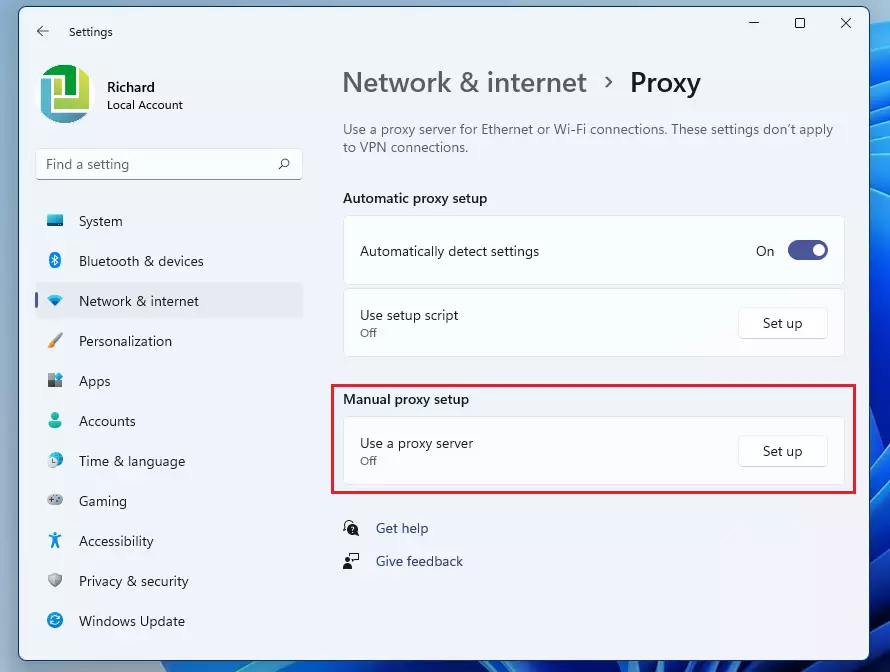
Use this method when you have the details of a specific proxy server: its IP address and port number. Open Settings, select Network & internet, and click Proxy. Scroll down to Manual proxy setup and click the Set up button. Enter the IP address and port number provided by your network administrator, then click Save.
Don't mix this up with the script method. If a script is switched on and you also add a manual proxy, it can be hard to tell which one Windows is using. Turn off the one you don't need.
- Go to Settings Network & internet Proxy The Proxy page opens.
- Scroll down to Manual proxy setup and click the Set up button next to Use a proxy server. A dialog opens with the proxy fields.
- Switch the toggle to On. The address and port fields become available.
- In the address field (labelled Proxy IP address on most builds), enter the server IP, for example 192.168.1.50.
- In the Port field, enter the port number provided to you.
Enter only the address and the port, each in its own box. Don't add http:// or a colon to the address. A typo in either field is the most common reason pages stop loading after you turn a proxy on.
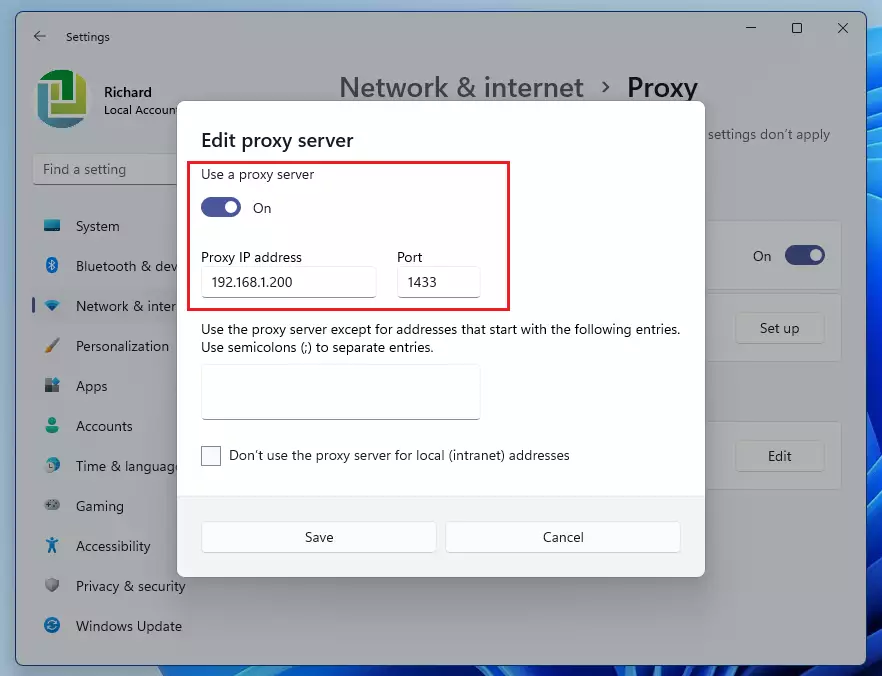
- Click Save to finish. The dialog closes and the Proxy page shows the address and port you entered.
The change applies right away, with no restart. Open a website in your browser to test it. If nothing loads, check the address and port, or ask your administrator whether the server is up. To go back to a normal connection, open the dialog again, switch the toggle to Off and click Save.
Note that these are system-wide Windows settings. Edge and Chrome follow them, but some apps, such as Firefox with its own proxy settings, may ignore them.
Summary
Setting up a proxy in Windows 11 lets you browse the internet through an intermediary server, either with a script address or by entering the server details yourself. Both options are in Settings Network & internet Proxy, and you can switch either one off from the same page if you need to go back.
Have a question about this guide?
Answered by AI from this guide. Good questions may be added to this page — please don't include personal details.
Did this guide fix your problem?

About the Author
Richard
Tech Writer, IT Professional
Richard is a writer at Geek Rewind who turns complex IT tasks into clear, step-by-step guides. He draws on years of hands-on experience in system administration and enterprise IT operations, focusing on Windows, Linux and WordPress: the problems people actually run into, and the fixes that work. His server and WordPress guides come from systems he runs himself. Richard builds and maintains the platform behind Geek Rewind, from its Ubuntu servers and Nginx configuration to its custom WordPress plugins. Many new tutorials start with readers' questions, and he's always glad to answer them in the comments.
No comments yet — be the first to share your thoughts!