How to Change Power Mode in Ubuntu Linux


- 4 steps
- Includes a restart or sign-out
Power modes in Ubuntu control the balance between speed and battery life. Ubuntu includes three built-in power profiles: Balanced, Power Saver and Performance. You can switch between them in a few clicks, with no terminal needed.
Balanced is the default and suits everyday use. Power Saver stretches your battery life by lowering the computer’s speed, and it can also dim the screen. Performance raises the speed for heavy jobs such as video editing or gaming. The cost is more heat, louder fans and faster battery drain.
To change power mode in Ubuntu, open Settings, click Power in the left sidebar, and under Power Mode choose Balanced, Power Saver or Performance. The change applies immediately with no restart or Apply button. Performance appears only on computers that support it.
How to choose power mode in Ubuntu Linux
Change the power mode when you are away from a charger and want the battery to last longer. Change it as well when you need extra speed for a demanding task. The setting lives in the Settings app, in the Power panel. The steps below show where to find it. They apply to current Ubuntu desktop releases with the standard GNOME desktop, such as Ubuntu 22.04 LTS and 24.04 LTS.
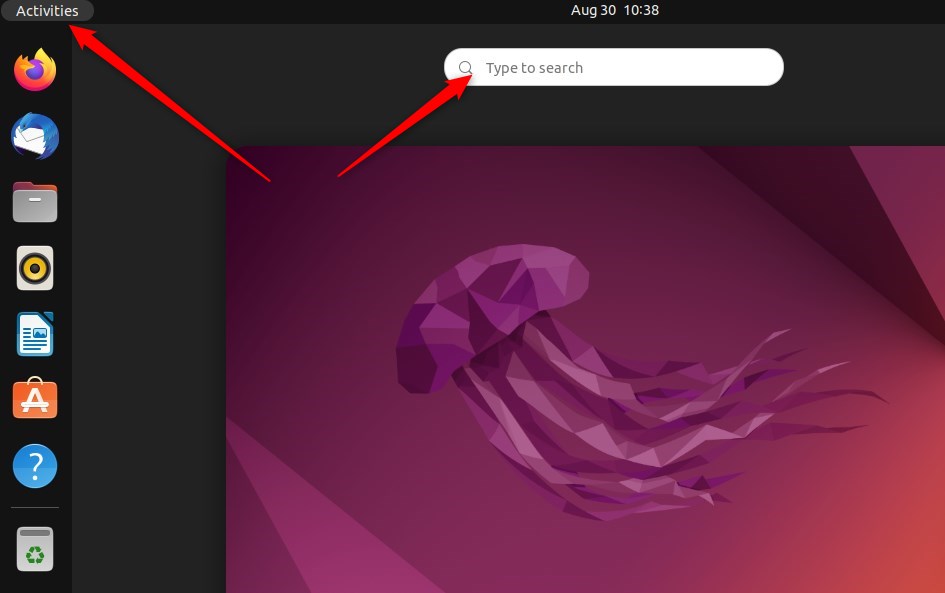
- Open the Settings app. Press the Super key (the Win on most keyboards), type Settings and press Enter. Alternatively, click the system menu in the top-right corner of the screen and select Settings. The Settings window opens with a list of categories on the left.
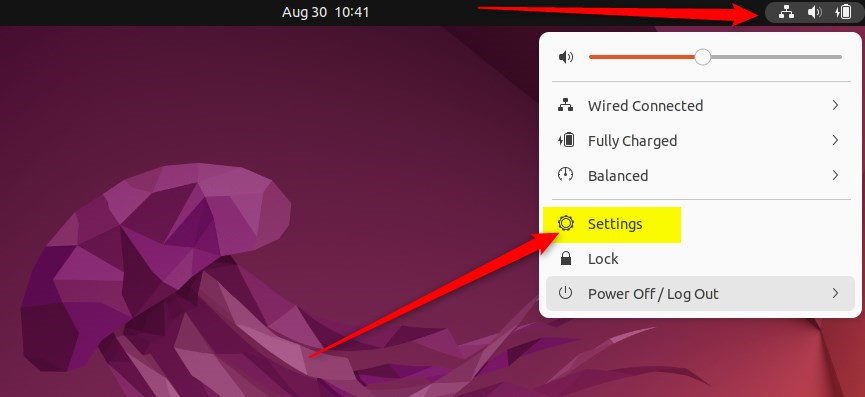
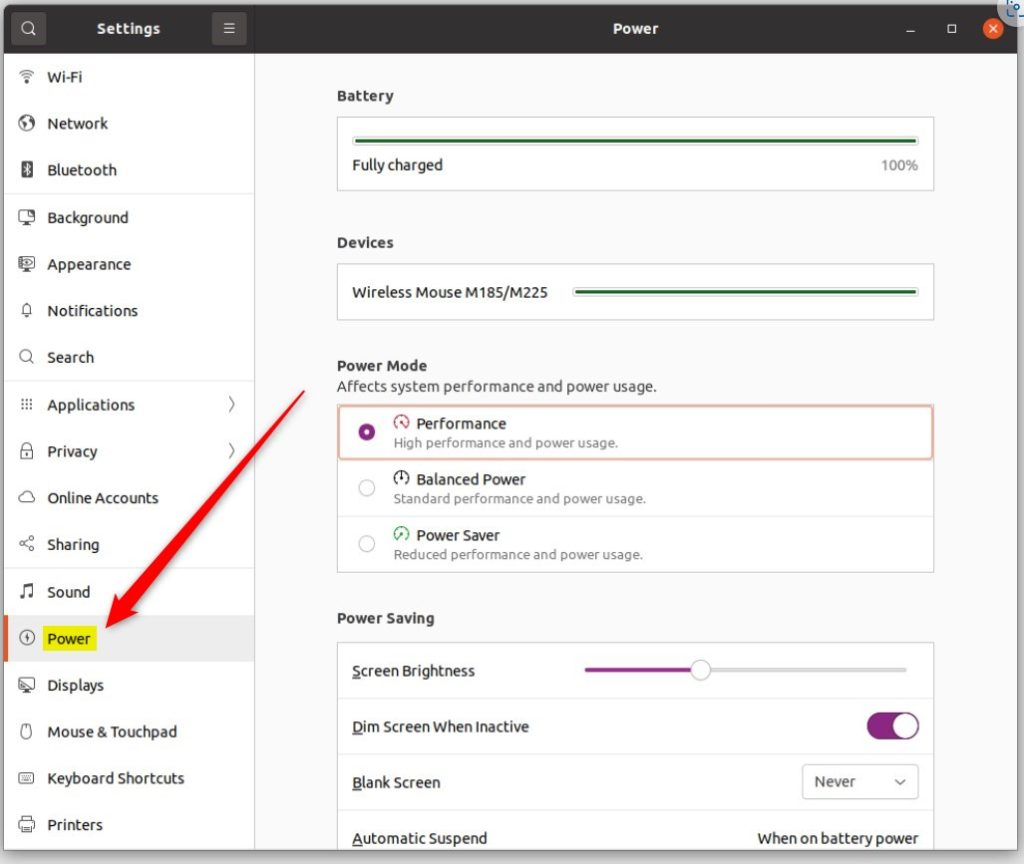
- Click Power in the list. If you can’t see it, scroll down the left sidebar or use the search icon at the top of the window. The Power panel opens on the right.
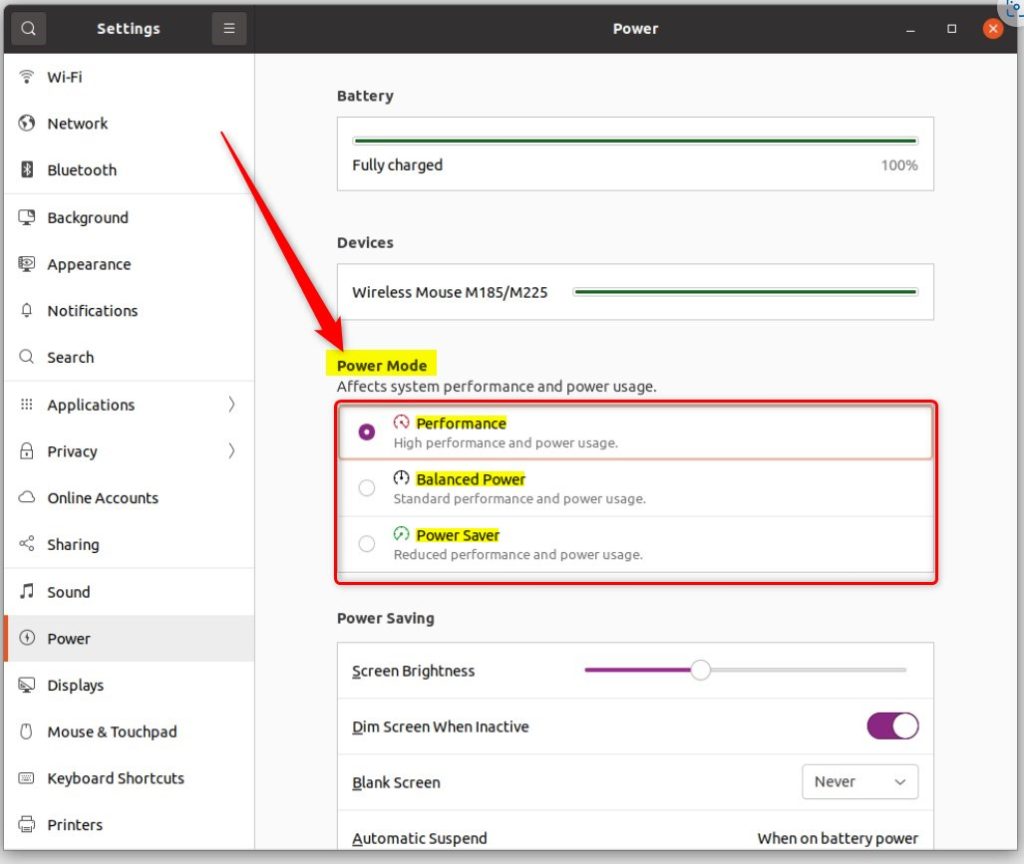
- Find the Power Mode section in Settings Power and choose one of the options listed:
- BalancedStandard performance and power usage. This is the default setting.
- Power SaverReduced performance and power usage. This setting maximizes battery life. It may enable some power-saving options and prevent them from being switched off.
- PerformanceHigh performance and power usage. This mode will only be visible if it is supported by your computer. It will be selectable if your computer is running on AC power. If your device supports lap detection, you will not be able to select this option if the device is running on someone’s lap.
The change applies right away. You don't need to click an Apply button or restart the computer. The selected option shows a mark next to it.
Ubuntu only shows the profiles your computer supports. The Performance option, for example, is not available on every machine. Virtual machines and some desktops may not show the section at all. Make sure the system is fully updated and try again.
- Close the Settings app once you are finished.
To undo the change, open Settings Power again and select Balanced. It is safe to switch back and forth as often as you like.
- Changing the power mode in Ubuntu Linux is a straightforward process that allows users to optimize performance and power usage according to their needs.
- Following the steps outlined in this article, users can select from different power modes such as Balanced, Power Saver, and Performance, ensuring flexibility based on their specific requirements.
- Accessing the System Settings panel and navigating to the Power settings allows users to seamlessly modify the power mode for their Ubuntu Linux system.
- Whether prioritizing battery life, performance, or a balance between the two, Ubuntu Linux empowers users with the tools to customize their power usage effortlessly.
Questions readers asked
Ubuntu's Settings app has no Power Mode option. How do I change the power mode?
Some Ubuntu releases don't show Power Mode in Settings › Power. You can change it in a terminal instead. Open a terminal and run powerprofilesctl list to see the profiles your computer supports. To switch, run powerprofilesctl set power-saver, powerprofilesctl set balanced or powerprofilesctl set performance. Then run powerprofilesctl get to check which profile is active. A profile that isn't listed isn't supported by your hardware.
Still have a question?
Answered by AI from this guide. Good questions may be added to this page — please don't include personal details.
Did this guide fix your problem?

About the Author
Richard
Tech Writer, IT Professional
Richard is a writer at Geek Rewind who turns complex IT tasks into clear, step-by-step guides. He draws on years of hands-on experience in system administration and enterprise IT operations, focusing on Windows, Linux and WordPress: the problems people actually run into, and the fixes that work. His server and WordPress guides come from systems he runs himself. Richard builds and maintains the platform behind Geek Rewind, from its Ubuntu servers and Nginx configuration to its custom WordPress plugins. Many new tutorials start with readers' questions, and he's always glad to answer them in the comments.
[…] systems it is possible to set a power mode to allow you to use the least amount of power you need. In Ubuntu this is done from the Power settings, but in Debian running XFCE the Power Manager does not give you this option. But that doesn’t […]
Anyone who dont have performance button enabled. You can also use that terminal command as a root.
powerprofilesctl set performance